

The Milky Way’s Habitable Zone May Be Larger Than Previously Believed
Stellar migration could significantly boost the number of habitable worlds in the Milky Way, and upcoming ESA missions will put these predictions to the test through detailed exoplanet studies.
The Galactic Habitable Zone (GHZ)—the area of a galaxy considered most favorable for complex life—may hold key clues for finding stars that could host habitable planets. In a new study accepted by Astronomy & Astrophysics, an international team explored how stellar migration—the movement of stars—impacts the search for life-supporting worlds in the Milky Way. Their findings provide fresh insights into the astrophysical factors that shape where habitable planets form and how life could emerge beyond Earth.
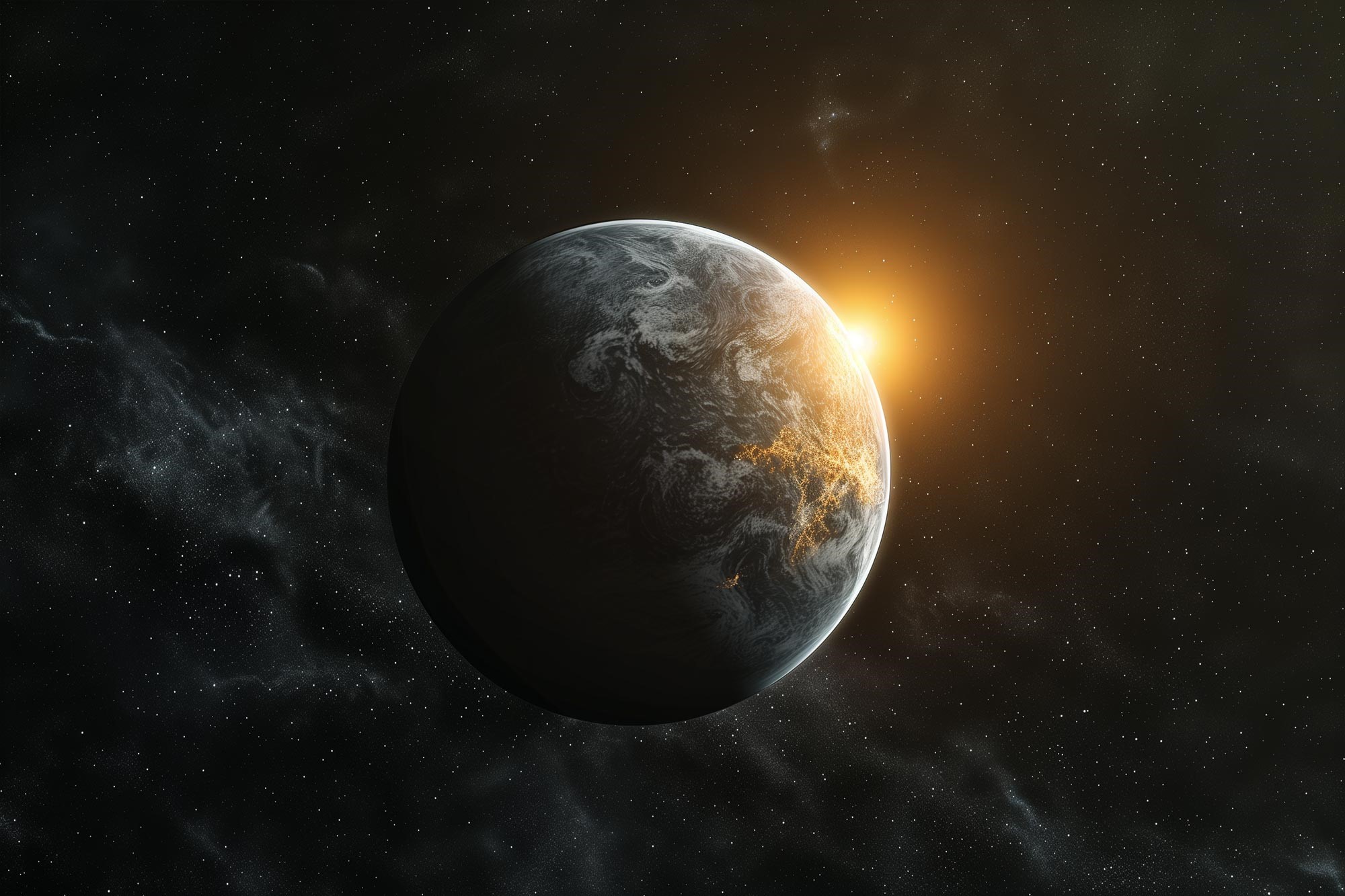
Figure 1. Simulations Reveal a Dynamic, Expanding Galactic Habitable Zone
Simulating Stellar Migration and Its Impacts
To investigate this, the researchers ran computer simulations modeling how stellar migration influences the location and boundaries of the GHZ. They compared scenarios with and without migration to estimate the likelihood of rocky, Earth-like planets forming around stars in various parts of the galaxy. Incorporating a chemical evolution model to trace the Milky Way’s growth—especially its vertical structure and thickness—they found that stellar migration greatly boosts the odds of habitable planets forming in the galaxy’s outer regions. The models showed stars are about five times more likely to host habitable planets when migration is included, and they also hinted that gas giants may strongly influence rocky planet formation nearer the galactic center. Figure 1 shows Simulations Reveal a Dynamic, Expanding Galactic Habitable Zone.
In their conclusion, the authors emphasize that their study broadens the exploration of factors shaping the Galactic Habitable Zone beyond previous analyses. They highlight the relevance of their findings for upcoming ESA missions—PLATO, Ariel, and LIFE—which are expected to provide unprecedented data on planetary characteristics, orbital structures, and atmospheric compositions.
Rethinking the Concept of Habitable Zones
The concept of the Galactic Habitable Zone (GHZ) expands on the classic idea of the stellar habitable zone (HZ)—the orbital range where a planet can sustain liquid water—first proposed in the 1950s. Since its introduction in the 1980s, the GHZ has evolved but is still generally defined as the region of the galaxy rich in heavy elements like iron, silicon, and oxygen, which are essential for forming rocky planets. While the precise size of the GHZ remains under debate, most scientists agree it excludes the galactic center, where frequent supernovae and extreme events make planet habitability unlikely.
The study highlights several upcoming ESA missions that will advance the search for life. PLATO, set to launch in December 2026, will scan one million stars for transiting exoplanets [1]. Ariel, scheduled for 2029, will analyze the chemical and thermal properties of at least 1,000 confirmed exoplanets. Meanwhile, the LIFE mission, initiated in 2017, aims to study the atmospheres of terrestrial exoplanets in search of biosignatures.
What future discoveries about the GHZ and stellar migration await us remains an open question—one that ongoing research will help answer. This is the very reason we do science.
So, keep exploring, keep questioning, and keep looking up!
Reference:
- https://scitechdaily.com/our-galaxys-sweet-spot-for-life-is-bigger-than-we-thought/
Cite this article:
Janani R (2025), The Milky Way’s Habitable Zone May Be Larger Than Previously Believed, AnaTechMaz, pp.552
Recent Post
-
Webb Telescope Spots Uranus’ 29th Moon Missed by Voyager 2 Nearly 40 Years Ago
NASA’s James Webb Space Telescope has uncovered a previously...
-
Small Magnets, Big Impact: A Low-Power Breakthrough for Space Oxygen Generation
Who would have thought a simple magnet could help solve one of..
-

Moon Formation Spotted Around Wandering Planets Drifting Through Space
Free-floating planetary-mass objects — giant, starless bodies....
-

US Classified Military Space Plane Set for New Mission with Hidden Objective
A secret space plane is set to embark on its new mission. The X-37B....
-
NASA’s Space Solar Designs May Cut Battery Use by 70% and Increase Power Output
A new study led by King’s College London suggests that...
-
NASA Spots New Interstellar Object Entering Solar System: Alien Probe Possible?
On July 1, astronomers observed a fast-moving object heading toward....
-
Perseverance Rover Uncovers Possible First Evidence of Life on Mars
A rock sample called “Sapphire Canyon,” taken from the Bright....
-
Physicists Say Black Hole May Explode Within This Decade with 90% Probability
Physicists have traditionally believed that black holes end their lives....
-
Planetary Collisions May Reveal Clues to Alien Habitability
Researchers at Southwest Research Institute, in collaboration with Yale University, have published a....
Earliest Cosmic Magnetic Fields Were as Weak as Brain Waves
Magnetic fields emerging in the Universe’s earliest moments were billions of times weaker than a....
-
Solar Flares Are 6.5 Times Hotter Than Previously Estimated
Researchers at the University of St Andrews have found that particles in solar flares can become up to 6.5.....
-
The Milky Way’s Habitable Zone May Be Larger Than Previously Believed
The Galactic Habitable Zone (GHZ)—the area of a galaxy considered....
-
Researchers Discover Stark Differences Between the Moon’s Near and Far Sides
New insights from China’s Chang’e 6 mission suggest that the....
-
AI Uncovers Hidden Martian Storms Blasting Across the Planet At 160 Km/H
Mars may look calm and lifeless from a distance, but new research...
-

NASA’s Terra Satellite Detects Strength of Tropical Storm 07W from the Side
Wind shear can push clouds and thunderstorms away from...