

Small Magnets, Big Impact: A Low-Power Breakthrough for Space Oxygen Generation
Who would have thought a simple magnet could help solve one of space travel’s toughest challenges? For decades, astronauts have struggled with the inefficiency of producing oxygen in microgravity. Current systems aboard the International Space Station rely on bulky, power-hungry machinery to split water into oxygen and hydrogen—an approach too heavy and energy-intensive for future long-duration missions.
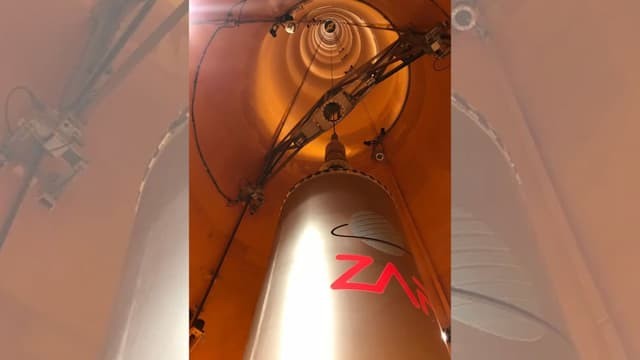
Figure 1. Space Oxygen Generation.
Breathing made simpler
Now, researchers from the University of Warwick, ZARM in Bremen, and Georgia Tech have demonstrated a lighter, more efficient solution. By using small, commercially available magnets, the team created a passive system that separates oxygen bubbles during electrolysis—without the need for extra energy. Figure 1 shows Space Oxygen Generation.
In space, gas bubbles don’t rise as they do on Earth; instead, they cling to electrodes and reduce efficiency [1]. The new system cleverly uses magnetic forces to guide bubbles toward collection points or spin them away, recreating the effect of a centrifuge—but without moving parts or high energy demands.
“We proved that centrifuges or mechanical systems aren’t necessary,” said Professor Katharina Brinkert, Director at ZARM. “We don’t even need additional power—our method is fully passive and low-maintenance.”
Toward lighter, more robust space systems
Tests conducted in Bremen’s Drop Tower and laboratory setups showed oxygen collection efficiency improved by up to 240 percent, achieving near-Earth performance levels. This advance could pave the way for lighter, more reliable life-support systems, a crucial step for sustainable deep-space missions.
The work builds on four years of collaboration. The concept was first proposed in 2022 by Álvaro Romero-Calvo of Georgia Tech, who ran the initial calculations and simulations. Brinkert’s teams at Warwick and later ZARM then designed and tested the system under microgravity conditions, validating its potential for future spaceflight.
By replacing bulky hardware with a simple magnetic approach, this innovation could bring astronauts one step closer to breathing easier on journeys beyond Earth.
Reference:
- https://interestingengineering.com/innovation/small-magnet-oxygen-production-space
Cite this article:
Keerthana S (2025), Small Magnets, Big Impact: A Low-Power Breakthrough for Space Oxygen Generation, AnaTechMaz, pp.542
Recent Post
-
Webb Telescope Spots Uranus’ 29th Moon Missed by Voyager 2 Nearly 40 Years Ago
NASA’s James Webb Space Telescope has uncovered a previously...
-
Small Magnets, Big Impact: A Low-Power Breakthrough for Space Oxygen Generation
Who would have thought a simple magnet could help solve one of..
-

Moon Formation Spotted Around Wandering Planets Drifting Through Space
Free-floating planetary-mass objects — giant, starless bodies....
-
US Classified Military Space Plane Set for New Mission with Hidden Objective
A secret space plane is set to embark on its new mission. The X-37B....
-
NASA’s Space Solar Designs May Cut Battery Use by 70% and Increase Power Output
A new study led by King’s College London suggests that...
-
NASA Spots New Interstellar Object Entering Solar System: Alien Probe Possible?
On July 1, astronomers observed a fast-moving object heading toward....
-
Perseverance Rover Uncovers Possible First Evidence of Life on Mars
A rock sample called “Sapphire Canyon,” taken from the Bright....
-
Physicists Say Black Hole May Explode Within This Decade with 90% Probability
Physicists have traditionally believed that black holes end their lives....
-
Planetary Collisions May Reveal Clues to Alien Habitability
Researchers at Southwest Research Institute, in collaboration with Yale University, have published a....
Earliest Cosmic Magnetic Fields Were as Weak as Brain Waves
Magnetic fields emerging in the Universe’s earliest moments were billions of times weaker than a....
-
Solar Flares Are 6.5 Times Hotter Than Previously Estimated
Researchers at the University of St Andrews have found that particles in solar flares can become up to 6.5.....
-
The Milky Way’s Habitable Zone May Be Larger Than Previously Believed
The Galactic Habitable Zone (GHZ)—the area of a galaxy considered....
-
Researchers Discover Stark Differences Between the Moon’s Near and Far Sides
New insights from China’s Chang’e 6 mission suggest that the....
-
AI Uncovers Hidden Martian Storms Blasting Across the Planet At 160 Km/H
Mars may look calm and lifeless from a distance, but new research...
-
NASA’s Terra Satellite Detects Strength of Tropical Storm 07W from the Side
Wind shear can push clouds and thunderstorms away from...