

Physicists Say Black Hole May Explode Within This Decade with 90% Probability
Physicists at UMass Amherst suggest that such an explosion could happen within the next decade, potentially “transforming our understanding of physics and rewriting the history of the universe.”
Physicists have traditionally believed that black holes end their lives in rare explosions, occurring at most once every 100,000 years. However, new research from the University of Massachusetts Amherst, published in Physical Review Letters, suggests a different scenario. The team estimates a greater than 90% chance of witnessing such an explosion within the next decade. With proper preparation, current space- and ground-based observatories could capture the event.
Observing this explosion would provide strong evidence for the existence of primordial black holes—a theorized type of black hole formed within the first second after the Big Bang 13.8 billion years ago, but never directly observed.
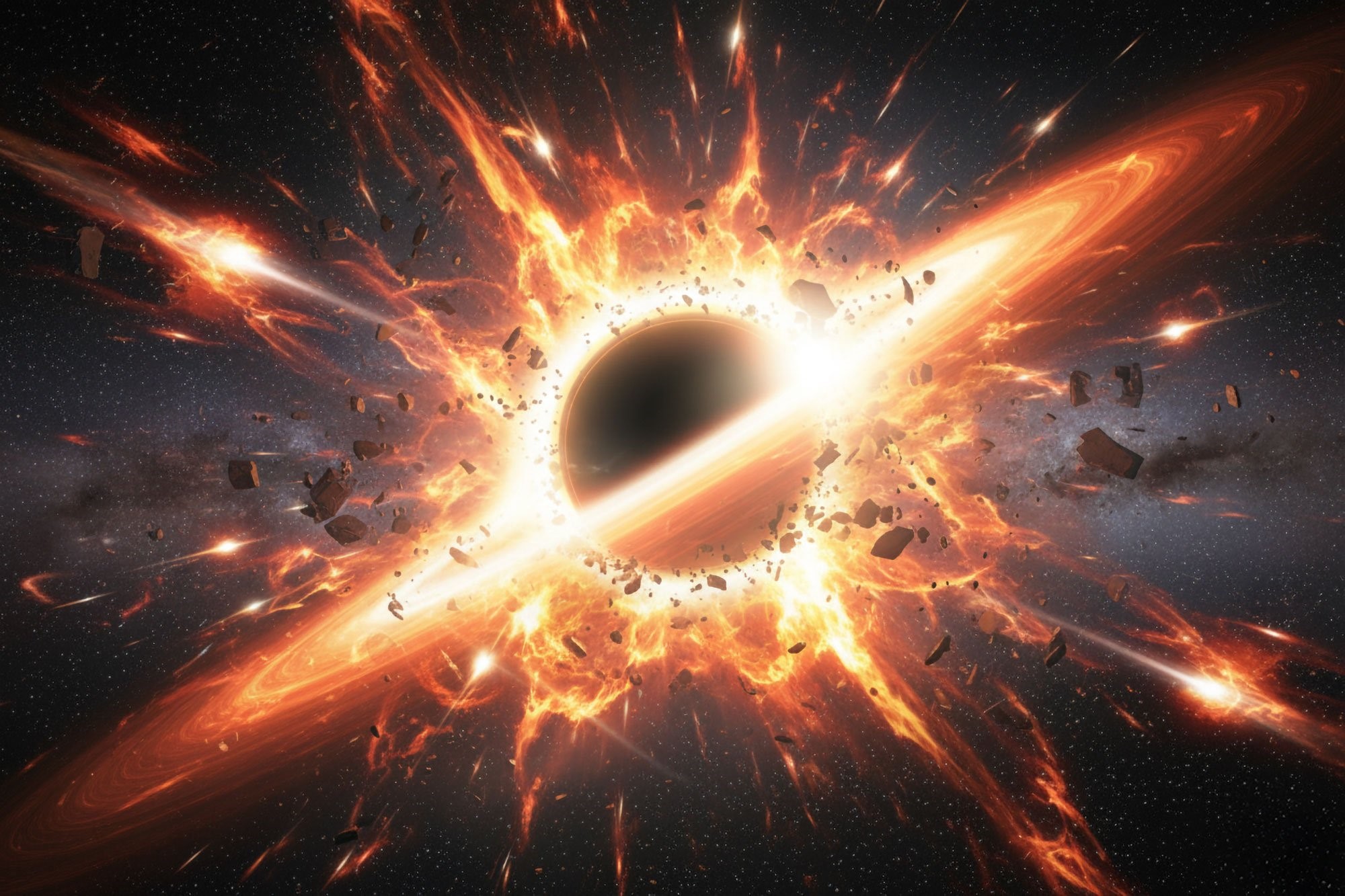
Figure 1. UMass Amherst Physicists Predict 90% Chance of PBH Explosion
The explosion could also provide a complete inventory of subatomic particles, including familiar ones like electrons, quarks, and Higgs bosons, as well as proposed particles such as dark matter candidates and potentially unknown particles. This comprehensive list would give researchers the tools to address one of humanity’s oldest questions: the origin of all matter. Figure 1 shows UMass Amherst Physicists Predict 90% Chance of PBH Explosion.
Exploring Black Holes
Black holes are well-known objects formed when a massive star exhausts its fuel, collapses in a supernova, and leaves behind a region of spacetime with gravity so strong that nothing, not even light, can escape. These stellar black holes are extremely massive and generally stable.
However, as Stephen Hawking noted in 1970, a different type—primordial black holes (PBHs)—could have formed from the universe’s conditions shortly after the Big Bang rather than from collapsing stars. Like traditional black holes, PBHs are highly dense and “black” because nothing can escape them, but they could be much lighter than the stellar black holes observed to date. Hawking also demonstrated that black holes have a temperature and, theoretically, can emit particles over time through “Hawking radiation” if they become sufficiently hot.
“The lighter a black hole, the hotter it becomes and the more particles it emits,” explains Andrea Thamm, co-author and assistant professor of physics at UMass Amherst. As primordial black holes (PBHs) evaporate, they grow increasingly lighter and hotter, releasing more radiation in a runaway process until they explode. This Hawking radiation is detectable by telescopes.
Despite this, no PBH has ever been directly observed. “We know how to detect Hawking radiation,” adds Joaquim Iguaz Juan, a postdoctoral researcher at UMass Amherst. “With our current telescopes, we can observe it. Since only PBHs can explode in the near future, detecting Hawking radiation would confirm we are witnessing an exploding PBH.”
Rethinking Black Hole Expectations
Physicists have long assumed that observing an exploding primordial black hole (PBH) is extremely unlikely. However, Joaquim Iguaz Juan emphasizes that scientists must challenge conventional assumptions and refine their hypotheses.
The team’s new prediction? Be prepared for a possible explosion. “We believe there is up to a 90% chance of witnessing an exploding PBH within the next 10 years,” says Aidan Symons, co-author and UMass Amherst physics graduate student.
Their study employs a “dark-QED toy model,” a variant of the usual electric force that includes a hypothesized heavy particle called a “dark electron.” Traditionally, black holes are considered electrically neutral, and PBHs were assumed to share this trait.
“We propose a different scenario,” explains Michael Baker, co-author and assistant professor at UMass Amherst. “If a primordial black hole forms with a small dark electric charge, the model predicts it could be temporarily stabilized before finally exploding.” Based on experimental data, this suggests PBH explosions could occur as often as once every 10 years, rather than once every 100,000 years.
“We’re not claiming it will definitely happen this decade,” Baker notes, “but the probability could be as high as 90%. With current technology, we could observe it if it occurs.”
Iguaz Juan adds, “Such an event would mark the first direct observation of both Hawking radiation and a PBH, providing a complete inventory of all particles in the universe [1]. It would revolutionize physics and reshape our understanding of cosmic history.”
Reference:
- https://scitechdaily.com/90-chance-physicists-predict-a-black-hole-could-explode-this-decade/
Cite this article:
Janani R (2025), Physicists Say Black Hole May Explode Within This Decade with 90% Probability, AnaTechMaz, pp.548
Recent Post
-
Webb Telescope Spots Uranus’ 29th Moon Missed by Voyager 2 Nearly 40 Years Ago
NASA’s James Webb Space Telescope has uncovered a previously...
-
Small Magnets, Big Impact: A Low-Power Breakthrough for Space Oxygen Generation
Who would have thought a simple magnet could help solve one of..
-
Moon Formation Spotted Around Wandering Planets Drifting Through Space
Free-floating planetary-mass objects — giant, starless bodies....
-

US Classified Military Space Plane Set for New Mission with Hidden Objective
A secret space plane is set to embark on its new mission. The X-37B....
-
NASA’s Space Solar Designs May Cut Battery Use by 70% and Increase Power Output
A new study led by King’s College London suggests that...
-
NASA Spots New Interstellar Object Entering Solar System: Alien Probe Possible?
On July 1, astronomers observed a fast-moving object heading toward....
-
Perseverance Rover Uncovers Possible First Evidence of Life on Mars
A rock sample called “Sapphire Canyon,” taken from the Bright....
-
Physicists Say Black Hole May Explode Within This Decade with 90% Probability
Physicists have traditionally believed that black holes end their lives....
-
Planetary Collisions May Reveal Clues to Alien Habitability
Researchers at Southwest Research Institute, in collaboration with Yale University, have published a....
Earliest Cosmic Magnetic Fields Were as Weak as Brain Waves
Magnetic fields emerging in the Universe’s earliest moments were billions of times weaker than a....
-
Solar Flares Are 6.5 Times Hotter Than Previously Estimated
Researchers at the University of St Andrews have found that particles in solar flares can become up to 6.5.....
-
The Milky Way’s Habitable Zone May Be Larger Than Previously Believed
The Galactic Habitable Zone (GHZ)—the area of a galaxy considered....
-
Researchers Discover Stark Differences Between the Moon’s Near and Far Sides
New insights from China’s Chang’e 6 mission suggest that the....
-
AI Uncovers Hidden Martian Storms Blasting Across the Planet At 160 Km/H
Mars may look calm and lifeless from a distance, but new research...
-
NASA’s Terra Satellite Detects Strength of Tropical Storm 07W from the Side
Wind shear can push clouds and thunderstorms away from...