

NASA Spots New Interstellar Object Entering Solar System: Alien Probe Possible?
3I/ATLAS is a swift, ancient interstellar object whose unusual characteristics spark both scientific investigation and speculation.
On July 1, astronomers observed a fast-moving object heading toward the Sun. Named 3I/ATLAS, it was notable for one striking reason: its trajectory showed it originated from outside our Solar System.
This is only the third confirmed interstellar object, and it exhibits highly unusual characteristics.
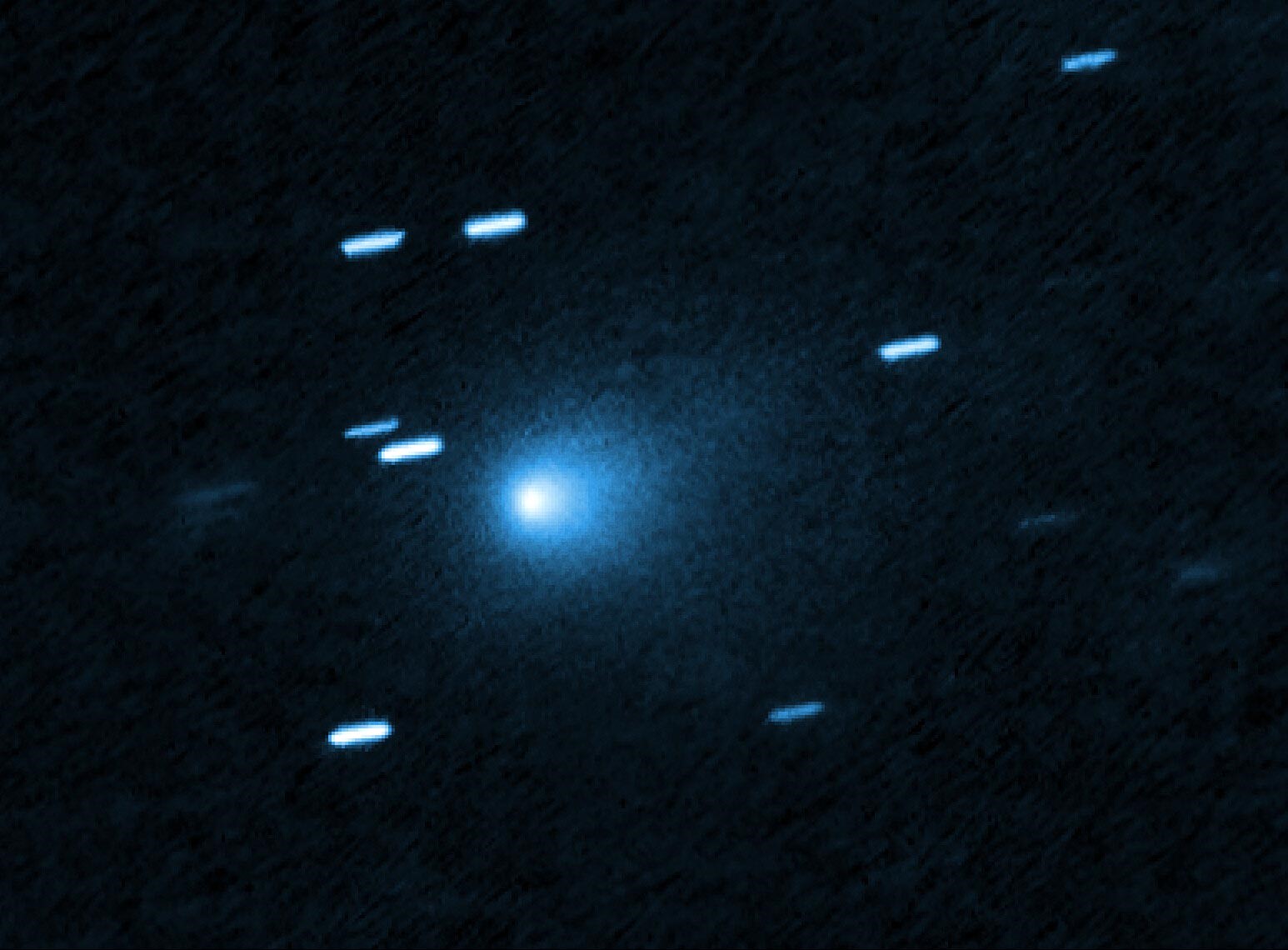
Figure 1. Hubble Image of Interstellar Comet 3I/ATLAS
3I/ATLAS Sets New Records
Observations revealed that 3I/ATLAS is traveling at roughly 245,000 kilometers per hour, making it the fastest object ever recorded in our Solar System. Figure 1 shows Hubble Image of Interstellar Comet 3I/ATLAS.
Its size is also remarkable, with early estimates suggesting a span of up to 20 kilometers, and researchers believe it could be older than the Sun.
Possibility of an Alien Origin
Astronomers usually assume that new objects are composed of rock or ice, but 3I/ATLAS’s unusual traits have prompted speculation it could be something else.
Harvard astrophysicist Avi Loeb and colleagues recently submitted a paper to arXiv titled Is the Interstellar Object 3I/ATLAS Alien Technology? (not yet peer-reviewed). Loeb, a controversial figure, previously suggested that the first known interstellar object, 1I/ʻOumuamua, might also have been an alien craft.
Among the anomalies hinting at a possible deliberate origin, Loeb points out that 3I/ATLAS’s orbit brings it unusually close to Venus, Mars, and Jupiter.
Humanity’s Own Alien Probes
The concept of alien probes roaming the cosmos may seem unusual, but humans launched several of our own in the 1970s. Voyager 1 and 2 have officially exited the Solar System, and Pioneer 10 and 11 are close behind.
This makes it plausible that alien civilizations—if they exist—could have sent out their own interstellar explorers. The key question, however, is how we could determine whether 3I/ATLAS or any other interstellar object is actually an alien probe, short of a direct encounter.
Detecting Alien Probes 101
The first step is spotting the object. Most Solar System bodies are visible only by reflected sunlight, with larger ones easier to detect. Smaller objects—like a Voyager-sized probe (~10 meters)—would likely go unnoticed until near the asteroid belt.
Next, scientists distinguish natural from technological objects. Signs of a natural origin include comet-like tails, while evidence of a probe might include radio emissions, electrostatic discharges, manoeuvring, or attempts to approach Earth.
For now, 3I/ATLAS is probably just a fast, old interstellar visitor, but it offers a chance to refine how we search, observe, and question the universe. Most objects have natural explanations, but the unusual ones deserve a second look.
Reference:
- https://scitechdaily.com/nasa-detects-new-interstellar-visitor-to-our-solar-system-could-it-be-an-alien-probe/
Cite this article:
Janani R (2025), NASA Spots New Interstellar Object Entering Solar System: Alien Probe Possible?, AnaTechMaz, pp.546
Recent Post
-
Webb Telescope Spots Uranus’ 29th Moon Missed by Voyager 2 Nearly 40 Years Ago
NASA’s James Webb Space Telescope has uncovered a previously...
-
Small Magnets, Big Impact: A Low-Power Breakthrough for Space Oxygen Generation
Who would have thought a simple magnet could help solve one of..
-

Moon Formation Spotted Around Wandering Planets Drifting Through Space
Free-floating planetary-mass objects — giant, starless bodies....
-
US Classified Military Space Plane Set for New Mission with Hidden Objective
A secret space plane is set to embark on its new mission. The X-37B....
-
NASA’s Space Solar Designs May Cut Battery Use by 70% and Increase Power Output
A new study led by King’s College London suggests that...
-
NASA Spots New Interstellar Object Entering Solar System: Alien Probe Possible?
On July 1, astronomers observed a fast-moving object heading toward....
-
Perseverance Rover Uncovers Possible First Evidence of Life on Mars
A rock sample called “Sapphire Canyon,” taken from the Bright....
-

Physicists Say Black Hole May Explode Within This Decade with 90% Probability
Physicists have traditionally believed that black holes end their lives....
-
Planetary Collisions May Reveal Clues to Alien Habitability
Researchers at Southwest Research Institute, in collaboration with Yale University, have published a....
Earliest Cosmic Magnetic Fields Were as Weak as Brain Waves
Magnetic fields emerging in the Universe’s earliest moments were billions of times weaker than a....
-
Solar Flares Are 6.5 Times Hotter Than Previously Estimated
Researchers at the University of St Andrews have found that particles in solar flares can become up to 6.5.....
-

The Milky Way’s Habitable Zone May Be Larger Than Previously Believed
The Galactic Habitable Zone (GHZ)—the area of a galaxy considered....
-
Researchers Discover Stark Differences Between the Moon’s Near and Far Sides
New insights from China’s Chang’e 6 mission suggest that the....
-
AI Uncovers Hidden Martian Storms Blasting Across the Planet At 160 Km/H
Mars may look calm and lifeless from a distance, but new research...
-

NASA’s Terra Satellite Detects Strength of Tropical Storm 07W from the Side
Wind shear can push clouds and thunderstorms away from...