

Solar Flares Are 6.5 Times Hotter Than Previously Estimated
Solar flares heat ions far more intensely than electrons, providing a fresh explanation for the broadening of spectral lines.
Researchers at the University of St Andrews have found that particles in solar flares can become up to 6.5 times hotter than previously estimated, potentially solving a decades-old mystery about the Sun.
Solar flares—intense bursts of energy in the Sun’s outer atmosphere—can push temperatures past 10 million degrees and significantly increase solar X-rays and radiation reaching Earth, posing risks to spacecraft, astronauts, and the upper atmosphere. Published in Astrophysical Journal Letters, the study shows that solar plasma, made of electrons and ions, behaves differently than long assumed, with positively charged ions reaching temperatures exceeding 60 million degrees.
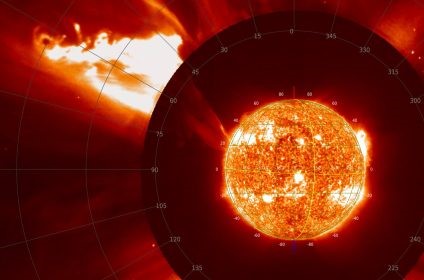
Figure 1. Solar Limb Flare Comparable in Size to Earth
Ions Experience Greater Heating Than Electrons
Using insights from other fields, Dr. Alexander Russell and his team, from the School of Mathematics and Statistics, concluded that solar flares are likely to heat ions far more intensely than electrons. Figure 1 shows Solar Limb Flare Comparable in Size to Earth.
Dr. Russell explained that recent discoveries show magnetic reconnection heats ions 6.5 times more than electrons—a phenomenon observed in near-Earth space, the solar wind, and computer simulations. However, this connection had not been previously applied to understanding solar flares.
Rethinking Key Assumptions in Solar Physics
“Traditionally, solar physics assumed ions and electrons share the same temperature. However, updated calculations using modern data reveal that temperature differences between ions and electrons can persist for tens of minutes in key regions of solar flares, allowing for the presence of super-hot ions,” explained Dr. Russell.
He added that the new ion temperature also aligns with the observed broadening of flare spectral lines, potentially resolving a decades-old astrophysics mystery.
Since the 1970s, scientists have wondered why flare spectral lines—bright spikes in the Sun’s extreme-ultraviolet and X-ray light—appear broader than expected. These were traditionally attributed to turbulent motions, but attempts to pinpoint the source of the turbulence have been inconclusive. After nearly 50 years, the new research suggests a paradigm shift: elevated ion temperatures may play a major role in explaining the unusually wide spectral lines of solar flares.
Reference:
- https://scitechdaily.com/solar-flares-are-6-5-times-hotter-than-we-thought/
Cite this article:
Janani R (2025), Solar Flares Are 6.5 Times Hotter Than Previously Estimated, AnaTechMaz, pp.551
Recent Post
-
Webb Telescope Spots Uranus’ 29th Moon Missed by Voyager 2 Nearly 40 Years Ago
NASA’s James Webb Space Telescope has uncovered a previously...
-
Small Magnets, Big Impact: A Low-Power Breakthrough for Space Oxygen Generation
Who would have thought a simple magnet could help solve one of..
-

Moon Formation Spotted Around Wandering Planets Drifting Through Space
Free-floating planetary-mass objects — giant, starless bodies....
-

US Classified Military Space Plane Set for New Mission with Hidden Objective
A secret space plane is set to embark on its new mission. The X-37B....
-
NASA’s Space Solar Designs May Cut Battery Use by 70% and Increase Power Output
A new study led by King’s College London suggests that...
-
NASA Spots New Interstellar Object Entering Solar System: Alien Probe Possible?
On July 1, astronomers observed a fast-moving object heading toward....
-

Perseverance Rover Uncovers Possible First Evidence of Life on Mars
A rock sample called “Sapphire Canyon,” taken from the Bright....
-
Physicists Say Black Hole May Explode Within This Decade with 90% Probability
Physicists have traditionally believed that black holes end their lives....
-
Planetary Collisions May Reveal Clues to Alien Habitability
Researchers at Southwest Research Institute, in collaboration with Yale University, have published a....
Earliest Cosmic Magnetic Fields Were as Weak as Brain Waves
Magnetic fields emerging in the Universe’s earliest moments were billions of times weaker than a....
-
Solar Flares Are 6.5 Times Hotter Than Previously Estimated
Researchers at the University of St Andrews have found that particles in solar flares can become up to 6.5.....
-
The Milky Way’s Habitable Zone May Be Larger Than Previously Believed
The Galactic Habitable Zone (GHZ)—the area of a galaxy considered....
-
Researchers Discover Stark Differences Between the Moon’s Near and Far Sides
New insights from China’s Chang’e 6 mission suggest that the....
-
AI Uncovers Hidden Martian Storms Blasting Across the Planet At 160 Km/H
Mars may look calm and lifeless from a distance, but new research...
-
NASA’s Terra Satellite Detects Strength of Tropical Storm 07W from the Side
Wind shear can push clouds and thunderstorms away from...