

NASA’s Space Solar Designs May Cut Battery Use by 70% and Increase Power Output
A new study led by King’s College London suggests that space-based solar panels could be a game-changer for Europe’s clean energy future. By harvesting solar energy directly from orbit, Europe could reduce its reliance on Earth-based wind and solar power by up to 80% and cut total grid costs by 7–15% by 2050.
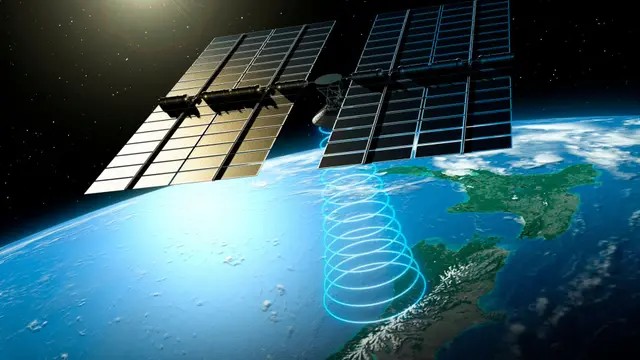
Figure 1. NASA’s Space Solar Designs
Continuous Power from Space
According to senior author Wei He, the main advantage of space solar power is its ability to generate electricity almost continuously. “In space, solar panels can be positioned to always face the sun, allowing for nearly uninterrupted energy production,” he said. Combined with higher solar radiation in orbit, this approach is far more efficient than terrestrial panels, which are limited by day-night cycles and seasonal changes. Figure 1 shows NASA’s Space Solar Designs
Two NASA-Inspired Designs
The study modeled Europe’s 2050 energy grid using two NASA-designed technologies: the Innovative Heliostat Swarm and the Mature Planar Array.
- Heliostat Swarm: Uses autonomous reflectors to focus sunlight onto a concentrator. It could operate 99% of the year, reduce battery storage needs by over 70%, and outperform wind and solar power by mid-century.
- Planar Array: A simpler, fixed-panel system that operates 60% of the year. While less efficient, it has higher technological readiness and could serve as a near-term demonstration platform.
Economic and Technological Challenges
Despite its promise, space-based solar power faces major hurdles. To be cost-competitive, the annual costs of the Heliostat and Planar Array would need to drop to 14 and 9 times the cost of conventional Earth-based solar panels, respectively — far below current prices.
Large-scale implementation would also require breakthroughs in wireless energy transmission and robotic assembly of orbital structures.
Even so, the study highlights space solar power as a viable pathway to dramatically reduce Europe’s energy storage needs, cut costs, and accelerate the transition to a low-carbon future.
Reference:
- https://interestingengineering.com/space/space-solar-designs-slash-battery-use
Cite this article:
Keerthana S (2025), NASA’s Space Solar Designs May Cut Battery Use by 70% and Increase Power Output, AnaTechMaz, pp.545
Recent Post
-
Webb Telescope Spots Uranus’ 29th Moon Missed by Voyager 2 Nearly 40 Years Ago
NASA’s James Webb Space Telescope has uncovered a previously...
-
Small Magnets, Big Impact: A Low-Power Breakthrough for Space Oxygen Generation
Who would have thought a simple magnet could help solve one of..
-

Moon Formation Spotted Around Wandering Planets Drifting Through Space
Free-floating planetary-mass objects — giant, starless bodies....
-
US Classified Military Space Plane Set for New Mission with Hidden Objective
A secret space plane is set to embark on its new mission. The X-37B....
-
NASA’s Space Solar Designs May Cut Battery Use by 70% and Increase Power Output
A new study led by King’s College London suggests that...
-
NASA Spots New Interstellar Object Entering Solar System: Alien Probe Possible?
On July 1, astronomers observed a fast-moving object heading toward....
-
Perseverance Rover Uncovers Possible First Evidence of Life on Mars
A rock sample called “Sapphire Canyon,” taken from the Bright....
-
Physicists Say Black Hole May Explode Within This Decade with 90% Probability
Physicists have traditionally believed that black holes end their lives....
-
Planetary Collisions May Reveal Clues to Alien Habitability
Researchers at Southwest Research Institute, in collaboration with Yale University, have published a....
Earliest Cosmic Magnetic Fields Were as Weak as Brain Waves
Magnetic fields emerging in the Universe’s earliest moments were billions of times weaker than a....
-
Solar Flares Are 6.5 Times Hotter Than Previously Estimated
Researchers at the University of St Andrews have found that particles in solar flares can become up to 6.5.....
-
The Milky Way’s Habitable Zone May Be Larger Than Previously Believed
The Galactic Habitable Zone (GHZ)—the area of a galaxy considered....
-
Researchers Discover Stark Differences Between the Moon’s Near and Far Sides
New insights from China’s Chang’e 6 mission suggest that the....
-
AI Uncovers Hidden Martian Storms Blasting Across the Planet At 160 Km/H
Mars may look calm and lifeless from a distance, but new research...
-

NASA’s Terra Satellite Detects Strength of Tropical Storm 07W from the Side
Wind shear can push clouds and thunderstorms away from...