

Sky Spectacle Ahead: Mars Glows, Venus Shines, and an Eagle Soars
July’s night sky is packed with celestial highlights: Mars glows at twilight, Mercury makes a brief evening appearance, and Venus blazes brightly before dawn alongside a striking pairing with Jupiter. Saturn remains visible past midnight, while the Moon has close encounters with Mars and several morning planets. As stargazers mark 60 years since Mariner 4’s historic Mars flyby, they can also enjoy spotting Aquila the Eagle soaring overhead, with the bright star Altair outlining its wings in the night sky.
What Are the Top Skywatching Events in July 2025?
Spot Mars in the evening, catch Venus and Jupiter shining in the morning, and see the eagle constellation Aquila soaring high in the night sky.
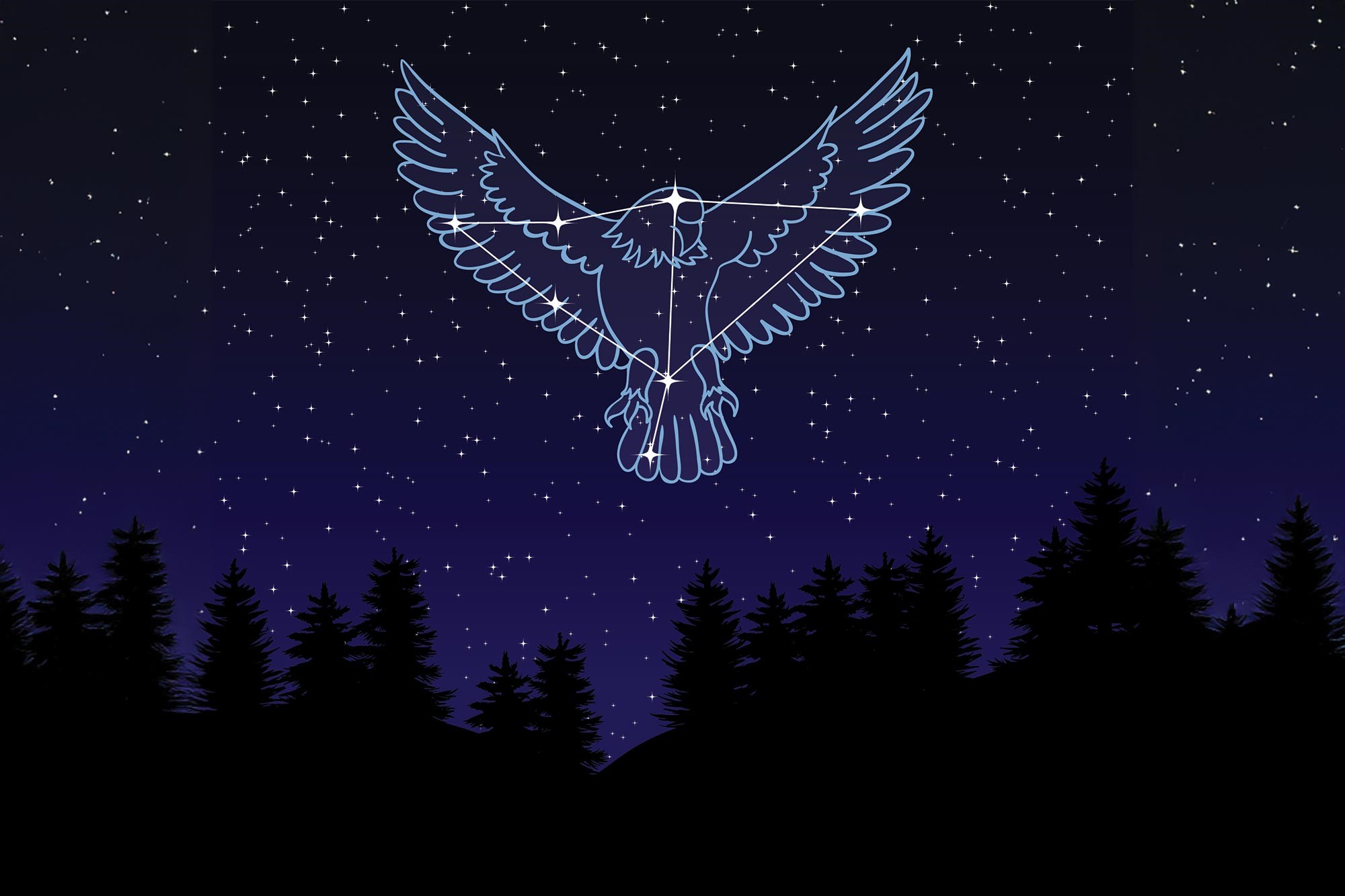
Figure 1. Eagle Rises: Spot Aquila, Mars, Venus & Jupiter This July
Stargazing Highlights
Planet Visibility Throughout the Month
Venus shines brightly in the eastern sky before sunrise, visible for a couple of hours each morning. It's joined by the Pleiades star cluster and the bright stars Aldebaran and Capella, creating a striking early-morning display. Figure 1 shows Eagle Rises: Spot Aquila, Mars, Venus & Jupiter This July.
Mars appears low in the western sky after sunset, glowing for about two hours before gradually fading and sinking lower each night.
Jupiter begins to emerge in the eastern sky just before sunrise around mid-July, slowly climbing higher each morning and drawing closer to Venus—setting up a beautiful pairing as August nears.
Mercury offers a brief appearance during the first week of July, visible low in the western sky 30 to 45 minutes after sunset. Catch it quickly—it disappears below the horizon soon after.
Saturn rises around midnight and steadily moves higher into the southern sky by dawn, its golden glow offering a peaceful sight in the early morning hours.
Day-by-Day Highlights
July 1–7 – Mercury at Sunset:
Mercury is bright and visible to the naked eye about 30–45 minutes after sunset during the first week of July. To catch it, you'll need a clear view of the western horizon, as it sets within an hour after the Sun.
July 21 & 22 – Moon, Venus, and Jupiter:
Look east before sunrise to enjoy a beautiful morning scene featuring the crescent Moon and brilliant Venus, along with several bright stars. With a clear view of the horizon, you may also spot Jupiter shining low in the sky.
July 28 – Moon and Mars:
After sunset, the crescent Moon will appear very close to Mars in the western sky, creating a striking celestial pairing.
All Month – Constellation Highlight: Aquila:
Aquila, the Eagle constellation, dominates the eastern sky during the first half of the night. Its brightest star, Altair, marks the southern point of the Summer Triangle—an easy-to-spot pattern in Northern Hemisphere summer skies.
Rewritten Transcript
What’s Up in July? Mars shines in the evening sky, marking 60 years since its first close-up, while Venus brightens the mornings, and the eagle constellation soars overhead.
Mercury makes a brief appearance low in the western sky about 30 to 45 minutes after sunset during the first week of July, but it sets quickly, so catch it early!
Mars is visible for the first couple of hours after dark, gradually sinking lower and dimming as Earth and Mars move farther apart. On July 28, the crescent Moon will appear close to Mars. This month also marks the 60th anniversary of NASA’s Mariner 4 flyby, which sent back the first detailed photos of Mars and revealed its thin, cold atmosphere.
Saturn rises late at night and climbs high in the southern sky by dawn.
In the morning sky, Venus shines brightly all month in the east before sunrise, accompanied by the Pleiades star cluster and the bright stars Aldebaran and Capella. Jupiter joins the morning lineup mid-month, rising just before dawn and climbing higher each day. By month’s end, early risers will see both bright planets together, heading toward a close conjunction in mid-August. On July 21 and 22, the crescent Moon will appear near Venus and Jupiter, creating a beautiful morning display.
Aquila: The Soaring Eagle
From July through August is an ideal time to observe Aquila, the eagle constellation. During these months, Aquila soars high in the sky during the first half of the night. In Greek mythology, Aquila represents the powerful eagle that served Zeus, carrying his lightning bolts and symbolizing his divine authority.
To locate Aquila, first find its brightest star, Altair, which forms one corner of the Summer Triangle—a prominent summer asterism in the Northern Hemisphere. Altair is the second brightest star in the triangle and marks its southernmost point.
While the other stars in Aquila are dimmer and harder to spot—especially in areas with light pollution—knowing the constellation’s orientation helps. Picture the eagle flying north with wings spread wide; its right wing points toward the bright star Vega [1]. Once you identify Altair and Aquila’s next brightest star, you can trace the rest of the constellation’s distinctive spread-wing shape.
The second half of July is the best time to observe Aquila, as the Moon rises later, reducing its brightness and making fainter stars easier to see.
Spotting Aquila is a rewarding challenge in the summer sky, and once familiar with its form, the mythical eagle seems to soar proudly overhead among the stars.
Here are the Moon phases for July.
Reference:
- https://scitechdaily.com/dont-miss-sky-show-mars-glows-venus-blazes-and-an-eagle-soars/
Cite this article:
Janani R (2025), Sky Spectacle Ahead: Mars Glows, Venus Shines, and an Eagle Soars, AnaTechMaz, pp.450
Recent Post
-
Scientists Uncover Strange Earth-Like Patterns in Mars Soil
Wave-like formations on Mars offer insights into the planet’s icy past, its potential to support life...
-
Webb Snaps First Direct Image of Exoplanet Shaping Cosmic Rings
This newly discovered planet marks Webb’s first direct image of an exoplanet. With nearly 6,000...
-
Astronomers Detect the Universe’s Long-Hidden Matter
Astronomers have discovered a massive filament of hot gas linking four galaxy clusters...
-
Hubble Captures Triple Suns and Hidden Planet Factory in Blue Nebula
Illuminated by scattered starlight, this vibrant blue nebula...
-
Star-Shredding Blast: NASA Unveils Brightest Black Hole Eruption Since the Big Bang
Supermassive black holes usually remain hidden, but when a star....
-
Space Emerging from Time? New Theory Challenges Einstein
A daring new theory proposes that time isn’t just a single linear flow but a three-dimensional fabric from which space....
-
Astronomers Find Hidden Earth-Like Planets Around Nearby Dwarf Stars
Research on 15 M-type stars has uncovered fresh insights into the...
-
Researchers Reveal Galactic Map Unlocking New Insights into the Extreme Universe
A groundbreaking survey from China’s Large High Altitude Air Shower...
-
Cosmic Feast: Massive Star Caught Rapidly Consuming Surrounding Gas
Astronomers have, for the first time, observed the massive gas inflow...
Lasers, Gas Bursts, and Hidden Water: How Perseverance Broke Through Mars’ Tough Rocks
NASA’s Perseverance rover recently tackled a tough Martian rock known...
-
Hidden Rings Around Young Stars Offer Earliest Clues to Planet Formation
High-resolution views of 78 young star disks in the Ophiuchus cloud have...
-
Harnessing Bolide Sonic Booms to Enhance Planetary Defense
Faint sonic booms from space help scientists track incoming debris—but an object's path is more important than it...
-
Earth’s Weather Satellites Reveal Venus’s Fiery Secrets
The future looks bright for long-term planetary monitoring across various wavelengths. Researchers at the...
-
Martian "Spiderwebs" Unveiled in Curiosity's Striking 360° Panorama
NASA’s Curiosity rover has created a stunning 360° color-balanced...
-
Sky Spectacle Ahead: Mars Glows, Venus Shines, and an Eagle Soars
July’s night sky is packed with celestial highlights: Mars glows at twilight, Mercury makes a brief evening....