

Hubble Captures Triple Suns and Hidden Planet Factory in Blue Nebula
Illuminated by scattered starlight, this vibrant blue nebula within the Taurus Molecular Cloud hosts three young stars—HP Tau, G2, and G3—alongside a hidden protostar wrapped in a planet-forming disc.
Captured by Hubble, the image showcases a dynamic stellar nursery just 480 light-years from Earth, where dust, gravity, and cosmic turbulence are actively shaping future solar systems.
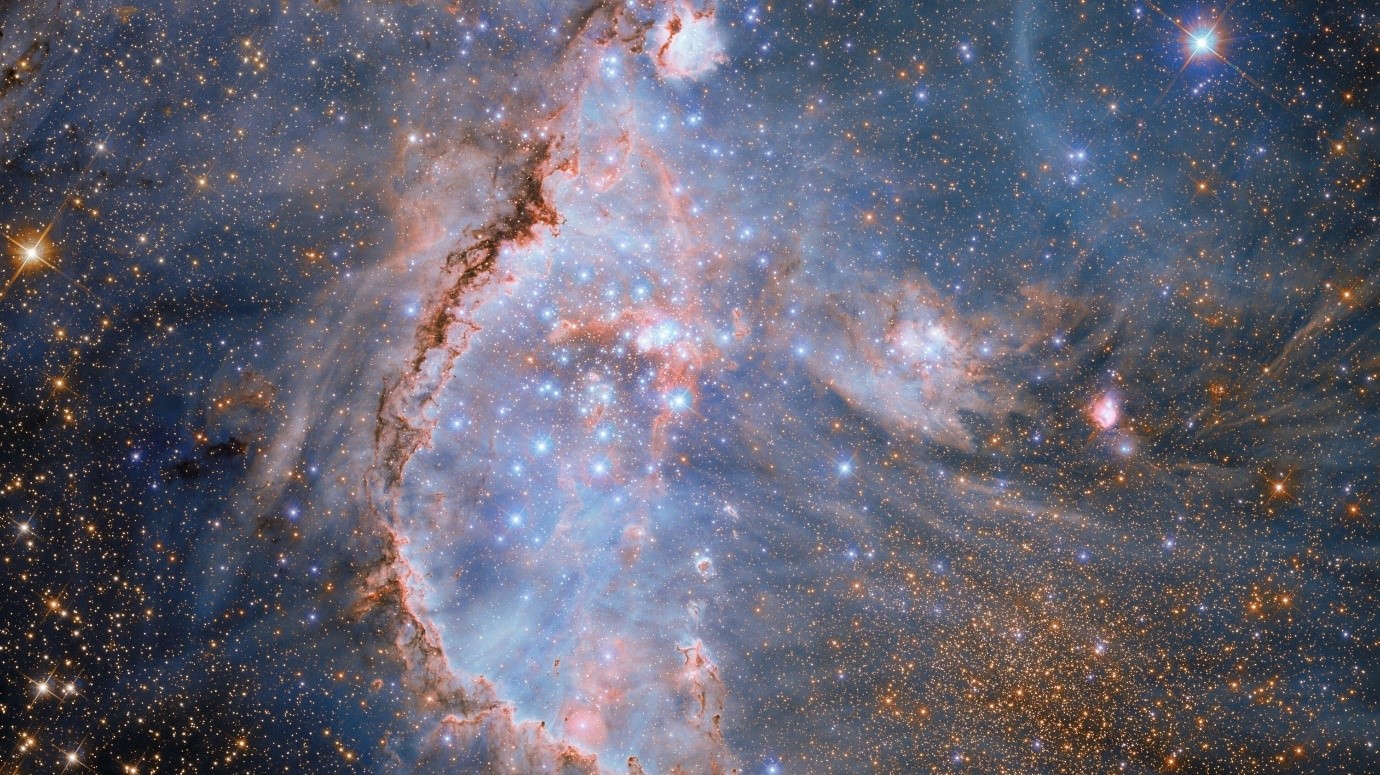
Figure 1. Taurus Blue Nebula: Triple Stars & Hidden Protostar
Triple Stars Illuminate Stellar Nursery in Taurus
This new image from the Hubble Space Telescope showcases the beautiful reflection nebula GN 04.32.8, a cosmic cloud that shines not from its own light, but by scattering light from nearby stars. This scattered starlight gives the nebula its signature soft blue glow, clearly visible in GN 04.32.8. Figure 1 shows Taurus Blue Nebula: Triple Stars & Hidden Protostar.
Located within the Taurus Molecular Cloud—about 480 light-years away in the constellation Taurus—this region is one of the closest and most ideal places in the sky to observe the birth of new stars.
The gentle blue glow of GN 04.32.8 is powered by three young stars at its core, including the variable star V1025 Tauri, which sits at the center of the image. Among them is HP Tauri, a member of the T Tauri class—an early, highly active phase in a star’s life marked by energy and instability. It’s fitting to find such stars within this vibrant stellar nursery.
Astronomers believe that HP Tau, HP Tau G2, and HP Tau G3 form a gravitationally bound triple system, adding to the region’s intrigue and making it an exciting target for further study.
Edge-On Protostar Reveals Planet Secrets
Sharp-eyed observers may spot a small, flattened orange glow just left of center beneath the nebula’s cloud—this is a newborn protostar partially obscured by a surrounding protoplanetary disc. The disc blocks some of the starlight, creating a dark line across the object. Because the disc is viewed edge-on from Earth, it provides a unique opportunity for detailed observation. Astronomers are using Hubble to study this system closely, aiming to better understand the types of exoplanets that could emerge from similar discs.
Reference:
- https://scitechdaily.com/triple-suns-a-hidden-planet-factory-hubbles-dazzling-peek-inside-a-blue-nebula/
Cite this article:
Janani R (2025), Hubble Captures Triple Suns and Hidden Planet Factory in Blue Nebula, AnaTechMaz, pp.439
Recent Post
-
Scientists Uncover Strange Earth-Like Patterns in Mars Soil
Wave-like formations on Mars offer insights into the planet’s icy past, its potential to support life...
-
Webb Snaps First Direct Image of Exoplanet Shaping Cosmic Rings
This newly discovered planet marks Webb’s first direct image of an exoplanet. With nearly 6,000...
-
Astronomers Detect the Universe’s Long-Hidden Matter
Astronomers have discovered a massive filament of hot gas linking four galaxy clusters...
-
Hubble Captures Triple Suns and Hidden Planet Factory in Blue Nebula
Illuminated by scattered starlight, this vibrant blue nebula...
-
Star-Shredding Blast: NASA Unveils Brightest Black Hole Eruption Since the Big Bang
Supermassive black holes usually remain hidden, but when a star....
-
Space Emerging from Time? New Theory Challenges Einstein
A daring new theory proposes that time isn’t just a single linear flow but a three-dimensional fabric from which space....
-
Astronomers Find Hidden Earth-Like Planets Around Nearby Dwarf Stars
Research on 15 M-type stars has uncovered fresh insights into the...
-
Researchers Reveal Galactic Map Unlocking New Insights into the Extreme Universe
A groundbreaking survey from China’s Large High Altitude Air Shower...
-
Cosmic Feast: Massive Star Caught Rapidly Consuming Surrounding Gas
Astronomers have, for the first time, observed the massive gas inflow...
Lasers, Gas Bursts, and Hidden Water: How Perseverance Broke Through Mars’ Tough Rocks
NASA’s Perseverance rover recently tackled a tough Martian rock known...
-
Hidden Rings Around Young Stars Offer Earliest Clues to Planet Formation
High-resolution views of 78 young star disks in the Ophiuchus cloud have...
-
Harnessing Bolide Sonic Booms to Enhance Planetary Defense
Faint sonic booms from space help scientists track incoming debris—but an object's path is more important than it...
-
Earth’s Weather Satellites Reveal Venus’s Fiery Secrets
The future looks bright for long-term planetary monitoring across various wavelengths. Researchers at the...
-
Martian "Spiderwebs" Unveiled in Curiosity's Striking 360° Panorama
NASA’s Curiosity rover has created a stunning 360° color-balanced...
-
Sky Spectacle Ahead: Mars Glows, Venus Shines, and an Eagle Soars
July’s night sky is packed with celestial highlights: Mars glows at twilight, Mercury makes a brief evening....