

Earth’s Weather Satellites Reveal Venus’s Fiery Secrets
The future looks bright for long-term planetary monitoring across various wavelengths.
Researchers at the University of Tokyo have successfully used infrared data from Japan’s Himawari-8 and Himawari-9 weather satellites to track temperature changes in Venus’ cloud tops over time. By analyzing satellite images collected between 2015 and 2025, the team estimated brightness temperatures on timescales ranging from days to years.
Their study uncovered previously unseen temperature wave patterns on Venus and demonstrated how meteorological satellites can provide valuable, continuous observations of the planet’s atmosphere. These data complement information gathered from dedicated planetary missions and ground-based telescopes.
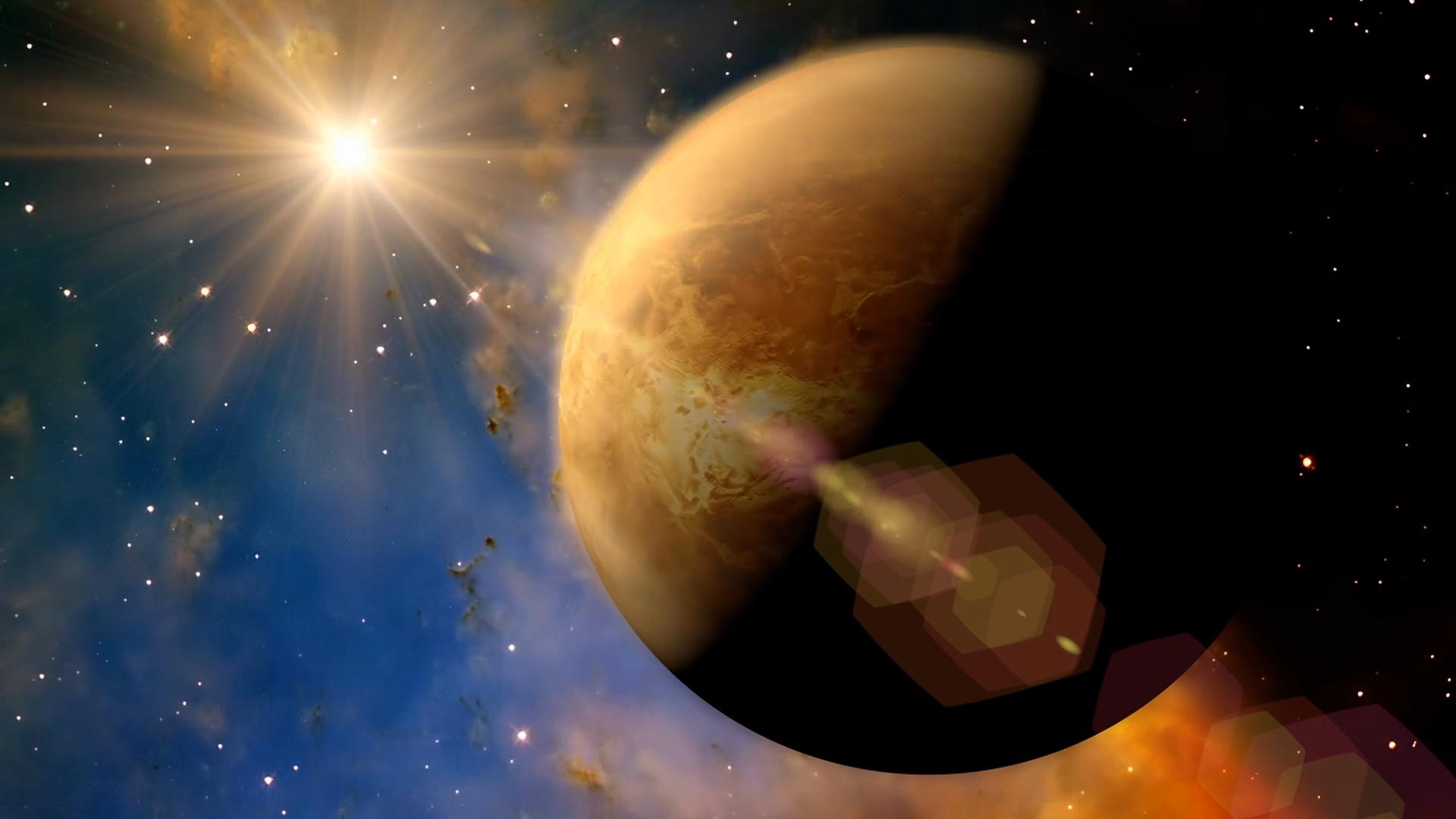
Figure 1. Earth’s Satellites Reveal Hidden Temperature Patterns in Venus’ Clouds
Originally launched in 2014 and 2016 to monitor Earth’s atmosphere, the Himawari-8 and -9 satellites are equipped with Advanced Himawari Imagers (AHIs). Since Venus occasionally falls within the edges of these instruments’ views, the research team, led by visiting scientist Gaku Nishiyama, saw a unique opportunity to repurpose the AHIs for planetary studies. Figure 1 shows Earth’s Satellites Reveal Hidden Temperature Patterns in Venus’ Clouds.
Monitoring changes in Venus’ cloud-top temperatures over time is crucial for understanding its atmospheric dynamics, such as thermal tides and large-scale wave patterns. However, collecting long-term data on these processes is challenging.
As Nishiyama explained, “Venus’ atmosphere shows year-long variations in reflectance and wind speed, but no planetary mission has been able to provide continuous observations beyond 10 years due to limited mission lifespans.” He also noted that while ground-based observations can aid long-term monitoring, they are often limited by Earth’s atmosphere and daylight conditions.
Meteorological Satellites Show Promise for Long-Term Planetary Monitoring
Meteorological satellites present a promising option for continuous planetary observation, thanks to their long operational lifespans—Himawari-8 and -9 are expected to remain active through 2029. These satellites are equipped with Advanced Himawari Imagers (AHIs), which provide multiband infrared data essential for measuring temperatures across different atmospheric layers. The AHIs also deliver frequent, low-noise observations—capabilities that many dedicated planetary missions still lack.
To assess their potential for Venus research, the team analyzed atmospheric changes on Venus over time and compared the results with data from earlier missions.
“This approach could offer valuable insights for Venus science,” said Nishiyama, “especially since there may not be another spacecraft orbiting Venus until new missions launch around 2030.”
As an initial step, the researchers compiled a dataset by extracting all Venus-related images from the AHI archives, identifying 437 usable observations. By correcting for background noise and adjusting for Venus’ apparent size in each image, they successfully tracked changes in cloud-top temperatures during times when Venus, Earth, and the satellite were optimally aligned for observation.
Detected Wave Patterns and Atmospheric Variations
The team analyzed temporal changes in brightness temperatures across multiple infrared bands on both yearly and daily timescales to study variations in thermal tides and planetary-scale waves. Their findings confirmed fluctuations in the amplitude of thermal tides and revealed that planetary wave amplitudes tend to decrease with altitude over time.
Although the limited temporal resolution of the AHI data made it difficult to draw firm conclusions about the underlying physics, the variations in thermal tide amplitude may be connected to decadal changes in Venus’ atmospheric structure.
Beyond demonstrating the utility of Himawari data for planetary observations, the researchers also used it to uncover calibration inconsistencies in data from previous planetary missions.
Gaku Nishiyama sees broader applications for this method: “Our new approach paves the way for long-term, multiband monitoring of other solar system bodies, like the Moon and Mercury [1]. Their infrared spectra reveal clues about surface composition and physical properties, shedding light on their evolutionary histories.”
The ability to observe under diverse geometric conditions—unlimited by ground-based constraints—holds great promise. “We hope this technique will let us evaluate surface and atmospheric characteristics across planets and moons, deepening our understanding of planetary evolution.”
Reference:
- https://scitechdaily.com/eyes-on-venus-earths-weather-satellites-unlock-secrets-of-the-hottest-planet/
Cite this article:
Janani R (2025), Earth’s Weather Satellites Reveal Venus’s Fiery Secrets, AnaTechMaz, pp.448
Recent Post
-
Scientists Uncover Strange Earth-Like Patterns in Mars Soil
Wave-like formations on Mars offer insights into the planet’s icy past, its potential to support life...
-
Webb Snaps First Direct Image of Exoplanet Shaping Cosmic Rings
This newly discovered planet marks Webb’s first direct image of an exoplanet. With nearly 6,000...
-
Astronomers Detect the Universe’s Long-Hidden Matter
Astronomers have discovered a massive filament of hot gas linking four galaxy clusters...
-
Hubble Captures Triple Suns and Hidden Planet Factory in Blue Nebula
Illuminated by scattered starlight, this vibrant blue nebula...
-
Star-Shredding Blast: NASA Unveils Brightest Black Hole Eruption Since the Big Bang
Supermassive black holes usually remain hidden, but when a star....
-

Space Emerging from Time? New Theory Challenges Einstein
A daring new theory proposes that time isn’t just a single linear flow but a three-dimensional fabric from which space....
-

Astronomers Find Hidden Earth-Like Planets Around Nearby Dwarf Stars
Research on 15 M-type stars has uncovered fresh insights into the...
-

Researchers Reveal Galactic Map Unlocking New Insights into the Extreme Universe
A groundbreaking survey from China’s Large High Altitude Air Shower...
-
Cosmic Feast: Massive Star Caught Rapidly Consuming Surrounding Gas
Astronomers have, for the first time, observed the massive gas inflow...
Lasers, Gas Bursts, and Hidden Water: How Perseverance Broke Through Mars’ Tough Rocks
NASA’s Perseverance rover recently tackled a tough Martian rock known...
-
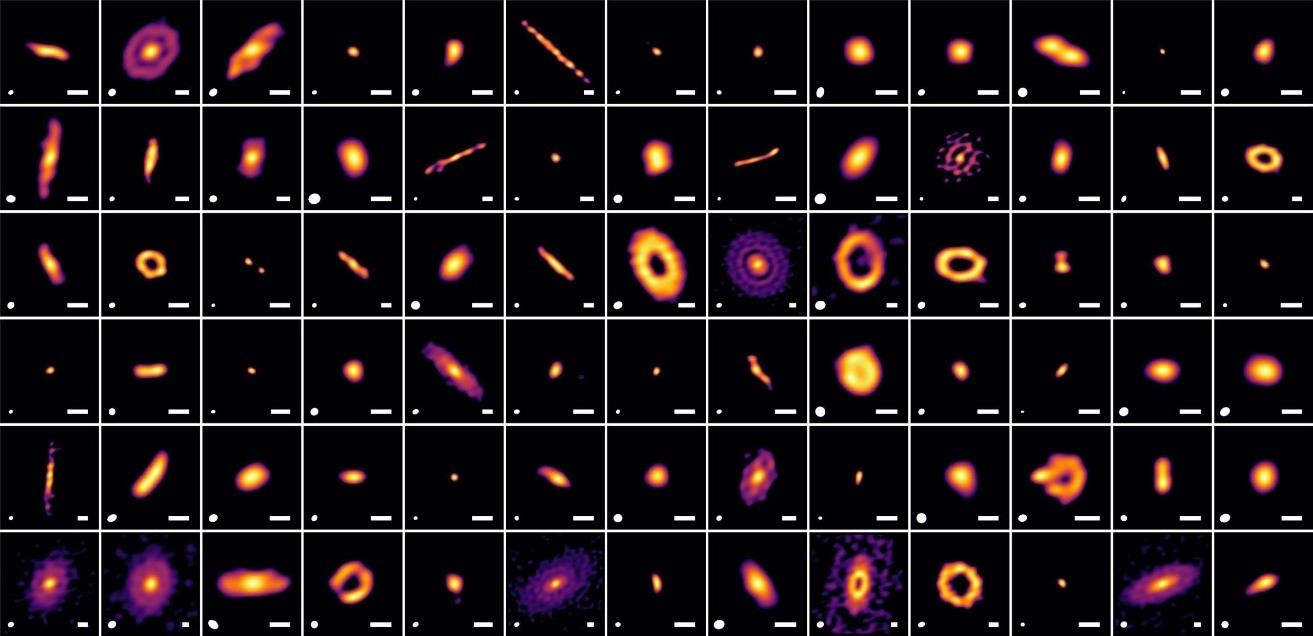
Hidden Rings Around Young Stars Offer Earliest Clues to Planet Formation
High-resolution views of 78 young star disks in the Ophiuchus cloud have...
-
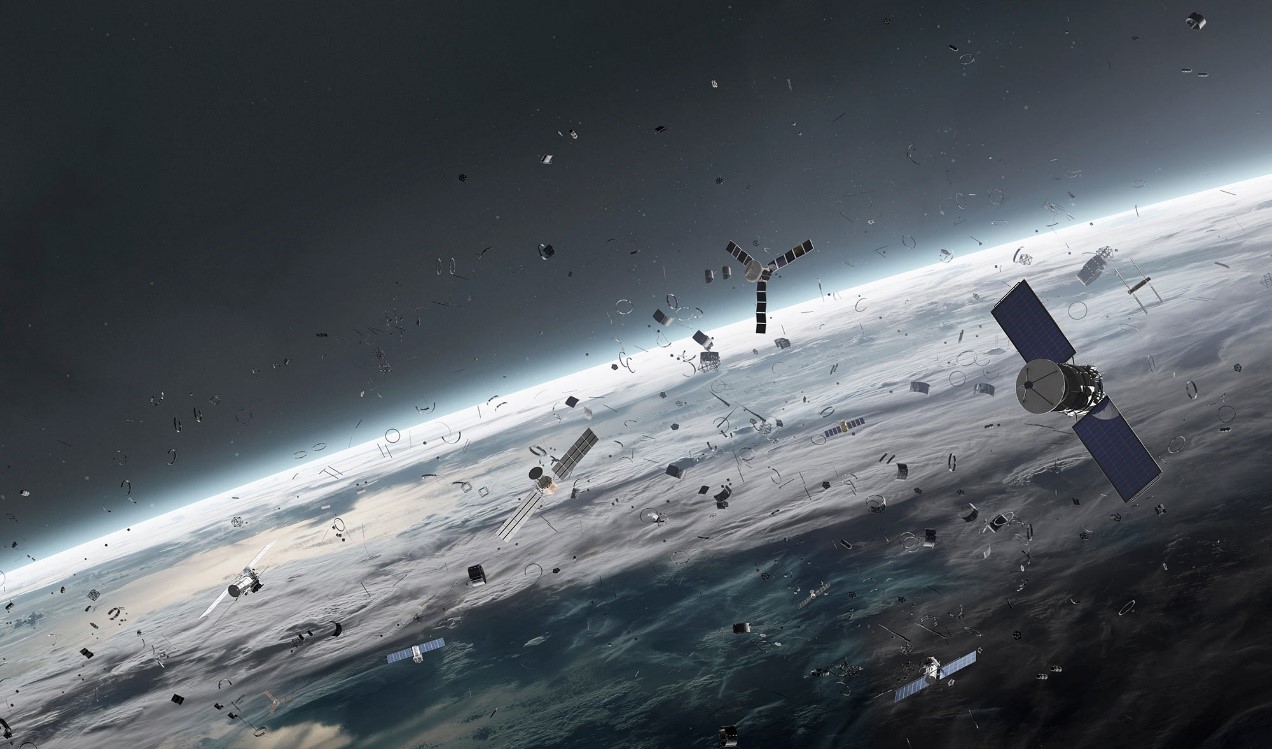
Harnessing Bolide Sonic Booms to Enhance Planetary Defense
Faint sonic booms from space help scientists track incoming debris—but an object's path is more important than it...
-
Earth’s Weather Satellites Reveal Venus’s Fiery Secrets
The future looks bright for long-term planetary monitoring across various wavelengths. Researchers at the...
-
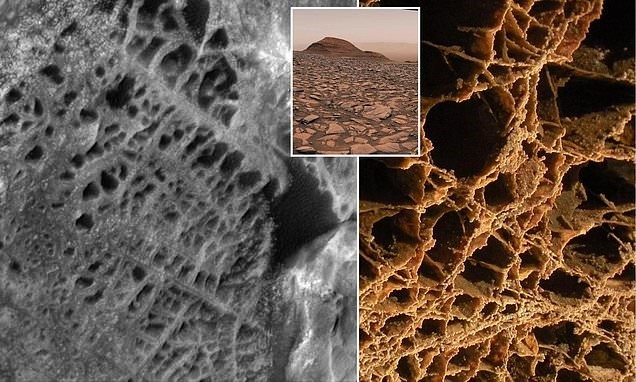
Martian "Spiderwebs" Unveiled in Curiosity's Striking 360° Panorama
NASA’s Curiosity rover has created a stunning 360° color-balanced...
-

Sky Spectacle Ahead: Mars Glows, Venus Shines, and an Eagle Soars
July’s night sky is packed with celestial highlights: Mars glows at twilight, Mercury makes a brief evening....