

Space Emerging from Time? New Theory Challenges Einstein
A daring new theory proposes that time isn’t just a single linear flow but a three-dimensional fabric from which space itself arises.
Physicist Gunther Kletetschka incorporates these extra time dimensions into his equations, successfully reproducing known particle masses, preserving causality, and offering a potential path to unify quantum mechanics and gravity. If confirmed by experiments, this 3D time concept could transform our fundamental understanding of reality.
Time as a 3D Framework
Imagine a universe where time is the fundamental stage for all of reality. A new theory from Gunther Kletetschka at the University of Alaska Fairbanks proposes that every physical event takes place within time, which itself has three independent dimensions. Space, according to this view, emerges as a secondary effect.
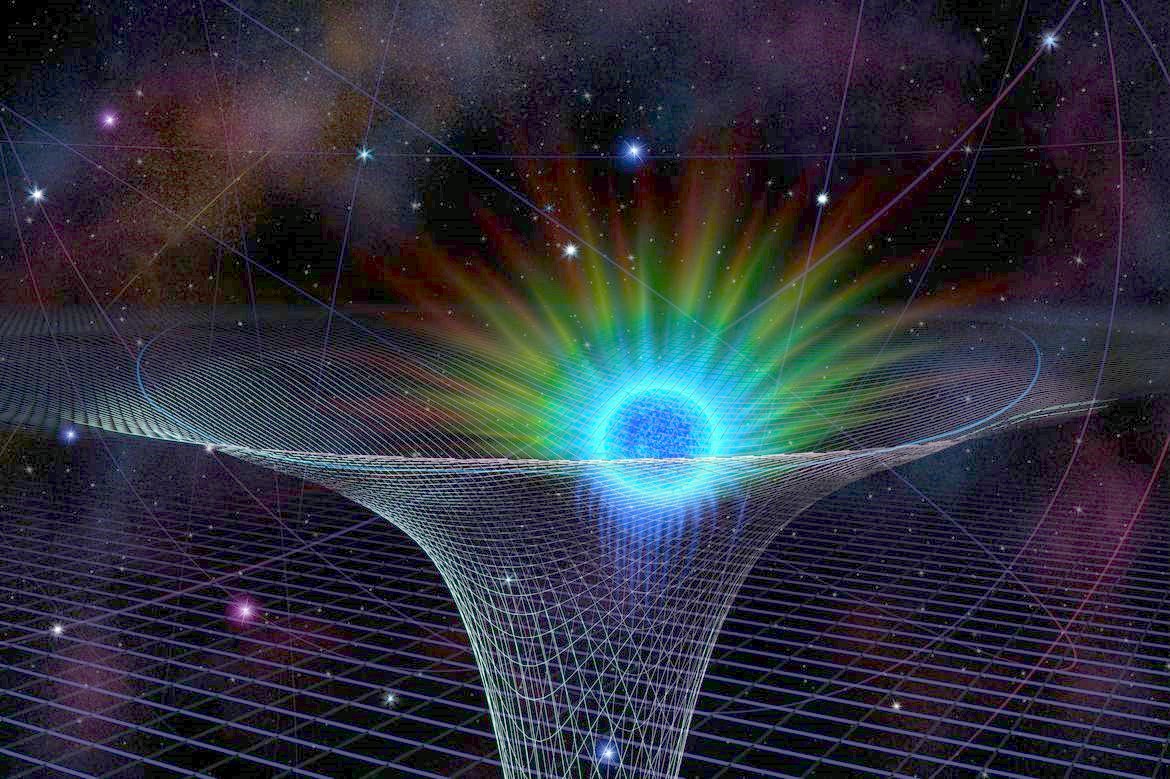
Figure 1. 3D Time May Hold Key to a Unified Theory of Everything
“These three dimensions of time form the primary fabric of everything, much like the canvas of a painting,” explained associate research professor Gunther Kletetschka of the UAF Geophysical Institute. “Space, with its three dimensions, still exists but acts more like the paint on the canvas rather than the canvas itself.” Figure 1 3D Time May Hold Key to a Unified Theory of Everything.
Rethinking Traditional Spacetime
This concept sharply contrasts with the century-old view of spacetime, which unites one time dimension with three spatial ones into a single framework. Kletetschka’s mathematics expands this by adding three time dimensions to the familiar spatial ones, creating a six-dimensional model. He believes this approach could bring scientists closer to a unified theory of the universe.
Understanding multiple time dimensions is challenging, and various theorists have explored similar ideas. What sets Kletetschka’s work apart is its ability to accurately reproduce known particle masses and other measurable properties, transforming a fascinating concept into a testable scientific hypothesis.
A Testable Model of 3D Time
Kletetschka’s recent work, published in Reports in Advances of Physical Science, builds on a longstanding line of theoretical physics research outside the mainstream. His three-dimensional time framework improves upon earlier models by successfully reproducing known particle masses and other physical properties that can be experimentally tested.
“Previous 3D time theories were mostly mathematical ideas without direct experimental links,” he explained. “My research advances the concept into a physically testable theory with multiple ways to verify it independently.”
This theory could help predict unknown particle properties and shed light on the origin of mass, potentially addressing one of physics’ most profound mysteries.
How Time Works in Three Dimensions
Three-dimensional time is a theory that treats time as having multiple independent directions—much like space, which has three axes (X, Y, and Z). In this model, time isn’t a single straight line but a multi-axial framework.
To visualize it, imagine walking forward along a path—this represents the flow of time as we experience it. Now imagine another path crossing it sideways. If you could step onto this second path without moving forward or backward in normal time, you might enter a slightly altered version of the same moment—perhaps a different variation of the same day. Traveling along this new time axis could allow you to explore alternative outcomes without breaking the linear flow of traditional time.
Resolving Causality and Energy Dynamics
The second dimension of time represents the existence of different possible outcomes, while the third dimension provides the means to transition between them. Kletetschka explains that his theory resolves issues found in earlier 3D time models rooted in traditional physics.
Previous theories often struggled with ambiguous cause-and-effect relationships across multiple time dimensions. However, Kletetschka’s framework maintains that causes still precede effects, though within a more complex mathematical structure.
Some researchers, including theoretical physicist Itzhak Bars from the University of Southern California, suggest that these second and third time dimensions may become noticeable—or unfold—under extreme energy conditions, such as during the early universe or in high-energy particle collisions.
Advancing Toward a Unified Theory of Everything
Many theoretical physicists, including Itzhak Bars, believe that exploring a three-dimensional time framework could help tackle some of the most profound unanswered questions in physics.
Kletetschka’s version of the theory may even contribute to solving one of the biggest challenges in the field: unifying quantum mechanics, which governs the tiniest particles, with gravity, which shapes the universe on the largest scales.
Achieving a quantum theory of gravity could pave the way toward a “theory of everything”—a single, all-encompassing framework that unites the four fundamental forces of nature: electromagnetism, the strong and weak nuclear forces, and gravity.
Linking the Mysteries of Mass and Gravity
The Standard Model of particle physics successfully unifies three of the four fundamental forces, but gravity—described by Einstein’s general relativity—remains incompatible with it [1]. Physicists have long searched for a “theory of everything” that could bring them together, with the origin of particle mass being a key piece of the puzzle.
Kletetschka believes his three-dimensional time theory could offer a breakthrough. His model not only replicates the known masses of particles like electrons, muons, and quarks, but also provides an explanation for why these particles have those specific masses.
“The path to unification may require a fundamental rethinking of physical reality,” he said. “Viewing time as three-dimensional offers a single, coherent mathematical framework that can naturally resolve several of physics’ deepest mysteries.”
Reference:
- https://scitechdaily.com/space-emerges-from-time-groundbreaking-theory-upends-einstein/
Cite this article:
Janani R (2025), Space Emerging from Time? New Theory Challenges Einstein, AnaTechMaz, pp.441
Recent Post
-
Scientists Uncover Strange Earth-Like Patterns in Mars Soil
Wave-like formations on Mars offer insights into the planet’s icy past, its potential to support life...
-
Webb Snaps First Direct Image of Exoplanet Shaping Cosmic Rings
This newly discovered planet marks Webb’s first direct image of an exoplanet. With nearly 6,000...
-
Astronomers Detect the Universe’s Long-Hidden Matter
Astronomers have discovered a massive filament of hot gas linking four galaxy clusters...
-
Hubble Captures Triple Suns and Hidden Planet Factory in Blue Nebula
Illuminated by scattered starlight, this vibrant blue nebula...
-
Star-Shredding Blast: NASA Unveils Brightest Black Hole Eruption Since the Big Bang
Supermassive black holes usually remain hidden, but when a star....
-
Space Emerging from Time? New Theory Challenges Einstein
A daring new theory proposes that time isn’t just a single linear flow but a three-dimensional fabric from which space....
-
Astronomers Find Hidden Earth-Like Planets Around Nearby Dwarf Stars
Research on 15 M-type stars has uncovered fresh insights into the...
-
Researchers Reveal Galactic Map Unlocking New Insights into the Extreme Universe
A groundbreaking survey from China’s Large High Altitude Air Shower...
-
Cosmic Feast: Massive Star Caught Rapidly Consuming Surrounding Gas
Astronomers have, for the first time, observed the massive gas inflow...
Lasers, Gas Bursts, and Hidden Water: How Perseverance Broke Through Mars’ Tough Rocks
NASA’s Perseverance rover recently tackled a tough Martian rock known...
-
Hidden Rings Around Young Stars Offer Earliest Clues to Planet Formation
High-resolution views of 78 young star disks in the Ophiuchus cloud have...
-
Harnessing Bolide Sonic Booms to Enhance Planetary Defense
Faint sonic booms from space help scientists track incoming debris—but an object's path is more important than it...
-
Earth’s Weather Satellites Reveal Venus’s Fiery Secrets
The future looks bright for long-term planetary monitoring across various wavelengths. Researchers at the...
-
Martian "Spiderwebs" Unveiled in Curiosity's Striking 360° Panorama
NASA’s Curiosity rover has created a stunning 360° color-balanced...
-

Sky Spectacle Ahead: Mars Glows, Venus Shines, and an Eagle Soars
July’s night sky is packed with celestial highlights: Mars glows at twilight, Mercury makes a brief evening....