

Astronomers Find Hidden Earth-Like Planets Around Nearby Dwarf Stars
Research on 15 M-type stars has uncovered fresh insights into the possible existence of exoplanets. Led by astronomers at Heidelberg University, the study suggests that Earth-like planets may be significantly more common than previously believed, particularly around small, low-mass stars.
Using data from the CARMENES project, an international research team has discovered four new exoplanets and accurately measured their properties. The findings show that Earth-sized, rocky planets are commonly found orbiting stars with less than one-sixth the mass of the Sun.
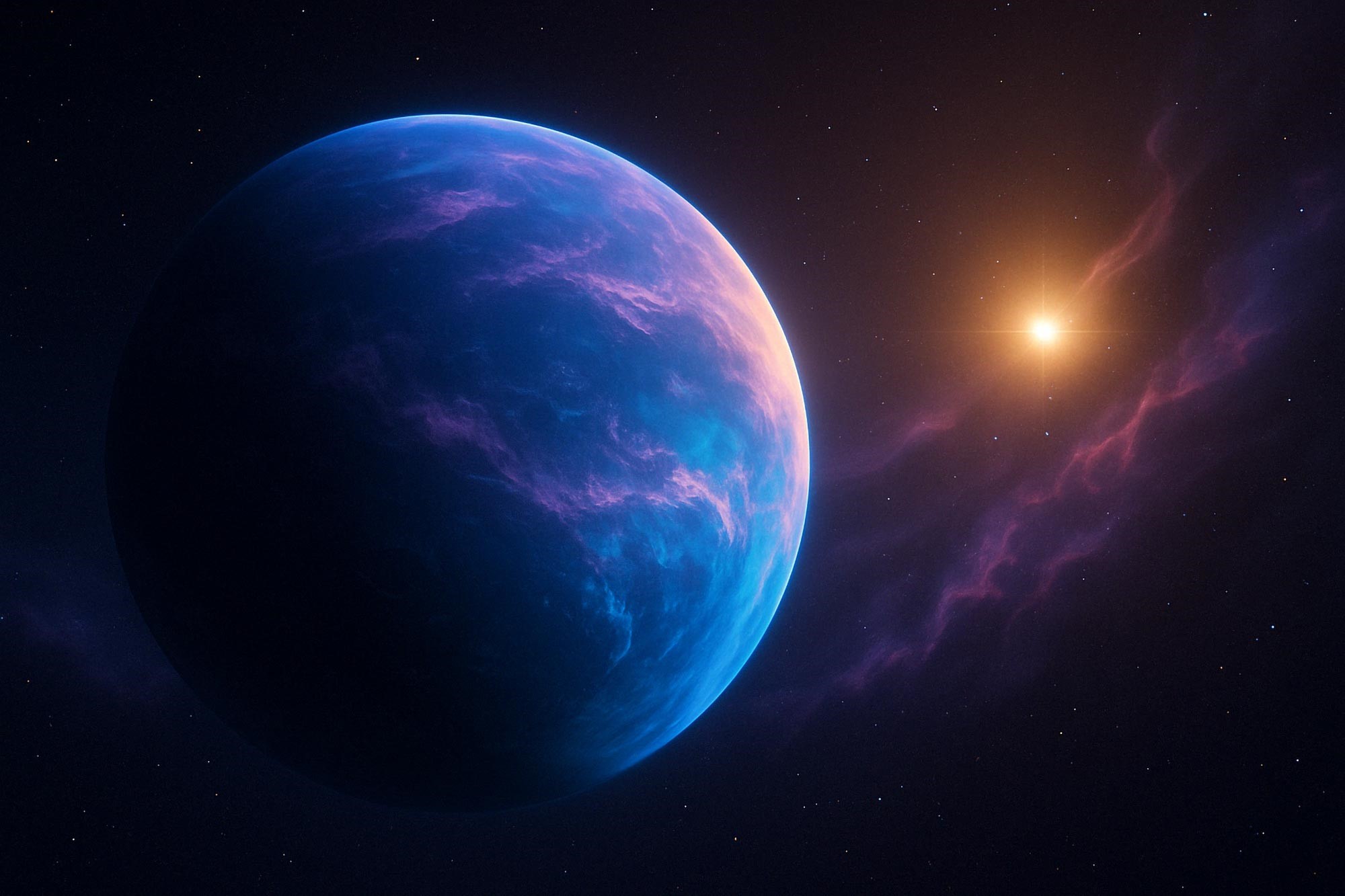
Figure 1. CARMENES Uncovers Four Potentially Habitable Earth-Like Worlds Around Low-Mass Stars
This discovery boosts the search for life beyond our solar system, as M-dwarfs—the most abundant stars in the galaxy—appear to host many potentially habitable planets. These stars provide favorable conditions for detecting such worlds nearby. Figure 1 shows CARMENES Uncovers Four Potentially Habitable Earth-Like Worlds Around Low-Mass Stars.
At the heart of this breakthrough is the CARMENES spectrograph, based at the Calar Alto Observatory in southern Spain and developed at Heidelberg University’s Königstuhl Observatory. This precision instrument detects tiny stellar wobbles caused by the gravitational pull of orbiting planets, revealing planets that would otherwise remain undetected.
Data Analysis Reveals Four New Worlds
In the current study, researchers selected 15 stars from a catalog of 2,200 M-dwarfs in the CARMENES program and analyzed their radial velocity data. By capturing high-resolution spectra and examining the spectral lines, they were able to measure the stars' motion with great precision.
This analysis led to the discovery of four new exoplanets. The largest has a mass 14 times that of Earth and completes an orbit around its star in about 3.3 years. The remaining three planets are smaller, ranging from 1.03 to 1.52 Earth masses, with orbital periods between 1.43 and 5.45 days.
Statistical results indicate that stars with less than 0.16 times the Sun’s mass typically host around two planets smaller than three Earth masses. “It’s quite remarkable how frequently small planets form around very low-mass stars,” notes Dr. Adrian Kaminski of Heidelberg University’s Königstuhl Observatory. In contrast, larger planets are less common. This trend suggests that low-mass stars are more likely to produce smaller planets in tight orbits.
Advancing Toward the Discovery of Habitable Worlds
Among the roughly 5,000 exoplanets discovered so far, none has matched Earth perfectly in mass, size, surface temperature, and host star type. However, the newly found planets satisfy at least the first three criteria, according to Prof. Dr. Andreas Quirrenbach, director of the Königstuhl Observatory.
“Small, rocky planets located in the habitable zone—the region around a star where liquid water can exist—are prime candidates for habitability [1]. Since M-dwarfs are abundant and emit steady energy over billions of years, they may offer stable conditions conducive to the emergence of life,” explains the astronomer and exoplanet expert. These insights point to the most promising targets in the ongoing search for habitable worlds.
Reference:
- https://scitechdaily.com/astronomers-discover-hidden-earth-like-worlds-orbiting-nearby-dwarf-stars/
Cite this article:
Janani R (2025), Astronomers Find Hidden Earth-Like Planets Around Nearby Dwarf Stars, AnaTechMaz, pp.442
Recent Post
-
Scientists Uncover Strange Earth-Like Patterns in Mars Soil
Wave-like formations on Mars offer insights into the planet’s icy past, its potential to support life...
-
Webb Snaps First Direct Image of Exoplanet Shaping Cosmic Rings
This newly discovered planet marks Webb’s first direct image of an exoplanet. With nearly 6,000...
-
Astronomers Detect the Universe’s Long-Hidden Matter
Astronomers have discovered a massive filament of hot gas linking four galaxy clusters...
-
Hubble Captures Triple Suns and Hidden Planet Factory in Blue Nebula
Illuminated by scattered starlight, this vibrant blue nebula...
-
Star-Shredding Blast: NASA Unveils Brightest Black Hole Eruption Since the Big Bang
Supermassive black holes usually remain hidden, but when a star....
-
Space Emerging from Time? New Theory Challenges Einstein
A daring new theory proposes that time isn’t just a single linear flow but a three-dimensional fabric from which space....
-
Astronomers Find Hidden Earth-Like Planets Around Nearby Dwarf Stars
Research on 15 M-type stars has uncovered fresh insights into the...
-
Researchers Reveal Galactic Map Unlocking New Insights into the Extreme Universe
A groundbreaking survey from China’s Large High Altitude Air Shower...
-
Cosmic Feast: Massive Star Caught Rapidly Consuming Surrounding Gas
Astronomers have, for the first time, observed the massive gas inflow...
Lasers, Gas Bursts, and Hidden Water: How Perseverance Broke Through Mars’ Tough Rocks
NASA’s Perseverance rover recently tackled a tough Martian rock known...
-
Hidden Rings Around Young Stars Offer Earliest Clues to Planet Formation
High-resolution views of 78 young star disks in the Ophiuchus cloud have...
-
Harnessing Bolide Sonic Booms to Enhance Planetary Defense
Faint sonic booms from space help scientists track incoming debris—but an object's path is more important than it...
-
Earth’s Weather Satellites Reveal Venus’s Fiery Secrets
The future looks bright for long-term planetary monitoring across various wavelengths. Researchers at the...
-
Martian "Spiderwebs" Unveiled in Curiosity's Striking 360° Panorama
NASA’s Curiosity rover has created a stunning 360° color-balanced...
-
Sky Spectacle Ahead: Mars Glows, Venus Shines, and an Eagle Soars
July’s night sky is packed with celestial highlights: Mars glows at twilight, Mercury makes a brief evening....