

Lasers, Gas Bursts, and Hidden Water: How Perseverance Broke Through Mars’ Tough Rocks
NASA’s Perseverance rover recently tackled a tough Martian rock known as “Kenmore.” Using advanced tools like a nitrogen gas blaster and a laser-equipped camera, the rover discovered evidence of water-rich clay, sparkling feldspar, and a rare mineral never before detected on Mars. Though the rock was unusually resistant—vibrating and cracking under pressure—Perseverance successfully overcame the challenge, uncovering important clues about the Red Planet’s history.
Drilling Beneath Mars’ Dust Layers
NASA’s Perseverance rover isn’t just drilling into Mars—it’s also grinding into rocks to uncover what lies beneath the dust. On June 3, the rover used its abrasion tool to clear a section of a rock nicknamed “Kenmore,” exposing a fresh surface for detailed study. This marked the 30th rock target to undergo such analysis. After creating a two-inch-wide abrasion patch, Perseverance deployed its scientific instruments to examine the newly revealed interior.
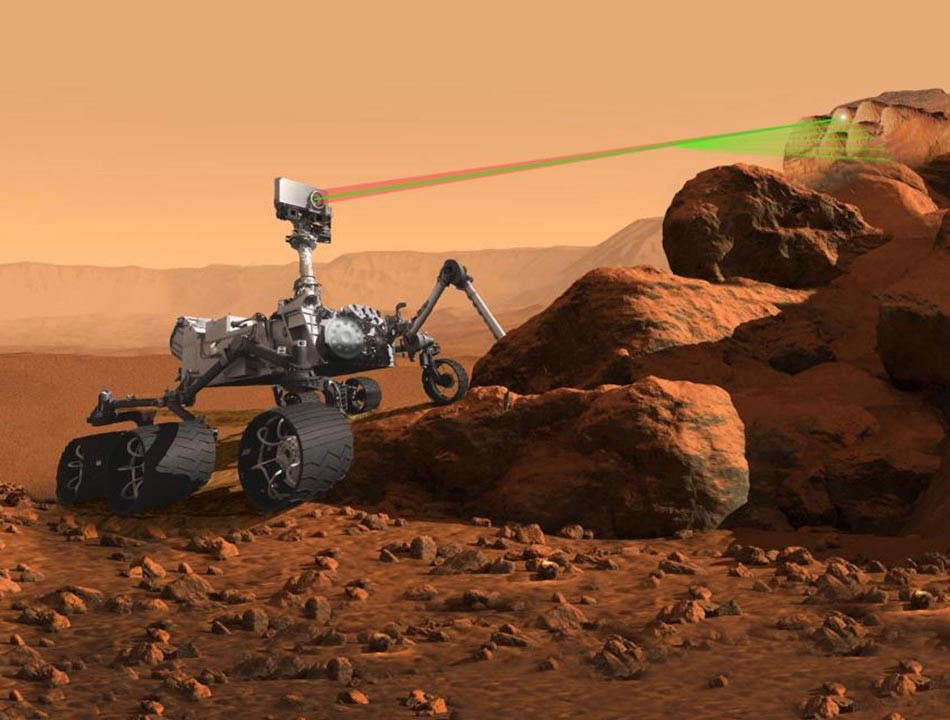
Figure 1. Perseverance Uses Laser to Analyze Martian Rock
“Kenmore was an unusual and uncooperative rock,” said Ken Farley, Perseverance’s deputy project scientist from Caltech. “It looked like a good candidate for abrasion and possibly even sampling, but during the process, it vibrated and broke apart.” Despite the challenge, the team was able to grind just deep enough to proceed with analysis [1]. By stripping away the rock’s weathered outer layer, scientists gain a clearer view of its true composition and history. This smooth, exposed surface also allows the rover’s instruments to take more precise measurements, helping uncover Mars’ geological past. Figure 1 shows Perseverance Uses Laser to Analyze Martian Rock.
Before drilling into the rocky outcrop nicknamed “Kenmore,” Perseverance first abraded the surface to assess whether it was suitable for sampling. The video, composed of eight images captured about one minute apart, shows the process in action.
High-Powered Abrasion Tools
NASA’s earlier Mars rovers, Spirit and Opportunity, were equipped with a diamond-dust-tipped Rock Abrasion Tool (RAT) that spun at 3,000 RPM while being pressed into rock by the robotic arm. Debris from the grinding was swept away by twin wire brushes. Curiosity uses a Dust Removal Tool with wire bristles to clear rock surfaces before drilling. In contrast, Perseverance features a specialized abrading bit and a more advanced cleaning system: the gaseous Dust Removal Tool (gDRT), which outperforms traditional wire brushes.
“We use Perseverance’s gDRT to blast a 12-psi (about 83 kPa) burst of nitrogen to clear dust and debris from freshly abraded rock surfaces,” explained Kyle Kaplan, a robotic engineer at NASA’s Jet Propulsion Laboratory. Each abrasion uses five puffs—one to vent the tanks and four to clean the surface. Since landing in Jezero Crater over four years ago, the system has fired 169 puffs, with around 800 still remaining. Unlike brushes, gDRT avoids introducing Earth-based contaminants to Martian surfaces.
With over 30 abrasion targets completed, the Perseverance team has refined its in-situ science workflow. After the gDRT clears the surface, the WATSON camera, mounted on the rover’s robotic arm, captures detailed close-up images. Next, SuperCam, located on the rover’s mast, fires thousands of laser pulses and uses a spectrometer to analyze the resulting material plumes. It also uses a second spectrometer to study visible and infrared light reflected from the exposed rock, helping determine its composition.
This video shows a test of Perseverance’s Gaseous Dust Removal Tool (gDRT) conducted in a vacuum chamber at NASA’s Jet Propulsion Laboratory in August 2020. The tool releases bursts of nitrogen gas to clear dust and debris from a rock surface after it has been abraded by the rover.
Clays, Feldspar, and Unexpected Minerals
“SuperCam analyzed both the abraded rock surface and the surrounding powdered tailings,” explained Cathy Quantin-Nataf, SuperCam team member and science lead for the “Crater Rim” campaign at the University of Lyon. The tailings revealed the presence of clay minerals containing water in the form of hydroxide molecules bonded with iron and magnesium—characteristic of ancient Martian clays. Spectral data from the abraded surface confirmed elevated levels of iron and magnesium.
Later, the SHERLOC and PIXL instruments examined the Kenmore rock as well. They supported SuperCam’s findings, confirming the presence of clay and detecting feldspar, a mineral known for giving the Moon its bright appearance. Notably, PIXL also identified manganese hydroxide—a mineral never before detected during the mission.
From Kenmore to What Lies Ahead
With data collection from Kenmore complete, Perseverance continued its journey along the rim of Jezero Crater to investigate new rock targets—whether cooperative or challenging.
“One of the first lessons in Mars rover missions is that not all rocks are the same,” said Ken Farley. “The insights we’re gaining from rocks like Kenmore will guide future missions, helping them quickly assess whether a rock is suitable for driving over, sampling, extracting hydrogen and oxygen for fuel, or even using as building material for habitats.”
Rover Sets New Distance Record
On June 19 (Sol 1,540), Perseverance broke its own record for the longest autonomous drive, covering 1,348 feet (411 meters)—about 210 feet (64 meters) farther than the previous record set on April 3, 2023 (Sol 753). While mission planners outline general routes, Perseverance uses its AutoNav system to shorten travel time between scientific targets.
“Perseverance drove the equivalent of 4½ football fields and could’ve gone farther, but that’s where the science team wanted to stop,” said Camden Miller, a rover driver at JPL. “We hit the target perfectly. Every day on Mars teaches us more, and the lessons we learn now will benefit future missions.”
Reference:
- https://scitechdaily.com/lasers-gas-blasts-and-hidden-water-how-perseverance-cracked-mars-stubborn-rock/
- https://opentools.ai/news/mars-stubborn-rock-mystery-cracked-perseverances-fiery-tactics
Cite this article:
Janani R (2025), Lasers, Gas Bursts, and Hidden Water: How Perseverance Broke Through Mars’ Tough Rocks, AnaTechMaz, pp.445
Recent Post
-
Scientists Uncover Strange Earth-Like Patterns in Mars Soil
Wave-like formations on Mars offer insights into the planet’s icy past, its potential to support life...
-
Webb Snaps First Direct Image of Exoplanet Shaping Cosmic Rings
This newly discovered planet marks Webb’s first direct image of an exoplanet. With nearly 6,000...
-

Astronomers Detect the Universe’s Long-Hidden Matter
Astronomers have discovered a massive filament of hot gas linking four galaxy clusters...
-

Hubble Captures Triple Suns and Hidden Planet Factory in Blue Nebula
Illuminated by scattered starlight, this vibrant blue nebula...
-
Star-Shredding Blast: NASA Unveils Brightest Black Hole Eruption Since the Big Bang
Supermassive black holes usually remain hidden, but when a star....
-

Space Emerging from Time? New Theory Challenges Einstein
A daring new theory proposes that time isn’t just a single linear flow but a three-dimensional fabric from which space....
-

Astronomers Find Hidden Earth-Like Planets Around Nearby Dwarf Stars
Research on 15 M-type stars has uncovered fresh insights into the...
-

Researchers Reveal Galactic Map Unlocking New Insights into the Extreme Universe
A groundbreaking survey from China’s Large High Altitude Air Shower...
-

Cosmic Feast: Massive Star Caught Rapidly Consuming Surrounding Gas
Astronomers have, for the first time, observed the massive gas inflow...
Lasers, Gas Bursts, and Hidden Water: How Perseverance Broke Through Mars’ Tough Rocks
NASA’s Perseverance rover recently tackled a tough Martian rock known...
-
Hidden Rings Around Young Stars Offer Earliest Clues to Planet Formation
High-resolution views of 78 young star disks in the Ophiuchus cloud have...
-
Harnessing Bolide Sonic Booms to Enhance Planetary Defense
Faint sonic booms from space help scientists track incoming debris—but an object's path is more important than it...
-
Earth’s Weather Satellites Reveal Venus’s Fiery Secrets
The future looks bright for long-term planetary monitoring across various wavelengths. Researchers at the...
-
Martian "Spiderwebs" Unveiled in Curiosity's Striking 360° Panorama
NASA’s Curiosity rover has created a stunning 360° color-balanced...
-

Sky Spectacle Ahead: Mars Glows, Venus Shines, and an Eagle Soars
July’s night sky is packed with celestial highlights: Mars glows at twilight, Mercury makes a brief evening....