

Solar Power from Space Could Transform Energy by 2050
A new cost-benefit analysis based on NASA’s current designs for space-based solar panels suggests they could replace up to 80% of Europe’s need for ground-based solar and wind power.
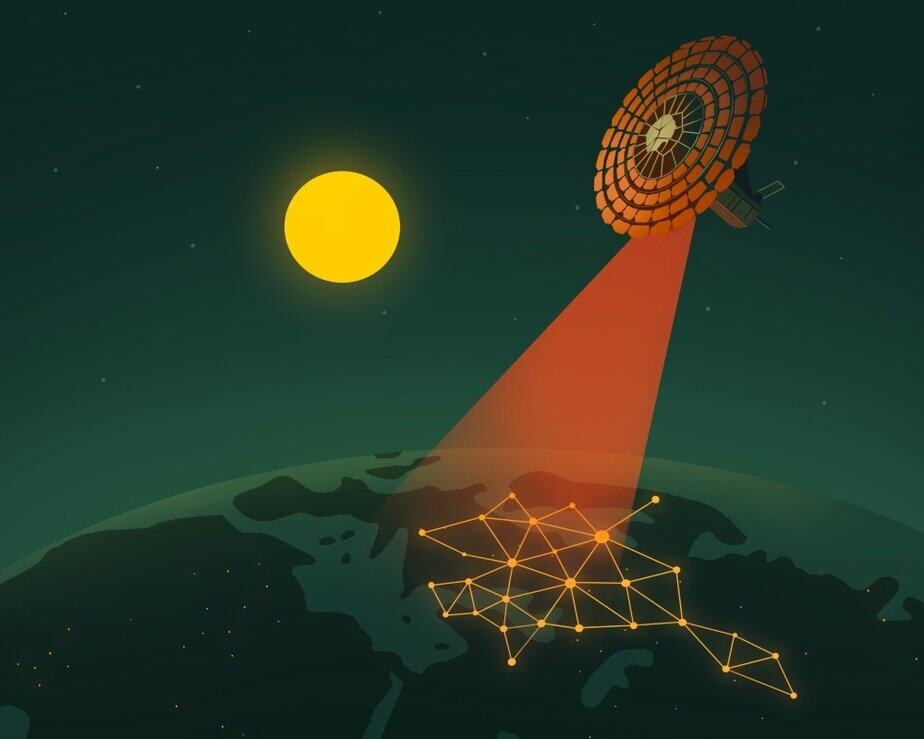
Figure 1. Space-Based Solar Power Could Revolutionize Energy by 2050.
The idea of harvesting solar energy from space was first introduced in 1968 by Czech-American aerospace engineer Peter Glaser, during the height of the space race. In his landmark paper, Glaser warned that “whether or not the human species will continue to expand could depend on our ability to develop alternative energy sources [to fossil fuels].” Figure 1 shows Space-Based Solar Power Could Revolutionize Energy by 2050.
Today, alternatives like solar and wind have become central to the push for net-zero carbon emissions in the fight against climate change. But challenges remain.
Solar power, for instance, is only available when the Sun is shining. To bridge the gap during nights or cloudy conditions, engineers are developing massive batteries capable of storing vast amounts of energy.
The first, known as a “heliostat swarm,” envisions a vast network of mirrors that reflect sunlight onto a central receiver, which then transmits the collected energy to Earth. This design could deliver power for up to 99.7% of the year—regardless of whether it is day or night, sunny or cloudy on the ground.
The second concept is the “mature planar array,” a more conventional design featuring flat solar panels oriented toward the Sun and radio wave transmitters aimed at Earth. While less efficient—able to capture solar energy about 60% of the time—it still represents a major step forward.
Either approach would dramatically outperform current ground-based solar panels, which operate at only 15–30% efficiency.
“In space, solar panels can be positioned to face the Sun almost constantly, allowing power generation to be nearly continuous compared to the stop–start cycle on Earth,” explains Wei He, senior author of the Joule paper and an engineer at King’s College London, UK. “And because they operate above Earth’s atmosphere, the panels also receive stronger solar radiation than they would on the ground.”
Research into space-based solar power is underway worldwide—in countries including China, India, Japan, Russia, the US, and the UK. Yet until now, its potential role in helping achieve net-zero emissions had never been fully quantified.
“This is the first paper to place space-based solar power within the broader framework of the energy transition,” says Wei He. “We’re now at the stage where this blue-sky idea can be scaled up for testing, and where regulation and policymaking must begin to be discussed.”
To explore its potential, He and colleagues modeled scenarios with and without space-based solar power to see how the technology might compete with other renewables in Europe.
Their analysis found that the heliostat design would outperform wind and solar by 2050, cutting total system costs by 7–15% and reducing reliance on ground-based wind and solar by up to 80%. The model also predicted a 70% decrease in the need for large-scale batteries, though colder regions would still require hydrogen storage during winter months.
For the heliostat approach to be cost effective, its annual costs would need to fall to about 14 times the projected 2050 cost of Earth-based solar panels. The planar array would be viable at around 9 times that cost. Currently, however, space-based solar power is still one to two orders of magnitude more expensive than these break-even thresholds.
Despite this, the researchers argue both approaches deserve attention. “We recommend a coordinated development strategy that combines and leverages both technologies,” He explains. “By first focusing on the more mature planar design, we can demonstrate and refine space-based solar power technologies, while at the same time accelerating R&D for systems capable of near-continuous power generation.”
Source: COSMOS
Cite this article:
Priyadharshini S (2025), Solar Power from Space Could Transform Energy by 2050, AnaTechMaz, pp.496
Recent Post
-
Solar Power from Space Could Transform Energy by 2050
A new cost-benefit analysis based on NASA’s current designs for space-based solar...
-
Nearby Galaxy Illuminated by the Brightest Radio Flash Ever Recorded
A fast radio burst (FRB) is a powerful surge of radio energy that lasts...
-
What Lies Beneath Jupiter’s Surface?
NASA’s Juno spacecraft has revealed that Jupiter’s core doesn’t have a sharp boundary, as...
-
Hidden Power Source of Massive Stars Finally Discovered
The universe is so vast that even our sun—over 330,000 times the mass of Earth—seems small...
-
NASA’s Parker Solar Probe Cracks a 70-Year-Old Solar Mystery
A research team led by the Southwest Research Institute (SwRI) has achieved the first...
-
Webb Telescope Uncovers 300 Cosmic Objects That Defy Expectations
The Mizzou research team began their investigation using two of JWST’s...
-
What if the Big Bang Wasn’t the Start? Supercomputers Hunt for Answers
For years, the question of what came before the Big Bang has been...
-
Astronomers Believe this Star May Soon Explode as a Supernova
A team from Chalmers University of Technology, Sweden, has discovered the largest ...
-
The Star That Nearly Disappeared: Astronomers Uncover a Cosmic Secret
ASASSN-24fw is an F-type star — slightly more massive than our Sun and...
Unusual Space Dust Uncovers Surprising Connection Between Distant Asteroids
About 4.6 billion years ago, the solar system emerged from a swirling...
-
The Cosmic "Hand of God" Reveals an Even Stranger Mystery
In 2009, NASA’s Chandra X-ray Observatory captured a remarkable image of a...
-
These Stars Don’t Shine by Fusion – They Consume Dark Matter
Scientists may have uncovered evidence for an entirely new class of star-like object that...
-
Unveiling the Sun’s Secret Threads in Spectacular Solar Flare Images
The most detailed images of a solar flare ever captured in the H-alpha wavelength (656.28...
-
Two Spacecraft Align to Create an Artificial Solar Eclipse in Space
The building blocks of a galaxy—stars, gas, and dust—emit light in a wide range of colors....
-
Two Spacecraft Synchronize to Simulate a Solar Eclipse in Space
Proba-3 is a groundbreaking mission designed to recreate the effect of a solar eclipse...