

These Stars Don’t Shine by Fusion – They Consume Dark Matter
A Strange New Type of Star
Scientists may have uncovered evidence for an entirely new class of star-like object that could unlock secrets about one of the universe’s greatest mysteries: dark matter.
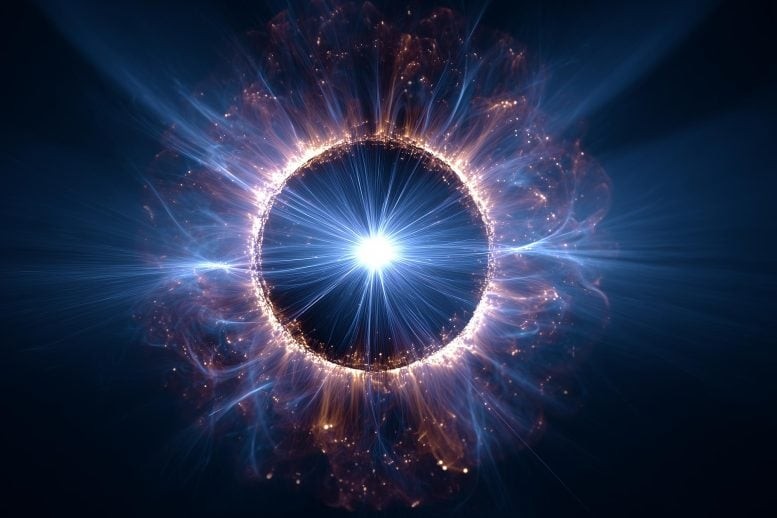
Figure 1. Stars Powered by Dark Matter Instead of Fusion.
Astrophysicists propose the existence of unusual stars called “dark dwarfs”, which may be glowing faintly near the heart of the Milky Way. Figure 1 shows Stars Powered by Dark Matter Instead of Fusion.
Despite their name, dark dwarfs aren’t dark at all — instead, they shine by harnessing dark matter, the invisible substance thought to make up a quarter of the cosmos.
From Failed Stars to Dark Dwarfs
According to new models, dark matter could become trapped inside young stars, releasing enough energy to stop them from cooling. This process may turn brown dwarfs — often called “failed stars” because they lack the mass for nuclear fusion — into long-lived, stable dark dwarfs.
If a brown dwarf drifts into a dense region of dark matter, collisions between dark matter particles could release bursts of energy, keeping it glowing indefinitely.
Powered by WIMPs
For this to happen, dark matter must be made of WIMPs (Weakly Interacting Massive Particles) — heavy particles that rarely interact with normal matter, but annihilate each other inside stars, producing a steady energy source.
One key signature could help identify a dark dwarf: lithium-7. Unlike in normal stars, where lithium burns away quickly, dark dwarfs may still contain this rare isotope — a telltale sign they’re something different.
A New Window into Dark Matter
Powerful instruments like the James Webb Space Telescope may already be capable of spotting them, especially near the galaxy’s core. Another method would be to survey many faint stars and look for statistical evidence of dark dwarfs.
Not all stars shine the way our Sun does. While most stars burn through nuclear fusion, scientists believe there could be exotic stars powered by something far stranger — dark matter. These are called dark dwarfs.
Born From Failed Stars
Dark dwarfs may form from brown dwarfs, often nicknamed “failed stars” because they don’t have enough mass to trigger fusion. Normally, brown dwarfs cool and fade over time. But in regions rich with dark matter, something unusual can happen.
Dark Matter as Fuel
If a brown dwarf drifts near the Milky Way’s center, it could trap dark matter particles inside. When these particles — possibly WIMPs (Weakly Interacting Massive Particles) — collide, they annihilate each other and release energy. This steady energy source could keep a dark dwarf glowing forever.
The Lithium Clue
How can astronomers tell a dark dwarf apart from a normal brown dwarf? The secret may lie in lithium-7. Normal stars burn it away quickly, but dark dwarfs should still hold onto it. Spotting a faint star with lithium-7 intact could mean we’ve found one.
A Window into Dark Matter
Finding even a single dark dwarf would be groundbreaking. It would not only reveal a new type of star but also give scientists rare insight into the true nature of dark matter, which makes up about a quarter of the universe. With telescopes like JWST, astronomers may already be on the brink of discovery.
Source: SciTECHDaily
Cite this article:
Priyadharshini S (2025), These Stars Don’t Shine by Fusion – They Consume Dark Matter, AnaTechMaz, pp.507
Recent Post
-
Solar Power from Space Could Transform Energy by 2050
A new cost-benefit analysis based on NASA’s current designs for space-based solar...
-
Nearby Galaxy Illuminated by the Brightest Radio Flash Ever Recorded
A fast radio burst (FRB) is a powerful surge of radio energy that lasts...
-
What Lies Beneath Jupiter’s Surface?
NASA’s Juno spacecraft has revealed that Jupiter’s core doesn’t have a sharp boundary, as...
-
Hidden Power Source of Massive Stars Finally Discovered
The universe is so vast that even our sun—over 330,000 times the mass of Earth—seems small...
-
NASA’s Parker Solar Probe Cracks a 70-Year-Old Solar Mystery
A research team led by the Southwest Research Institute (SwRI) has achieved the first...
-
Webb Telescope Uncovers 300 Cosmic Objects That Defy Expectations
The Mizzou research team began their investigation using two of JWST’s...
-
What if the Big Bang Wasn’t the Start? Supercomputers Hunt for Answers
For years, the question of what came before the Big Bang has been...
-
Astronomers Believe this Star May Soon Explode as a Supernova
A team from Chalmers University of Technology, Sweden, has discovered the largest ...
-
The Star That Nearly Disappeared: Astronomers Uncover a Cosmic Secret
ASASSN-24fw is an F-type star — slightly more massive than our Sun and...
Unusual Space Dust Uncovers Surprising Connection Between Distant Asteroids
About 4.6 billion years ago, the solar system emerged from a swirling...
-
The Cosmic "Hand of God" Reveals an Even Stranger Mystery
In 2009, NASA’s Chandra X-ray Observatory captured a remarkable image of a...
-
These Stars Don’t Shine by Fusion – They Consume Dark Matter
Scientists may have uncovered evidence for an entirely new class of star-like object that...
-
Unveiling the Sun’s Secret Threads in Spectacular Solar Flare Images
The most detailed images of a solar flare ever captured in the H-alpha wavelength (656.28...
-
Two Spacecraft Align to Create an Artificial Solar Eclipse in Space
The building blocks of a galaxy—stars, gas, and dust—emit light in a wide range of colors....
-
Two Spacecraft Synchronize to Simulate a Solar Eclipse in Space
Proba-3 is a groundbreaking mission designed to recreate the effect of a solar eclipse...