

The Star That Nearly Disappeared: Astronomers Uncover a Cosmic Secret
The Star and Its Surroundings
ASASSN-24fw is an F-type star — slightly more massive than our Sun and roughly twice its size — located around 3,000 light-years from Earth. Astronomers estimate that it is encircled by a cloudy disk about 1.3 astronomical units (AU) wide, larger than the distance between Earth and the Sun.
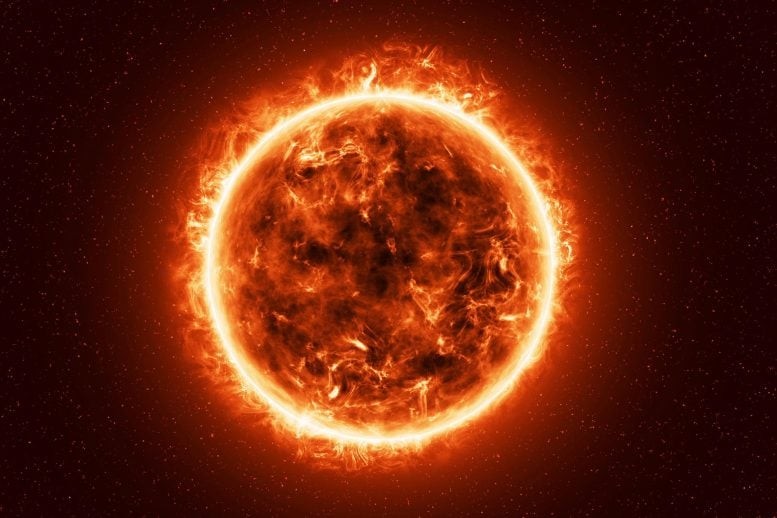
Figure 1. Astronomers Reveal the Mystery Behind a Star’s Near Disappearance
This disk is thought to contain clusters of carbon or water ice, each roughly the size of a large dust grain on Earth. Because this material closely resembles that found in planet-forming disks, studying it could offer astronomers valuable clues about how stars and planetary systems form and evolve. Figure 1 shows Astronomers Reveal the Mystery Behind a Star’s Near Disappearance.
A Hidden Companion Star
These findings alone don’t explain all of the system’s peculiar behavior, noted Forés-Toribio. Instead, researchers suspect that ASASSN-24fw may actually be part of a hidden binary system, with a smaller, cooler companion star orbiting alongside it.
“With the data we have, what we propose is that there are two stars together in a binary system,” said Forés-Toribio. “The second star, much fainter and less massive, may be driving the geometric changes that cause the eclipses.”
A Rare and Dramatic Event
Dimming events like this are already uncommon, but this one-in-a-million eclipse was especially striking, said Chris Kochanek, co-author of the study and professor of astronomy at Ohio State. Even after searching for similar cases, the team found nothing that followed the same unusual pattern.
“We were hoping to find some similarities and didn’t really find very many, which is interesting in and of itself,” said Kochanek. “But the hope is, as we discover more in the future, some patterns might eventually emerge.”
The system was first identified by the All-Sky Automated Survey for Supernovae (ASAS-SN), a global network of small telescopes designed to monitor the entire visible night sky. Since its launch more than a decade ago, ASAS-SN has collected over 14 million images of the cosmos.
“The universe’s capacity to surprise us is continuous,” said Krzysztof Stanek, another co-author and astronomy professor at Ohio State. “Even with small ground-based telescopes and massive space-based ones, every time we gain a new capability, we still uncover new phenomena.”
Looking Ahead: The Next Eclipse
Researchers estimate that ASASSN-24fw undergoes an eclipse roughly once every 43.8 years, meaning the next won’t occur until around 2068. While some of today’s team may not be around to witness it, they hope their work—and the long-term datasets they’ve cultivated—will serve as a foundation for future astronomers.
“We want our data to be accessible a hundred years from now, even if we are not around,” said Stanek. “The main point of ASAS-SN is that if something happens in the sky, we’ll have historical data for it.”
In the meantime, the team plans to use larger observatories—such as the James Webb Space Telescope and the Large Binocular Telescope Observatory—to gather more complete observations as the star system gradually returns to full brightness.
“This study is a particularly interesting example of a broader class of still very strange objects,” Stanek added. “We learn the most about astrophysics when we encounter the unusual, because it forces us to test and refine our theories.”
Source: SciTECHDaily
Cite this article:
Priyadharshini S (2025), The Star That Nearly Disappeared: Astronomers Uncover a Cosmic Secret, AnaTechMaz, pp.504
Recent Post
-
Solar Power from Space Could Transform Energy by 2050
A new cost-benefit analysis based on NASA’s current designs for space-based solar...
-
Nearby Galaxy Illuminated by the Brightest Radio Flash Ever Recorded
A fast radio burst (FRB) is a powerful surge of radio energy that lasts...
-
What Lies Beneath Jupiter’s Surface?
NASA’s Juno spacecraft has revealed that Jupiter’s core doesn’t have a sharp boundary, as...
-
Hidden Power Source of Massive Stars Finally Discovered
The universe is so vast that even our sun—over 330,000 times the mass of Earth—seems small...
-
NASA’s Parker Solar Probe Cracks a 70-Year-Old Solar Mystery
A research team led by the Southwest Research Institute (SwRI) has achieved the first...
-
Webb Telescope Uncovers 300 Cosmic Objects That Defy Expectations
The Mizzou research team began their investigation using two of JWST’s...
-
What if the Big Bang Wasn’t the Start? Supercomputers Hunt for Answers
For years, the question of what came before the Big Bang has been...
-
Astronomers Believe this Star May Soon Explode as a Supernova
A team from Chalmers University of Technology, Sweden, has discovered the largest ...
-
The Star That Nearly Disappeared: Astronomers Uncover a Cosmic Secret
ASASSN-24fw is an F-type star — slightly more massive than our Sun and...
Unusual Space Dust Uncovers Surprising Connection Between Distant Asteroids
About 4.6 billion years ago, the solar system emerged from a swirling...
-
The Cosmic "Hand of God" Reveals an Even Stranger Mystery
In 2009, NASA’s Chandra X-ray Observatory captured a remarkable image of a...
-
These Stars Don’t Shine by Fusion – They Consume Dark Matter
Scientists may have uncovered evidence for an entirely new class of star-like object that...
-
Unveiling the Sun’s Secret Threads in Spectacular Solar Flare Images
The most detailed images of a solar flare ever captured in the H-alpha wavelength (656.28...
-
Two Spacecraft Align to Create an Artificial Solar Eclipse in Space
The building blocks of a galaxy—stars, gas, and dust—emit light in a wide range of colors....
-
Two Spacecraft Synchronize to Simulate a Solar Eclipse in Space
Proba-3 is a groundbreaking mission designed to recreate the effect of a solar eclipse...