

What if the Big Bang Wasn’t the Start? Supercomputers Hunt for Answers
Simulating the Unsolvable: A New Path Before the Big Bang
For years, the question of what came before the Big Bang has been dismissed as unscientific—or even meaningless. But a recent paper in Living Reviews in Relativity challenges that view. Authored by FQxI cosmologist Eugene Lim (King’s College London), astrophysicist Katy Clough (Queen Mary University of London), and Josu Aurrekoetxea (Oxford University), the study proposes that advanced computer simulations could open new ways to explore these mysteries.
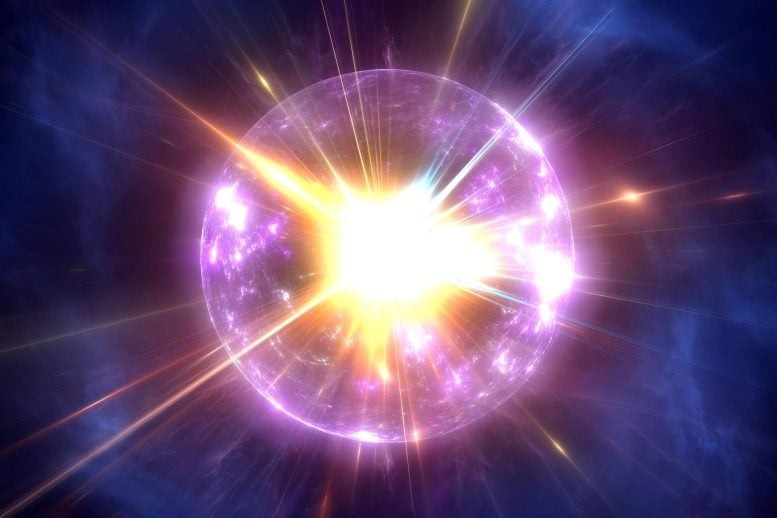
Figure 1. If the Big Bang Wasn’t the Beginning: Supercomputers Search for Clues.
Using numerical methods to approximate Einstein’s equations of gravity under extreme conditions, the researchers suggest that cosmologists may finally gain tools to tackle long-standing puzzles. These range from what may have preceded the Big Bang, to whether multiple universes exist, if our cosmos has ever collided with another, or whether reality unfolds in endless cycles of expansion and collapse. Figure 1 shows If the Big Bang Wasn’t the Beginning: Supercomputers Search for Clues.
Einstein’s general relativity describes how gravity influences matter and energy across the universe. Yet, when pushed back to the earliest moments of cosmic history, the equations fail. They predict a singularity—a state of infinite temperature and density where known physics breaks down. Under such conditions, traditional assumptions cannot be used to solve the equations. A similar problem arises in other extreme environments, such as deep within black holes.
You can look around the lamppost, but you can’t step into the darkness beyond—it’s impossible to solve the equations there,” Lim explains. “With numerical relativity, we finally have a way to venture into those darker regions
Beyond the Lamppost
Numerical relativity was first proposed in the 1960s and 70s as a way to predict the gravitational waves—ripples in spacetime—that would be produced when black holes collided and merged. These scenarios are so extreme that Einstein’s equations cannot be solved with pencil and paper alone. Instead, they demand complex computer codes and numerical approximations. The approach gained renewed attention in the 1980s with the proposal of the LIGO experiment, though the breakthrough didn’t arrive until 2005. That success opened the door to using the method for other profound puzzles.
“You can search around the lamppost, but you can’t go far beyond the lamppost, where it’s dark—you just can’t solve those equations. Numerical relativity allows you to explore regions away from the lamppost,” explains Eugene Lim.
One mystery Lim is especially drawn to is cosmic inflation—a brief but dramatic burst of expansion in the universe’s infancy. Inflation was introduced to explain why the cosmos looks uniform across vast distances, as though an initially tiny patch of space had been stretched smooth. “If you don’t have inflation, a lot of things fall apart,” says Lim. Yet despite its success in describing the present universe, no one has managed to explain how or why the early cosmos went through this sudden growth spurt.
The challenge lies in the math. To model inflation using Einstein’s equations, cosmologists typically assume the universe was uniform and symmetric from the start—the very condition inflation was meant to explain. Remove that assumption, and the equations become too difficult to write down. Numerical relativity, however, offers a way around this barrier, enabling simulations that start with very different initial conditions. It’s not simple, since there are infinitely many possible ways spacetime could have looked before inflation, but it allows researchers to test predictions from deeper theories—like string theory—that might explain inflation’s origins.
Cosmic Strings and Colliding Universes
The potential applications don’t stop there. Numerical relativity could also shed light on exotic objects known as cosmic strings—long, narrow defects in spacetime that may produce distinctive gravitational waves. Detecting such signals would provide strong evidence for their existence. Similarly, simulations could predict observable traces, or “bruises,” left behind if our universe ever collided with another, offering a way to test the multiverse hypothesis.
Even more ambitiously, numerical relativity might help probe whether there was a universe before the Big Bang. Some theories suggest that the cosmos may be cyclic, repeatedly collapsing and rebounding through “big crunches” and “big bangs.” Such bouncing universes are notoriously hard to describe analytically. “Bouncing universes are an excellent example, because they reach strong gravity where you can’t rely on your symmetries,” notes Lim. “Several groups are already working on them—it used to be that nobody was.”
Running these simulations requires immense computing power, but as supercomputers continue to advance, so will our ability to explore these deep questions. Lim and his colleagues hope their latest paper, which outlines the power and promise of numerical relativity, will help bridge communities.
“We want to build a real overlap between cosmology and numerical relativity,” says Lim. “Numerical relativists can bring their techniques to cosmological problems, and cosmologists can use those methods to tackle the questions they otherwise couldn’t.”
Source: SciTECHDaily
Cite this article:
Priyadharshini S (2025), What if the Big Bang Wasn’t the Start? Supercomputers Hunt for Answers, AnaTechMaz, pp.502
Recent Post
-
Solar Power from Space Could Transform Energy by 2050
A new cost-benefit analysis based on NASA’s current designs for space-based solar...
-
Nearby Galaxy Illuminated by the Brightest Radio Flash Ever Recorded
A fast radio burst (FRB) is a powerful surge of radio energy that lasts...
-
What Lies Beneath Jupiter’s Surface?
NASA’s Juno spacecraft has revealed that Jupiter’s core doesn’t have a sharp boundary, as...
-
Hidden Power Source of Massive Stars Finally Discovered
The universe is so vast that even our sun—over 330,000 times the mass of Earth—seems small...
-
NASA’s Parker Solar Probe Cracks a 70-Year-Old Solar Mystery
A research team led by the Southwest Research Institute (SwRI) has achieved the first...
-
Webb Telescope Uncovers 300 Cosmic Objects That Defy Expectations
The Mizzou research team began their investigation using two of JWST’s...
-
What if the Big Bang Wasn’t the Start? Supercomputers Hunt for Answers
For years, the question of what came before the Big Bang has been...
-
Astronomers Believe this Star May Soon Explode as a Supernova
A team from Chalmers University of Technology, Sweden, has discovered the largest ...
-
The Star That Nearly Disappeared: Astronomers Uncover a Cosmic Secret
ASASSN-24fw is an F-type star — slightly more massive than our Sun and...
Unusual Space Dust Uncovers Surprising Connection Between Distant Asteroids
About 4.6 billion years ago, the solar system emerged from a swirling...
-
The Cosmic "Hand of God" Reveals an Even Stranger Mystery
In 2009, NASA’s Chandra X-ray Observatory captured a remarkable image of a...
-
These Stars Don’t Shine by Fusion – They Consume Dark Matter
Scientists may have uncovered evidence for an entirely new class of star-like object that...
-
Unveiling the Sun’s Secret Threads in Spectacular Solar Flare Images
The most detailed images of a solar flare ever captured in the H-alpha wavelength (656.28...
-
Two Spacecraft Align to Create an Artificial Solar Eclipse in Space
The building blocks of a galaxy—stars, gas, and dust—emit light in a wide range of colors....
-
Two Spacecraft Synchronize to Simulate a Solar Eclipse in Space
Proba-3 is a groundbreaking mission designed to recreate the effect of a solar eclipse...