

Astronomers Believe this Star May Soon Explode as a Supernova
Astronomers Unveil Enormous Stellar Bubble Around Red Supergiant
A team from Chalmers University of Technology, Sweden, has discovered the largest known bubble of gas and dust in the Milky Way, surrounding the red supergiant star DFK 52. The colossal structure, equal in mass to the Sun, was ejected during a massive stellar eruption about 4,000 years ago.
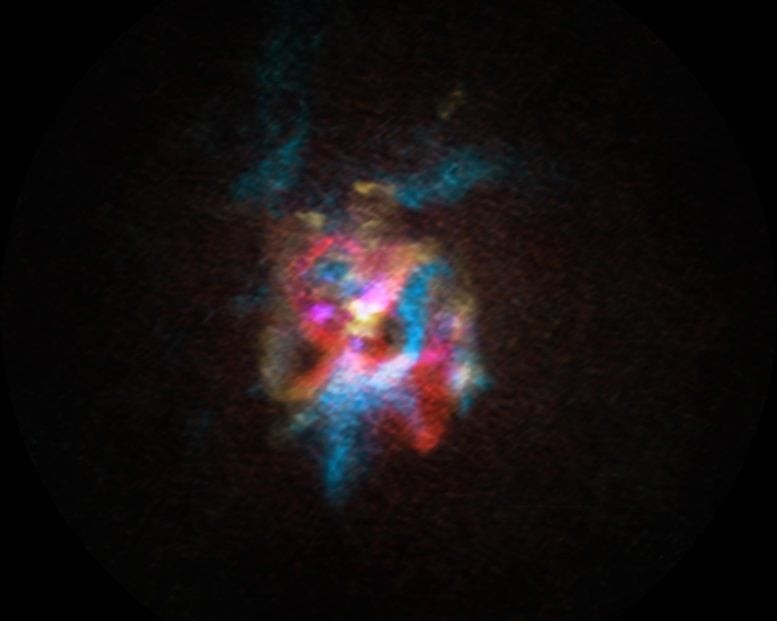
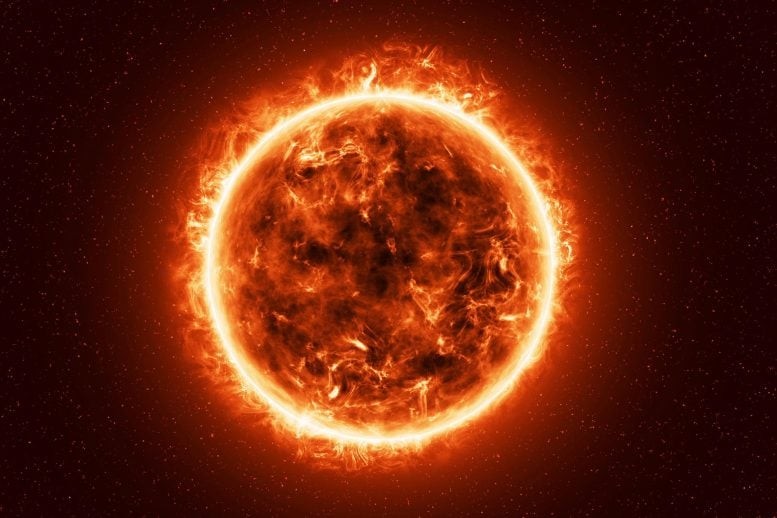
Figure 1. Astronomers Spot a Potential Future Supernova.
What puzzles scientists is how the star survived such an intense outburst. The study, led by Mark Siebert and published in Astronomy & Astrophysics, used the ALMA radio telescope in Chile to examine DFK 52, a star with striking similarities to Betelgeuse. Figure 1 shows Astronomers Spot a Potential Future Supernova.
A Colossal Cloud of Gas and Dust
“We were stunned by what ALMA revealed. This star is practically a twin of Betelgeuse, yet it’s surrounded by an enormous, chaotic bubble of material,” explains Mark Siebert of Chalmers.
The cloud, made of gas and dust, contains about the same mass as the Sun and extends 1.4 light-years from the star—thousands of times wider than our solar system. If DFK 52 were as close to Earth as Betelgeuse, the bubble would span nearly a third of the Moon’s apparent width in the night sky.
A Continuing Expansion
Using ALMA’s radio observations, astronomers tracked the motion of molecules within the gas and confirmed that the bubble is still expanding. They conclude it was created when DFK 52 violently expelled part of its outer layers during a massive eruption a few thousand years ago.
“The bubble is made of material that once belonged to the star itself. It must have been hurled outward in a powerful explosion about four thousand years ago. In cosmic terms, that’s practically yesterday,” explains Elvire De Beck, astronomer at Chalmers.
The Galaxy’s Next Supernova?
Exactly how DFK 52 managed to lose so much mass without collapsing into a supernova remains a puzzle. One leading theory is that the star may have an unseen companion that helped strip away its outer layers.
“We still don’t understand how the star could eject such an enormous amount of material in such a short time. Perhaps, like Betelgeuse appears to, it has a hidden companion that has yet to be detected,” adds Mark Siebert.
Red supergiants such as DFK 52 are in the final stages of their lives and will ultimately end in a supernova. But could this particular star be the next to go?
“We’re preparing further observations to unravel what’s happening—and to see whether DFK 52 might be the Milky Way’s next supernova. If it behaves like a typical red supergiant, it could explode anytime within the next million years,” says Elvire De Beck.
Source: SciTECHDaily
Cite this article:
Priyadharshini S (2025), Astronomers Believe this Star May Soon Explode as a Supernova, AnaTechMaz, pp.503
Recent Post
-
Solar Power from Space Could Transform Energy by 2050
A new cost-benefit analysis based on NASA’s current designs for space-based solar...
-
Nearby Galaxy Illuminated by the Brightest Radio Flash Ever Recorded
A fast radio burst (FRB) is a powerful surge of radio energy that lasts...
-
What Lies Beneath Jupiter’s Surface?
NASA’s Juno spacecraft has revealed that Jupiter’s core doesn’t have a sharp boundary, as...
-
Hidden Power Source of Massive Stars Finally Discovered
The universe is so vast that even our sun—over 330,000 times the mass of Earth—seems small...
-
NASA’s Parker Solar Probe Cracks a 70-Year-Old Solar Mystery
A research team led by the Southwest Research Institute (SwRI) has achieved the first...
-
Webb Telescope Uncovers 300 Cosmic Objects That Defy Expectations
The Mizzou research team began their investigation using two of JWST’s...
-
What if the Big Bang Wasn’t the Start? Supercomputers Hunt for Answers
For years, the question of what came before the Big Bang has been...
-
Astronomers Believe this Star May Soon Explode as a Supernova
A team from Chalmers University of Technology, Sweden, has discovered the largest ...
-
The Star That Nearly Disappeared: Astronomers Uncover a Cosmic Secret
ASASSN-24fw is an F-type star — slightly more massive than our Sun and...
Unusual Space Dust Uncovers Surprising Connection Between Distant Asteroids
About 4.6 billion years ago, the solar system emerged from a swirling...
-
The Cosmic "Hand of God" Reveals an Even Stranger Mystery
In 2009, NASA’s Chandra X-ray Observatory captured a remarkable image of a...
-
These Stars Don’t Shine by Fusion – They Consume Dark Matter
Scientists may have uncovered evidence for an entirely new class of star-like object that...
-
Unveiling the Sun’s Secret Threads in Spectacular Solar Flare Images
The most detailed images of a solar flare ever captured in the H-alpha wavelength (656.28...
-
Two Spacecraft Align to Create an Artificial Solar Eclipse in Space
The building blocks of a galaxy—stars, gas, and dust—emit light in a wide range of colors....
-
Two Spacecraft Synchronize to Simulate a Solar Eclipse in Space
Proba-3 is a groundbreaking mission designed to recreate the effect of a solar eclipse...