

Webb Telescope Uncovers 300 Cosmic Objects That Defy Expectations
Tracing the First Clues
The Mizzou research team began their investigation using two of JWST’s powerful infrared instruments: the Near-Infrared Camera (NIRCam) and the Mid-Infrared Instrument (MIRI). Designed to capture light from the farthest reaches of space, these tools are crucial for exploring the mysteries of the early universe.
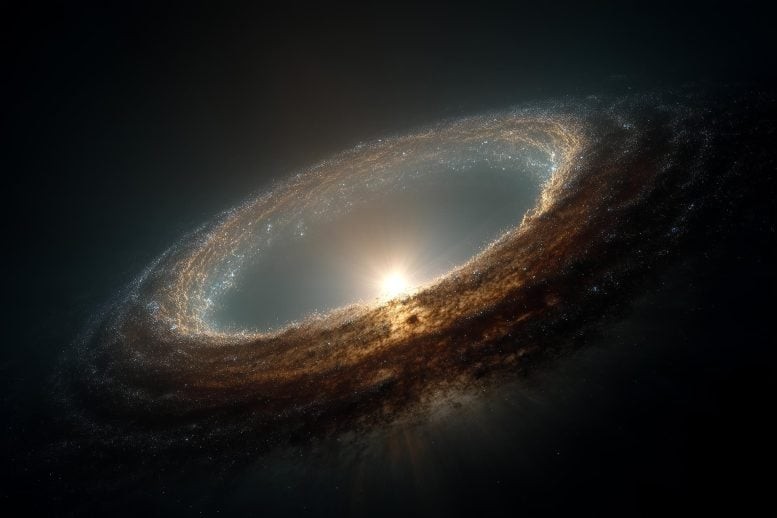
Figure 1. Webb Telescope Reveals 300 Mysterious Objects Beyond Current Theories.
Why Infrared Light Matters
The farther an object is from Earth, the longer its light has traveled — stretching into the infrared part of the spectrum by the time it reaches us. Figure 1 shows Webb Telescope Reveals 300 Mysterious Objects Beyond Current Theories.
“As the light from these early galaxies travels through space, it stretches into longer wavelengths — shifting from visible light into infrared,” explained Yan. “This process, called redshift, helps us determine how far away these galaxies are. The higher the redshift, the farther the galaxy — and the closer it is to the beginning of the universe.”
The ‘Dropout’ Technique
To confirm whether the 300 mysterious objects were truly early galaxies, the Mizzou researchers used a trusted method known as the dropout technique.
Filling in the Details
Identifying candidates is only the beginning — the next challenge is to test whether these galaxies really exist at very high redshifts.
“Ideally, this would be done with spectroscopy, which spreads light into its component wavelengths to reveal precise redshift signatures,” Yan noted.
But when full spectroscopic data isn’t available, researchers turn to spectral energy distribution fitting. This approach allowed Sun and Yan to estimate the galaxies’ redshifts, as well as infer key properties such as their ages and masses.
The Final Test
To confirm their discoveries, the team will rely on spectroscopy — the gold standard for studying distant galaxies.
Spectroscopy works by splitting light into its component wavelengths, much like a prism creating a rainbow. Each galaxy leaves behind a distinct “fingerprint” in this spectrum, revealing vital details about its age, formation, and chemical makeup.
“One of our objects has already been confirmed by spectroscopy as an early galaxy,” Sun explained. “But a single confirmation isn’t enough. We’ll need more evidence before we can say with certainty whether these findings truly challenge existing theories.”
Source: SciTECHDaily
Cite this article:
Priyadharshini S (2025), Webb Telescope Uncovers 300 Cosmic Objects That Defy Expectations, AnaTechMaz, pp.501
Recent Post
-
Solar Power from Space Could Transform Energy by 2050
A new cost-benefit analysis based on NASA’s current designs for space-based solar...
-
Nearby Galaxy Illuminated by the Brightest Radio Flash Ever Recorded
A fast radio burst (FRB) is a powerful surge of radio energy that lasts...
-
What Lies Beneath Jupiter’s Surface?
NASA’s Juno spacecraft has revealed that Jupiter’s core doesn’t have a sharp boundary, as...
-
Hidden Power Source of Massive Stars Finally Discovered
The universe is so vast that even our sun—over 330,000 times the mass of Earth—seems small...
-
NASA’s Parker Solar Probe Cracks a 70-Year-Old Solar Mystery
A research team led by the Southwest Research Institute (SwRI) has achieved the first...
-
Webb Telescope Uncovers 300 Cosmic Objects That Defy Expectations
The Mizzou research team began their investigation using two of JWST’s...
-
What if the Big Bang Wasn’t the Start? Supercomputers Hunt for Answers
For years, the question of what came before the Big Bang has been...
-
Astronomers Believe this Star May Soon Explode as a Supernova
A team from Chalmers University of Technology, Sweden, has discovered the largest ...
-
The Star That Nearly Disappeared: Astronomers Uncover a Cosmic Secret
ASASSN-24fw is an F-type star — slightly more massive than our Sun and...
Unusual Space Dust Uncovers Surprising Connection Between Distant Asteroids
About 4.6 billion years ago, the solar system emerged from a swirling...
-
The Cosmic "Hand of God" Reveals an Even Stranger Mystery
In 2009, NASA’s Chandra X-ray Observatory captured a remarkable image of a...
-
These Stars Don’t Shine by Fusion – They Consume Dark Matter
Scientists may have uncovered evidence for an entirely new class of star-like object that...
-
Unveiling the Sun’s Secret Threads in Spectacular Solar Flare Images
The most detailed images of a solar flare ever captured in the H-alpha wavelength (656.28...
-
Two Spacecraft Align to Create an Artificial Solar Eclipse in Space
The building blocks of a galaxy—stars, gas, and dust—emit light in a wide range of colors....
-
Two Spacecraft Synchronize to Simulate a Solar Eclipse in Space
Proba-3 is a groundbreaking mission designed to recreate the effect of a solar eclipse...