

NASA’s Parker Solar Probe Cracks a 70-Year-Old Solar Mystery
Confirming Decades-Old Solar Theories
A research team led by the Southwest Research Institute (SwRI) has achieved the first direct confirmation of long-standing theories about magnetic reconnection—a powerful process that unleashes stored magnetic energy and drives solar flares, coronal mass ejections, and other space weather events.
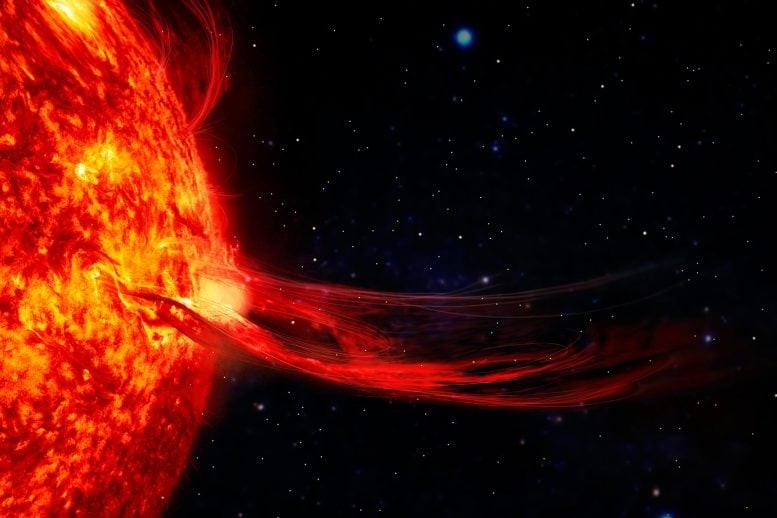
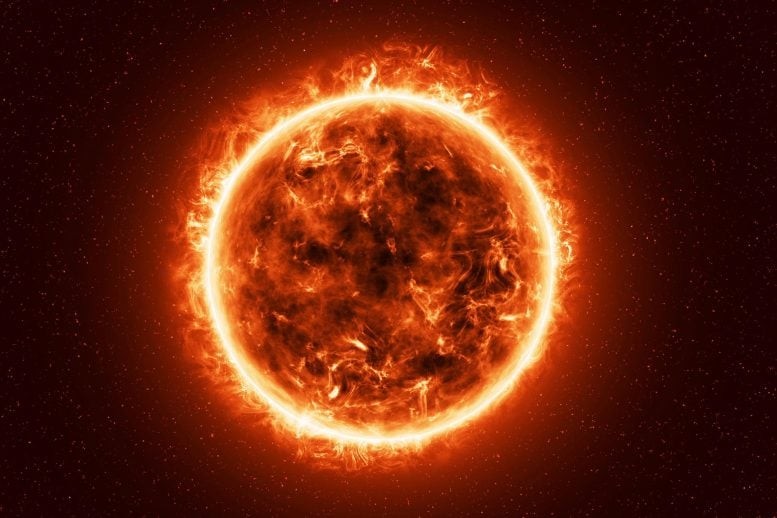
Figure 1. NASA’s Parker Solar Probe Unveils Solution to a 70-Year Solar Puzzle.
This breakthrough was made possible by NASA’s Parker Solar Probe (PSP), the only spacecraft to venture into the Sun’s upper atmosphere. Figure 1 shows NASA’s Parker Solar Probe Unveils Solution to a 70-Year Solar Puzzle.
Magnetic reconnection occurs when magnetic field lines within superheated plasma snap apart and rejoin in a new configuration, releasing an immense burst of energy. On the Sun, this mechanism powers massive eruptions that ripple through the solar system, sometimes disrupting technology on Earth, including satellites, communications, and power grids.
Understanding reconnection on the Sun is essential for creating accurate models of solar storms—tools that could one day help predict and mitigate their impact on our planet.
From Earth’s Magnetosphere to the Sun
“Magnetic reconnection operates at many different scales—from laboratory plasmas to Earth’s magnetosphere, the Sun, and even cosmic environments,” explained Dr. Ritesh Patel, research scientist at the Southwest Research Institute’s Solar System Science and Exploration Division in Boulder, Colorado, and lead author of a new paper in Nature Astronomy.
“Since the late 1990s, we’ve been able to identify reconnection in the solar corona through imaging and spectroscopy. Direct detection in space, however, was first achieved in Earth’s magnetosphere with NASA’s Magnetospheric Multiscale (MMS) mission. But confirming reconnection directly in the Sun’s corona only became possible after the launch of NASA’s Parker Solar Probe (PSP) in 2018.”
PSP’s unprecedented proximity to the Sun has opened a new era of solar discovery. On September 6, 2022, the spacecraft flew through a massive solar eruption and captured the first detailed measurements of plasma flows and magnetic field activity inside such an event. By combining PSP’s in-situ data with observations from the European Space Agency’s Solar Orbiter, the SwRI-led team confirmed that the probe had passed directly through a magnetic reconnection zone in the Sun’s atmosphere—a first in the history of space exploration.
Long-Standing Models Finally Validated
“We’ve been developing the theory of magnetic reconnection for nearly 70 years, so we already had a framework for how the key parameters should behave,” explained Patel. “The measurements and observations from Parker Solar Probe’s encounter have now validated long-standing simulation models—though within certain uncertainties. These data not only strengthen decades of theoretical work but also provide critical constraints for refining future models. They give us a clearer path for interpreting PSP’s other solar measurements across different events and timeframes.”
NASA’s Magnetospheric Multiscale (MMS) mission, also led by SwRI, first revealed how reconnection unfolds in Earth’s magnetosphere on smaller scales. Now, PSP’s 2022 observations deliver the missing link—showing how the same fundamental process operates on the vastly larger scales of the Sun. The SwRI team’s next step will be to investigate whether turbulence, fluctuations, and magnetic waves also accompany reconnection in the solar regions where PSP detected this activity.
Unlocking Energy Transfer Secrets
“Ongoing discoveries are revealing how reconnection transfers energy and accelerates particles across different scales,” Patel added. “By understanding these processes at the Sun, we can improve our ability to forecast solar activity and, in turn, protect satellites, communications, and power systems in Earth’s near-space environment.”
Source: SciTECHDaily
Cite this article:
Priyadharshini S (2025), NASA’s Parker Solar Probe Cracks a 70-Year-Old Solar Mystery, AnaTechMaz, pp.500
Recent Post
-
Solar Power from Space Could Transform Energy by 2050
A new cost-benefit analysis based on NASA’s current designs for space-based solar...
-
Nearby Galaxy Illuminated by the Brightest Radio Flash Ever Recorded
A fast radio burst (FRB) is a powerful surge of radio energy that lasts...
-
What Lies Beneath Jupiter’s Surface?
NASA’s Juno spacecraft has revealed that Jupiter’s core doesn’t have a sharp boundary, as...
-
Hidden Power Source of Massive Stars Finally Discovered
The universe is so vast that even our sun—over 330,000 times the mass of Earth—seems small...
-
NASA’s Parker Solar Probe Cracks a 70-Year-Old Solar Mystery
A research team led by the Southwest Research Institute (SwRI) has achieved the first...
-
Webb Telescope Uncovers 300 Cosmic Objects That Defy Expectations
The Mizzou research team began their investigation using two of JWST’s...
-
What if the Big Bang Wasn’t the Start? Supercomputers Hunt for Answers
For years, the question of what came before the Big Bang has been...
-
Astronomers Believe this Star May Soon Explode as a Supernova
A team from Chalmers University of Technology, Sweden, has discovered the largest ...
-
The Star That Nearly Disappeared: Astronomers Uncover a Cosmic Secret
ASASSN-24fw is an F-type star — slightly more massive than our Sun and...
Unusual Space Dust Uncovers Surprising Connection Between Distant Asteroids
About 4.6 billion years ago, the solar system emerged from a swirling...
-
The Cosmic "Hand of God" Reveals an Even Stranger Mystery
In 2009, NASA’s Chandra X-ray Observatory captured a remarkable image of a...
-
These Stars Don’t Shine by Fusion – They Consume Dark Matter
Scientists may have uncovered evidence for an entirely new class of star-like object that...
-
Unveiling the Sun’s Secret Threads in Spectacular Solar Flare Images
The most detailed images of a solar flare ever captured in the H-alpha wavelength (656.28...
-
Two Spacecraft Align to Create an Artificial Solar Eclipse in Space
The building blocks of a galaxy—stars, gas, and dust—emit light in a wide range of colors....
-
Two Spacecraft Synchronize to Simulate a Solar Eclipse in Space
Proba-3 is a groundbreaking mission designed to recreate the effect of a solar eclipse...