

Unusual Space Dust Uncovers Surprising Connection Between Distant Asteroids
Ancient Solar System Origins
About 4.6 billion years ago, the solar system emerged from a swirling cloud of gas and dust around the Sun. Today’s asteroids are some of the most intact relics from that chaotic beginning—like leftover scraps from a vast construction site. By studying their shapes, surfaces, and chemical makeup, scientists can piece together what conditions were like when the solar system first formed.
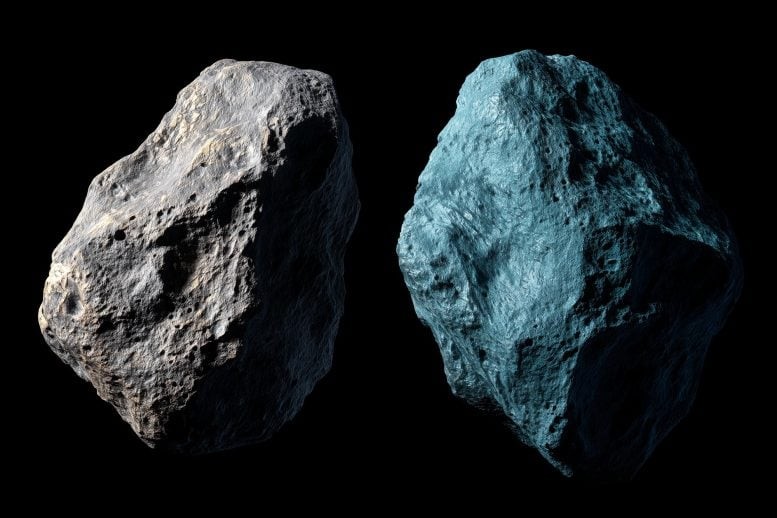
Figure 1. Strange Space Dust Reveals Unexpected Link Between Far-Flung Asteroids.
To better decode these rocky remnants, researchers classify asteroids into groups based on shared traits. A new study in The Planetary Science Journal, led by IPAC scientist Joe Masiero, suggests that two very different kinds of asteroids may have experienced the same turbulent past. Figure 1 shows Strange Space Dust Reveals Unexpected Link Between Far-Flung Asteroids.
“Asteroids let us see the early solar system almost like a freeze frame—capturing the conditions that existed when the first solid objects came together,” said Masiero.
A Rare Fingerprint in Space Rocks
Using data from Caltech’s Palomar Observatory, Masiero and his team studied two distinct types of asteroids: one rich in metal and another made mostly of silicates and minerals. Surprisingly, both carried the same unusual dusty coating—an iron-and-sulfur compound called troilite.
“Troilite is extremely rare, so we can treat it like a fingerprint that connects these two very different kinds of asteroids,” explained Masiero.
Asteroid Spectra and Classifications
Asteroids are grouped into classes based on the spectrum of light reflected from their surfaces, labeled with letters such as M, K, and C. These spectra reveal whether an asteroid’s outer layer—its regolith, or surface “dirt”—contains carbon, silicates, or metals.
In this study, Masiero focused on two categories: M-type asteroids, which are metal-rich, and K-type asteroids, which are mostly silicate-based and thought to trace back to an ancient, massive collision. (For context, silicates make up about 95 percent of Earth’s crust and mantle.)
However, what scientists see in an asteroid’s spectrum depends on several factors, including its shape, regolith size (dust, pebbles, boulders), and the phase angle—the angle between the Sun, the asteroid, and Earth. Much like the Moon has phases, asteroids show different appearances as they orbit the Sun and rotate on their axes.
“While spectra tell us there are different minerals on the surfaces of these objects, we’re still trying to figure out how different these bodies truly are,” said Masiero. “We want to rewind the clock to when they first formed, and to the conditions that shaped them in the early solar system.”
Probing Asteroids with Polarization
To move beyond spectra, Masiero turned to polarization, particularly in the near-infrared, as a tool for studying asteroids. By measuring how light waves are polarized after bouncing off M- and K-type asteroids, his team found evidence that these two classes may actually be linked through their surface composition.
Polarization refers to the orientation of light waves. Just as brightness measures the number of photons and color measures wavelength, polarization reflects the way light interacts with a surface. Different minerals produce distinct polarization signals, much like they produce different colors.
Because polarization changes with phase angle, Masiero could use these variations to probe surface makeup—even when certain minerals didn’t leave obvious spectral “fingerprints.”
“Polarization gives us insights into asteroid minerals that we can’t get from brightness or spectra alone,” Masiero explained. “It gives us a third axis of information about surface mineralogy.”
Unlocking Secrets at Palomar
To gather this data, Masiero used the WIRC+Pol instrument at Caltech’s Palomar Observatory, perched in the mountains above San Diego, California.
“Palomar is such a fabulous facility,” said Masiero. “The telescope operators and support astronomers are invaluable in helping us get the best data possible. For the infrared polarization measurements I needed, there’s no other instrument that can go nearly as deep. It’s a capability unique to Palomar.”
Tracing a Shared Ancestry
The polarization results revealed a striking connection: both M- and K-type asteroids carry the same dusty coating of troilite, an iron-sulfide mineral.
Masiero argues this shared “fingerprint” suggests that the two asteroid types originated from similar large parent bodies that later fractured into the smaller objects we see today. Their different bulk compositions could represent material from different layers of those ancient bodies—just as Earth has a metal core, a silicate mantle, and a rocky crust.
The origin of the troilite dust itself remains uncertain. It could have blanketed the surfaces of these bodies before they split apart, or it may have formed a cloud of debris that coated them afterward.
“You can’t rip open Earth to see all its layers,” Masiero said. “But you can study asteroids—the leftover bits and pieces from solar system formation—and use them to learn how planets like ours were built.”
Source: SciTECHDaily
Cite this article:
Priyadharshini S (2025), Unusual Space Dust Uncovers Surprising Connection Between Distant Asteroids, AnaTechMaz, pp.505
Recent Post
-
Solar Power from Space Could Transform Energy by 2050
A new cost-benefit analysis based on NASA’s current designs for space-based solar...
-
Nearby Galaxy Illuminated by the Brightest Radio Flash Ever Recorded
A fast radio burst (FRB) is a powerful surge of radio energy that lasts...
-
What Lies Beneath Jupiter’s Surface?
NASA’s Juno spacecraft has revealed that Jupiter’s core doesn’t have a sharp boundary, as...
-
Hidden Power Source of Massive Stars Finally Discovered
The universe is so vast that even our sun—over 330,000 times the mass of Earth—seems small...
-
NASA’s Parker Solar Probe Cracks a 70-Year-Old Solar Mystery
A research team led by the Southwest Research Institute (SwRI) has achieved the first...
-
Webb Telescope Uncovers 300 Cosmic Objects That Defy Expectations
The Mizzou research team began their investigation using two of JWST’s...
-
What if the Big Bang Wasn’t the Start? Supercomputers Hunt for Answers
For years, the question of what came before the Big Bang has been...
-
Astronomers Believe this Star May Soon Explode as a Supernova
A team from Chalmers University of Technology, Sweden, has discovered the largest ...
-
The Star That Nearly Disappeared: Astronomers Uncover a Cosmic Secret
ASASSN-24fw is an F-type star — slightly more massive than our Sun and...
Unusual Space Dust Uncovers Surprising Connection Between Distant Asteroids
About 4.6 billion years ago, the solar system emerged from a swirling...
-
The Cosmic "Hand of God" Reveals an Even Stranger Mystery
In 2009, NASA’s Chandra X-ray Observatory captured a remarkable image of a...
-
These Stars Don’t Shine by Fusion – They Consume Dark Matter
Scientists may have uncovered evidence for an entirely new class of star-like object that...
-
Unveiling the Sun’s Secret Threads in Spectacular Solar Flare Images
The most detailed images of a solar flare ever captured in the H-alpha wavelength (656.28...
-
Two Spacecraft Align to Create an Artificial Solar Eclipse in Space
The building blocks of a galaxy—stars, gas, and dust—emit light in a wide range of colors....
-
Two Spacecraft Synchronize to Simulate a Solar Eclipse in Space
Proba-3 is a groundbreaking mission designed to recreate the effect of a solar eclipse...