

Hidden Power Source of Massive Stars Finally Discovered
Giants Among the Stars
The universe is so vast that even our sun—over 330,000 times the mass of Earth—seems small in comparison to the truly colossal stars. High-mass stars, defined as those more than eight times the sun’s mass, form rapidly and unleash intense stellar winds and radiation. In theory, these powerful forces should strip away the material they need to grow, making their existence a long-standing mystery.
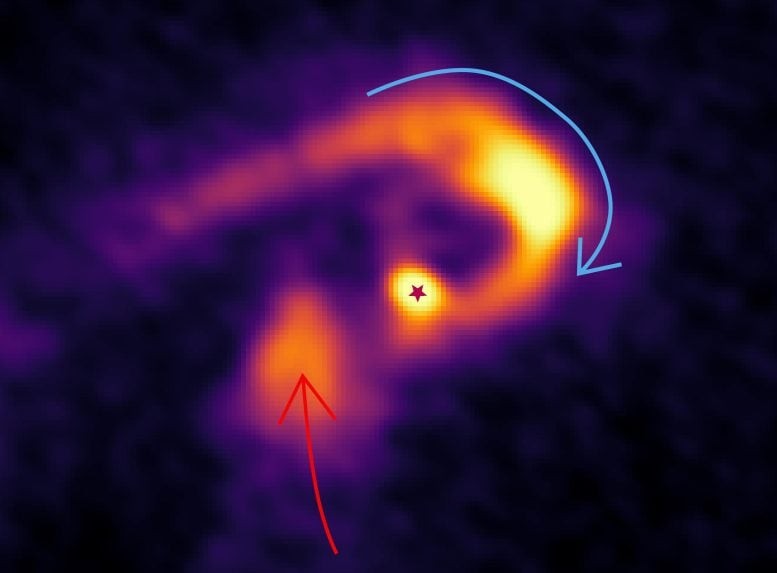
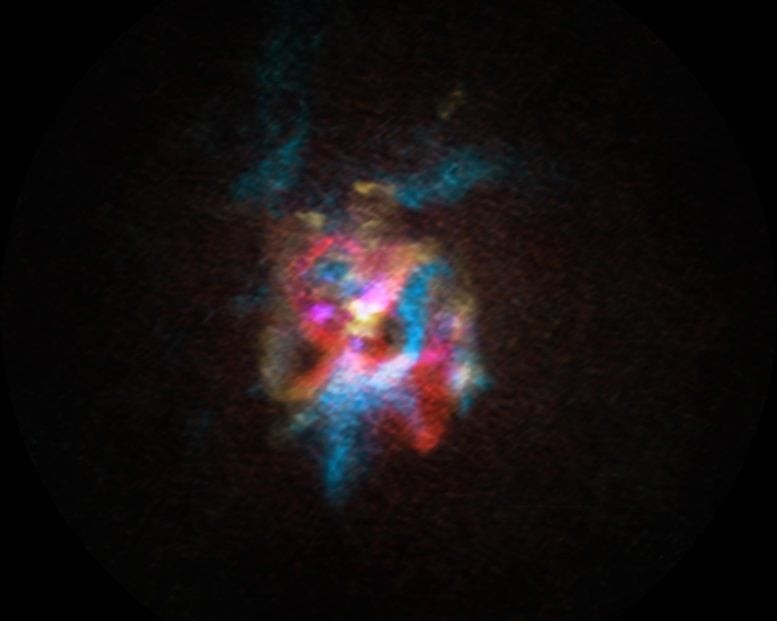
Figure 1. Secret Fuel Driving the Growth of Giant Stars Revealed.
The Mystery of High-Mass Formation
For decades, astronomers suspected that enormous accretion disks—rotating structures of dust and gas—supplied the fuel for these giants. But new research led by scientists at Kyoto University and the University of Tokyo suggests a different mechanism at play. Figure 1 shows Secret Fuel Driving the Growth of Giant Stars Revealed.
“Our work seems to show that these structures are being fed by streamers—flows of gas that bring matter from scales larger than a thousand astronomical units, essentially acting as massive gas highways,” explains corresponding author Fernando Olguin.
Gas Highways Feeding Stars
To uncover the truth, researchers needed sharper views of the distant nurseries where massive stars are born. Using the Atacama Large Millimeter/submillimeter Array (ALMA) in Chile, a network of antennas capable of detecting faint dust and molecular emissions, they captured unprecedented details of a young star in formation.
The observations revealed two distinct gas streamers feeding the star. One streamer connected directly to its central region, displaying velocity patterns that hinted at rotation and infall—strong evidence that it was delivering material fast enough to overcome the star’s own disruptive feedback.
Streamers Delivering Stellar Fuel
The team expected to find a large dust disk surrounding the star. Instead, they discovered either no disk or one so small it was nearly undetectable.
“We found streamers feeding what at that time was thought to be a disk, but to our surprise, there is either no disk or it is extremely small,” says Olguin.
This finding suggests that even without a large disk, gas streamers alone can deliver the fuel needed to build up massive stars, defying previous models of stellar growth.
A New Path to Stellar Growth
Looking ahead, the researchers plan to investigate other star-forming regions to see if gas streamers are a universal mechanism for forming massive stars. They also aim to probe the innermost regions around these young stars to confirm whether small disks exist—or if streamers are doing all the work.
Giants of the Universe
Massive stars—those more than eight times the mass of our sun—are cosmic powerhouses. They form quickly, shine intensely, and send out strong winds and radiation. The puzzle: with all that energy blasting outward, how do they keep pulling in material to grow so large?
The Old Theory — Accretion Disks
For years, astronomers thought these stars grew through enormous accretion disks—rotating structures of dust and gas feeding the young star like a cosmic conveyor belt. While disks work for smaller stars like our sun, they didn’t fully explain how massive stars keep gathering fuel against their own powerful outflows.
A New Clue — Cosmic Gas Highways
An international research team used the Atacama Large Millimeter/submillimeter Array (ALMA) in Chile to peer into star-forming regions. What they saw changed the picture: massive stars weren’t just fed by disks, but by streamers—huge flows of gas extending over thousands of astronomical units. These streamers act like “gas highways,” funneling material directly onto the star at high speed.
Breaking Expectations
The team expected to find a large dust disk, but instead discovered either no disk or one that was extremely small. Yet, the streamers alone seemed capable of delivering enough fuel to overcome the star’s own feedback. This means massive stars can grow without the traditional large disk—an entirely new pathway for stellar formation.
Source: SciTECHDaily
Cite this article:
Priyadharshini S (2025), Hidden Power Source of Massive Stars Finally Discovered, AnaTechMaz, pp.499
Recent Post
-
Solar Power from Space Could Transform Energy by 2050
A new cost-benefit analysis based on NASA’s current designs for space-based solar...
-
Nearby Galaxy Illuminated by the Brightest Radio Flash Ever Recorded
A fast radio burst (FRB) is a powerful surge of radio energy that lasts...
-
What Lies Beneath Jupiter’s Surface?
NASA’s Juno spacecraft has revealed that Jupiter’s core doesn’t have a sharp boundary, as...
-
Hidden Power Source of Massive Stars Finally Discovered
The universe is so vast that even our sun—over 330,000 times the mass of Earth—seems small...
-
NASA’s Parker Solar Probe Cracks a 70-Year-Old Solar Mystery
A research team led by the Southwest Research Institute (SwRI) has achieved the first...
-
Webb Telescope Uncovers 300 Cosmic Objects That Defy Expectations
The Mizzou research team began their investigation using two of JWST’s...
-
What if the Big Bang Wasn’t the Start? Supercomputers Hunt for Answers
For years, the question of what came before the Big Bang has been...
-
Astronomers Believe this Star May Soon Explode as a Supernova
A team from Chalmers University of Technology, Sweden, has discovered the largest ...
-
The Star That Nearly Disappeared: Astronomers Uncover a Cosmic Secret
ASASSN-24fw is an F-type star — slightly more massive than our Sun and...
Unusual Space Dust Uncovers Surprising Connection Between Distant Asteroids
About 4.6 billion years ago, the solar system emerged from a swirling...
-
The Cosmic "Hand of God" Reveals an Even Stranger Mystery
In 2009, NASA’s Chandra X-ray Observatory captured a remarkable image of a...
-
These Stars Don’t Shine by Fusion – They Consume Dark Matter
Scientists may have uncovered evidence for an entirely new class of star-like object that...
-
Unveiling the Sun’s Secret Threads in Spectacular Solar Flare Images
The most detailed images of a solar flare ever captured in the H-alpha wavelength (656.28...
-
Two Spacecraft Align to Create an Artificial Solar Eclipse in Space
The building blocks of a galaxy—stars, gas, and dust—emit light in a wide range of colors....
-
Two Spacecraft Synchronize to Simulate a Solar Eclipse in Space
Proba-3 is a groundbreaking mission designed to recreate the effect of a solar eclipse...