

Secrets of Hot Jupiters Revealed Through their Unusual Orbits
To address this challenge, a research team led by PhD student Yugo Kawai and Assistant Professor Akihiko Fukui at the University of Tokyo’s Graduate School of Arts and Sciences developed a novel observational method that focuses on the timing of high-eccentricity migration. In this scenario, a planet begins on a highly elongated orbit, and repeated close encounters with its star gradually circularize the orbit through tidal forces. The duration of this circularization depends on factors such as the planet’s mass, orbital period, and the strength of tidal interactions. For a hot Jupiter formed via high-eccentricity migration, this process must complete within the system’s lifetime. By calculating circularization times for over 500 known hot Jupiters, the team identified roughly 30 planets that defy expectations—they exhibit circular orbits even though their calculated circularization times exceed the ages of their planetary systems.
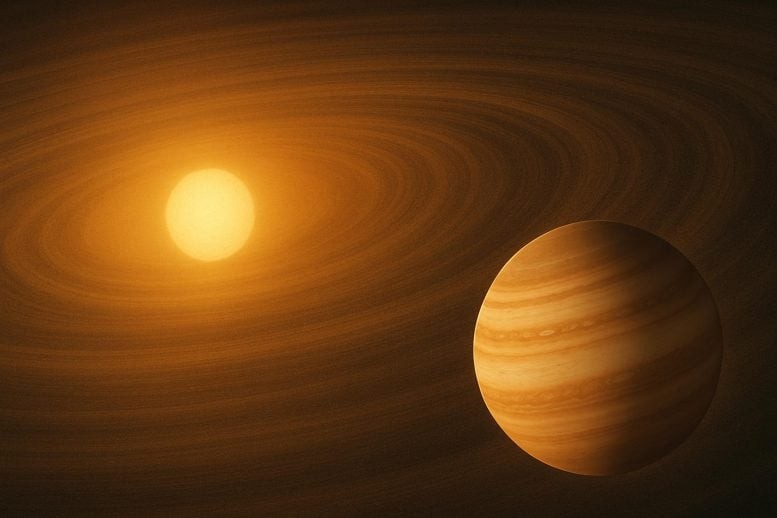
Figure 1. Uncovering the Hidden Paths of Hot Jupiters.
Signs of Smooth Disk Migration
These planets exhibit characteristics consistent with disk-driven migration. Their orbits are closely aligned with their host stars, indicating a gradual inward movement rather than chaotic gravitational interactions. Additionally, several of these hot Jupiters exist within multi-planet systems—configurations that would likely be disrupted by high-eccentricity migration, which can destabilize or eject neighboring planets. Figure 1 shows Uncovering the Hidden Paths of Hot Jupiters.
What These Planets Can Reveal Next
Identifying planets that preserve clues about their past migration is crucial for understanding planetary system formation. Future investigations of their atmospheres and chemical compositions could pinpoint where in the protoplanetary disk they originated, providing fresh insights into the formation and evolution of hot Jupiters.
Reading Orbital Clues
Show how scientists use orbital properties—alignment with the star, eccentricity, and multi-planet system presence—to infer each planet’s migration history. Highlight unusual cases that challenge existing models.
Hidden Patterns and Anomalies
Focus on the discovery of hot Jupiters whose orbits don’t match theoretical expectations, like circular orbits that should take longer than their system’s age to form. Explain why these “exceptions” are key to understanding planetary evolution.
What Hot Jupiters Reveal About Planetary Systems
Conclude by connecting hot Jupiter studies to the broader picture: how planets form, migrate, and interact in their systems. Emphasize how ongoing observations of atmospheres, compositions, and orbital dynamics continue to unlock the secrets of these exotic worlds.
Source: SciTECHDaily
Cite this article:
Priyadharshini S (2025), Secrets of Hot Jupiters Revealed Through their Unusual Orbits, AnaTechMaz, pp.645
Recent Post
-
Scientists Crack the Milky Way’s Long-Standing Chemical Mystery
Scientists at the Institute of Cosmos Sciences of the University of Barcelona (ICCUB) and the French National...
-
Astronomers Discover Giant Exoplanet 18 Times the Mass of Jupiter in Distant Star System
OASIS plays a key role in identifying the most promising candidates....
-
Most Detailed Black Hole Accretion Model Ever Revealed by Scientists
“This marks the first time we can observe what happens when the key physical processes governing...
-
Possible Building Block of Life Spotted on Distant Exoplanet, but Scientists Advise Caution
The key question for TRAPPIST-1e is simple: if it has an atmosphere...
-
Astronomers Spot One of the Universe’s Biggest Rotating Cosmic Structures
Researchers have discovered a remarkably thin chain of 14...
-

Hidden Dark Matter Around Black Holes Revealed by Gravitational Waves
The study focuses on extreme mass-ratio inspirals (EMRIs), which occur....
-
Unveiling the Universe’s Fiercest Explosions: Fresh Insights into X-Ray Bursts
The rp-process relies on numerous nuclei located near the proton...
-

Universe’s Expansion Gets a New Twist Through Gravitational Lensing
The universe is vast and continues to grow, even though its.....
-
Black Hole Launches Near-Light-Speed Winds in Just Hours
Using XMM-Newton and the JAXA-led XRISM mission, scientists studied the supermassive black hole at...

Ancient Asteroids Could Reveal the Blueprint for Space Mining
Researchers at ICE-CSIC selected and characterized meteorite samples that were later analyzed using...
-

Scientists Chart the Invisible Universe, Uncovering Fresh Insights into Dark Matter and Dark Energy
Between 2013 and 2019, the...
-
Surprising Discoveries Suggest Uranus and Neptune are Very Different Than Expected
To explore these ideas, the researchers created a new technique to simulate...
-
Astronomers Snap Stunning Photo of a Real-Life “Tatooine” with Two Suns
Directly capturing an image of a planet outside our solar system is rare—but...
-
James Webb Finds its Strongest Evidence Yet of an Atmosphere Around a Rocky Exoplanet
Gases such as water vapor can absorb specific wavelengths of near...
-
Secrets of Hot Jupiters Revealed Through their Unusual Orbits
To address this challenge, a research team led by PhD student Yugo Kawai and Assistant Professor...