

Most Detailed Black Hole Accretion Model Ever Revealed by Scientists
Capturing Accretion Physics Without Simplifications
“This marks the first time we can observe what happens when the key physical processes governing black hole accretion are modeled with full accuracy,” said lead author Lizhong Zhang. “These systems are highly nonlinear—any simplifying assumption can drastically alter the results. What’s most exciting is that our simulations now consistently reproduce behaviors observed across different black hole systems, from ultraluminous X-ray sources to X-ray binaries. In essence, we’re able to ‘observe’ these systems not with a telescope, but through computational modeling.”
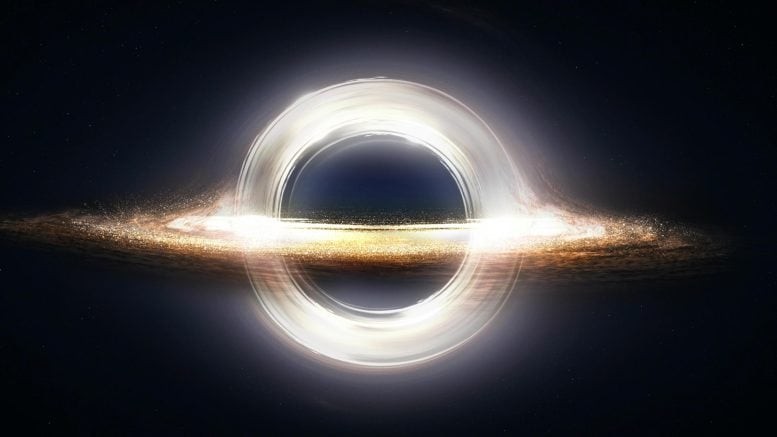
Figure 1. Groundbreaking Black Hole Accretion Model Achieved.
Because black holes generate extremely strong gravitational forces, any realistic model must incorporate Einstein’s theory of general relativity, which describes how massive objects warp spacetime. When large amounts of matter fall toward a black hole, it is also crucial to account for how the emitted radiation (light) travels through this curved spacetime and interacts with surrounding gas. Earlier simulations, however, could not tackle all these mathematical challenges simultaneously, leaving key aspects of the physics unmodeled. Figure 1 shows Groundbreaking Black Hole Accretion Model Achieved.
Overcoming the Limits of Earlier Models
Much like a physics student begins with simplified “toy” models that capture only a subset of real-world variables, early attempts to simulate radiation around black holes relied on necessary shortcuts.
These approximations were unavoidable because solving the full equations is extremely complex and computationally demanding. By combining decades of accumulated insights, Zhang and his team developed new algorithms that solve the equations directly, without approximations. “Currently, ours is the only algorithm that model’s radiation accurately within the framework of general relativity,” he added.
Simulating Stellar-Mass Black Holes
The study focuses on accretion onto stellar-mass black holes, which are roughly 10 times the mass of the Sun—far smaller than supermassive black holes like Sgr A* at the center of our galaxy. Simulations are especially important for these black holes because, unlike their supermassive counterparts, they cannot be imaged directly and appear only as points of light. Researchers must instead analyze the light’s spectrum to infer the energy distribution around the black hole.
Stellar-mass black holes evolve on human timescales, from minutes to hours, compared with supermassive black holes, which change over years or even centuries. This makes them ideal for studying the real-time dynamics and evolution of accretion systems.
Through their simulations, the researchers were able to capture how matter behaves as it spirals into stellar-mass black holes, forming turbulent, radiation-dominated accretion disks, driving powerful winds, and occasionally producing energetic jets. They found that their model closely matched the spectra observed from real black holes. This alignment between simulation and observation is critical, providing a stronger basis for interpreting the limited data available on these distant objects.
Matching Simulations with Observations
Looking ahead, the team aims to test whether their model can be applied to all types of black holes. Beyond stellar-mass black holes, the simulations could provide new insights into supermassive black holes, which play a key role in shaping galaxy evolution. The researchers plan to refine their approach to account for the varied ways radiation interacts with matter across a wide range of temperatures and densities.
Source: SciTECHDaily
Cite this article:
Priyadharshini S (2025), Most Detailed Black Hole Accretion Model Ever Revealed by Scientists, AnaTechMaz, pp.633
Recent Post
-
Scientists Crack the Milky Way’s Long-Standing Chemical Mystery
Scientists at the Institute of Cosmos Sciences of the University of Barcelona (ICCUB) and the French National...
-
Astronomers Discover Giant Exoplanet 18 Times the Mass of Jupiter in Distant Star System
OASIS plays a key role in identifying the most promising candidates....
-
Most Detailed Black Hole Accretion Model Ever Revealed by Scientists
“This marks the first time we can observe what happens when the key physical processes governing...
-
Possible Building Block of Life Spotted on Distant Exoplanet, but Scientists Advise Caution
The key question for TRAPPIST-1e is simple: if it has an atmosphere...
-
Astronomers Spot One of the Universe’s Biggest Rotating Cosmic Structures
Researchers have discovered a remarkably thin chain of 14...
-
Hidden Dark Matter Around Black Holes Revealed by Gravitational Waves
The study focuses on extreme mass-ratio inspirals (EMRIs), which occur....
-
Unveiling the Universe’s Fiercest Explosions: Fresh Insights into X-Ray Bursts
The rp-process relies on numerous nuclei located near the proton...
-

Universe’s Expansion Gets a New Twist Through Gravitational Lensing
The universe is vast and continues to grow, even though its.....
-
Black Hole Launches Near-Light-Speed Winds in Just Hours
Using XMM-Newton and the JAXA-led XRISM mission, scientists studied the supermassive black hole at...

Ancient Asteroids Could Reveal the Blueprint for Space Mining
Researchers at ICE-CSIC selected and characterized meteorite samples that were later analyzed using...
-

Scientists Chart the Invisible Universe, Uncovering Fresh Insights into Dark Matter and Dark Energy
Between 2013 and 2019, the...
-
Surprising Discoveries Suggest Uranus and Neptune are Very Different Than Expected
To explore these ideas, the researchers created a new technique to simulate...
-
Astronomers Snap Stunning Photo of a Real-Life “Tatooine” with Two Suns
Directly capturing an image of a planet outside our solar system is rare—but...
-
James Webb Finds its Strongest Evidence Yet of an Atmosphere Around a Rocky Exoplanet
Gases such as water vapor can absorb specific wavelengths of near...
-
Secrets of Hot Jupiters Revealed Through their Unusual Orbits
To address this challenge, a research team led by PhD student Yugo Kawai and Assistant Professor...