

James Webb Finds its Strongest Evidence Yet of an Atmosphere Around a Rocky Exoplanet
Gases such as water vapor can absorb specific wavelengths of near-infrared light emitted from the planet’s surface before the radiation escapes through the atmosphere. As a result, the planet appears cooler because the telescope detects less outgoing light. Another possibility is the presence of bright silicate clouds, which could cool the atmosphere by reflecting incoming starlight.
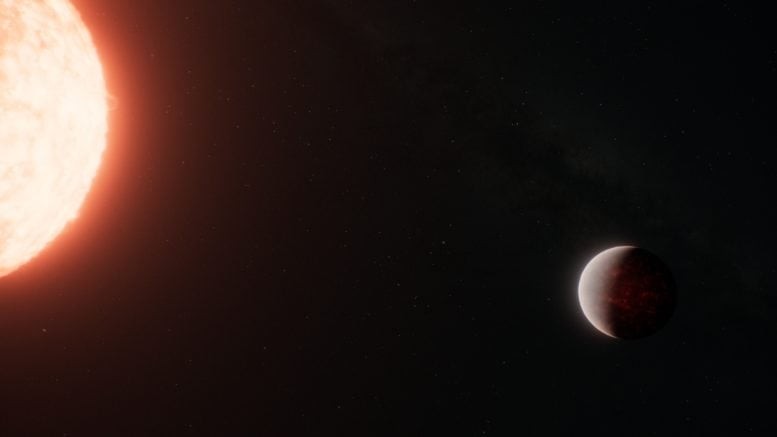
Figure 1. James Webb’s Strongest Evidence Yet of a Rocky Exoplanet Atmosphere.
To explain the planet’s unusually low density, the research team also considered a structural difference: it may have a relatively small iron core and a rocky mantle composed of material less dense than Earth’s rock. Figure 1 shows James Webb’s Strongest Evidence Yet of a Rocky Exoplanet Atmosphere.
TOI-561 b stands out among ultra–short-period planets because it orbits an exceptionally old, iron-poor star—roughly twice the age of our Sun—located in the Milky Way’s thick disk. This suggests the planet formed in a vastly different chemical environment than planets in our solar system. Its composition may therefore reflect the types of worlds that formed when the universe was much younger.
Testing the Atmosphere Hypothesis
The research team also proposed that TOI-561 b could be enveloped by a thick atmosphere, making the planet appear larger than it truly is. Although small planets exposed to intense stellar radiation for billions of years are generally expected to be airless, some observations indicate that these worlds may not be composed solely of bare rock or molten lava.
To test this idea, scientists used Webb’s Near-Infrared Spectrograph (NIRSpec) to measure the planet’s dayside temperature by analyzing its near-infrared brightness. The method tracks the slight drop in brightness of the star–planet system when the planet passes behind its host star—an approach previously used to study atmospheres in the TRAPPIST-1 system and other rocky exoplanets.
If TOI-561 b were a completely atmosphere-free rocky world, unable to redistribute heat to its nightside, its dayside temperature should approach about 4,900°F (2,700°C). Instead, NIRSpec observations indicate a much cooler dayside temperature of roughly 3,200°F (1,800°C)—still extreme, but significantly lower than expected.
A Delicate Balance of Magma and Gas
To account for this discrepancy, the team explored several possibilities. A global magma ocean might transport some heat, but without an atmosphere, the nightside would likely be solid, restricting circulation away from the dayside. Another scenario involves a thin layer of vaporized rock hovering above the magma ocean, though such a layer alone would not produce the level of cooling observed.
These findings represent the first results from Webb’s General Observers Program 3860, which monitored the TOI-561 system continuously for more than 37 hours as the planet completed nearly four full orbits of its star. The team is now analyzing the complete data set to map temperatures across the entire planet and better constrain the composition of its atmosphere.
Source: SciTECHDaily
Cite this article:
Priyadharshini S (2025), James Webb Finds its Strongest Evidence Yet of an Atmosphere Around a Rocky Exoplanet, AnaTechMaz, pp.644
Recent Post
-
Scientists Crack the Milky Way’s Long-Standing Chemical Mystery
Scientists at the Institute of Cosmos Sciences of the University of Barcelona (ICCUB) and the French National...
-
Astronomers Discover Giant Exoplanet 18 Times the Mass of Jupiter in Distant Star System
OASIS plays a key role in identifying the most promising candidates....
-
Most Detailed Black Hole Accretion Model Ever Revealed by Scientists
“This marks the first time we can observe what happens when the key physical processes governing...
-
Possible Building Block of Life Spotted on Distant Exoplanet, but Scientists Advise Caution
The key question for TRAPPIST-1e is simple: if it has an atmosphere...
-

Astronomers Spot One of the Universe’s Biggest Rotating Cosmic Structures
Researchers have discovered a remarkably thin chain of 14...
-
Hidden Dark Matter Around Black Holes Revealed by Gravitational Waves
The study focuses on extreme mass-ratio inspirals (EMRIs), which occur....
-
Unveiling the Universe’s Fiercest Explosions: Fresh Insights into X-Ray Bursts
The rp-process relies on numerous nuclei located near the proton...
-

Universe’s Expansion Gets a New Twist Through Gravitational Lensing
The universe is vast and continues to grow, even though its.....
-
Black Hole Launches Near-Light-Speed Winds in Just Hours
Using XMM-Newton and the JAXA-led XRISM mission, scientists studied the supermassive black hole at...

Ancient Asteroids Could Reveal the Blueprint for Space Mining
Researchers at ICE-CSIC selected and characterized meteorite samples that were later analyzed using...
-
Scientists Chart the Invisible Universe, Uncovering Fresh Insights into Dark Matter and Dark Energy
Between 2013 and 2019, the...
-
Surprising Discoveries Suggest Uranus and Neptune are Very Different Than Expected
To explore these ideas, the researchers created a new technique to simulate...
-
Astronomers Snap Stunning Photo of a Real-Life “Tatooine” with Two Suns
Directly capturing an image of a planet outside our solar system is rare—but...
-
James Webb Finds its Strongest Evidence Yet of an Atmosphere Around a Rocky Exoplanet
Gases such as water vapor can absorb specific wavelengths of near...
-
Secrets of Hot Jupiters Revealed Through their Unusual Orbits
To address this challenge, a research team led by PhD student Yugo Kawai and Assistant Professor...