

Unveiling the Universe’s Fiercest Explosions: Fresh Insights into X-Ray Bursts
The rp-process relies on numerous nuclei located near the proton drip line—regions where nuclei are highly unstable, short-lived, and often have poorly known masses. This makes it extremely difficult to model their reaction pathways with accuracy.
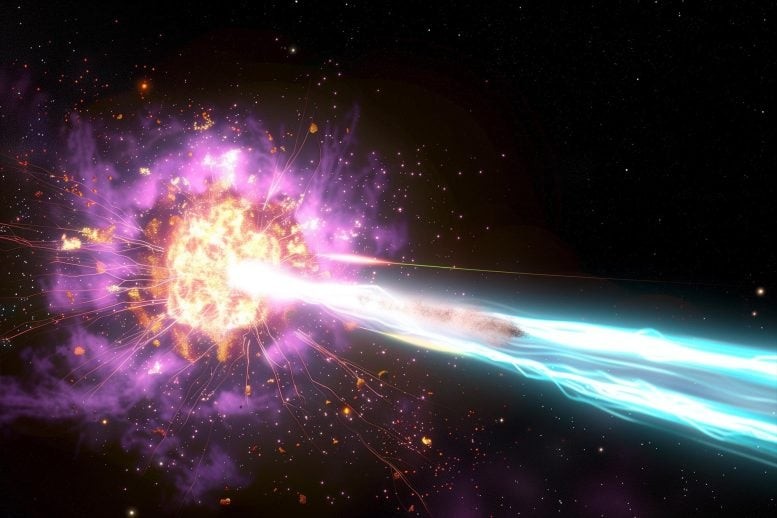
Figure 1. Fresh Discoveries About the Cosmos’s Fiercest X-Ray Bursts.
To obtain precise mass values for phosphorus-26 and sulfur-27, the team performed direct measurements using magnetic-rigidity-defined isochronous mass spectrometry at the Cooling Storage Ring of the Heavy Ion Research Facility in Lanzhou (HIRFL-CSR). Their results show that the proton separation energy of sulfur-27 is 129–267 keV higher than previously reported, with an eightfold improvement in measurement accuracy. Figure 1 shows Fresh Discoveries About the Cosmos’s Fiercest X-Ray Bursts.
Impact on X-Ray Burst Reaction Rates
Armed with these new mass measurements, the researchers found that under X-ray burst conditions, the updated reaction rate for 26P(p,γ)27S is dramatically enhanced across the temperature range of 0.4–2 gigakelvin (GK)—reaching up to five times earlier estimates at 1 GK. The uncertainty in the reverse reaction rate has also been significantly reduced. This improved rate boosts the abundance ratio of sulfur-27 to phosphorus-26, indicating a more effective reaction flow toward sulfur-27.
“Our high-precision mass measurements and the resulting updated reaction rate offer more dependable inputs for astrophysical reaction networks, helping to resolve long-standing uncertainties in nucleosynthesis pathways in the phosphorus–sulfur region during X-ray bursts,” said Dr. Suqing Hou of IMP, a corresponding author of the study.
What Are X-Ray Bursts? The Universe’s Extreme Thermonuclear Flashes
X-ray bursts are among the most violent thermonuclear explosions in the cosmos. They erupt on the surfaces of neutron stars—ultra-dense remnants left behind after massive stars die. When these neutron stars pull in gas from a nearby companion star, the material piles up on their surface until it ignites in a runaway nuclear reaction. This sudden release of energy produces a powerful, seconds-long flash of X-rays detectable across the galaxy.
In this part, we explore how these bursts occur, why neutron stars are the perfect sites for such intense explosions, and what makes X-ray bursts unique compared to other cosmic phenomena.
Inside the rp-Process: Nuclear Reactions at the Edge of Stability
The intense heat during an X-ray burst triggers rapid proton-capture reactions, known as the rp-process. This process creates heavier nuclei by adding protons at high speed. However, many of the nuclei involved lie near the proton drip line, where atoms become extremely unstable and difficult to study. Scientists struggle to map these nuclear pathways because the masses and lifetimes of such exotic nuclei are often uncertain. Recent measurements—particularly of phosphorus-26 and sulfur-27—have provided a major breakthrough, enabling more accurate modeling of reaction rates. This part focuses on the challenges of studying unstable nuclei and how new experimental data reshapes our understanding of nucleosynthesis during X-ray bursts.
New Insights Transform X-Ray Burst Models and Cosmic Chemistry
With newly improved mass data, especially for sulfur-27, researchers have recalculated key reaction rates that occur during X-ray bursts. The rate of the reaction 26P(p,γ)27S is now known to be much higher—up to five times earlier estimates under burst temperatures. This accelerates the flow of matter along the rp-process, increasing the production of certain isotopes and reducing long-standing uncertainties in astrophysical models.
These refined reaction rates allow scientists to build more accurate simulations of X-ray bursts, helping us better understand the chemical evolution of galaxies and the role neutron stars play in forging new elements.
Source: SciTECHDaily
Cite this article:
Priyadharshini S (2025), Unveiling the Universe’s Fiercest Explosions: Fresh Insights into X-Ray Bursts, AnaTechMaz, pp.637
Recent Post
-
Scientists Crack the Milky Way’s Long-Standing Chemical Mystery
Scientists at the Institute of Cosmos Sciences of the University of Barcelona (ICCUB) and the French National...
-
Astronomers Discover Giant Exoplanet 18 Times the Mass of Jupiter in Distant Star System
OASIS plays a key role in identifying the most promising candidates....
-
Most Detailed Black Hole Accretion Model Ever Revealed by Scientists
“This marks the first time we can observe what happens when the key physical processes governing...
-
Possible Building Block of Life Spotted on Distant Exoplanet, but Scientists Advise Caution
The key question for TRAPPIST-1e is simple: if it has an atmosphere...
-

Astronomers Spot One of the Universe’s Biggest Rotating Cosmic Structures
Researchers have discovered a remarkably thin chain of 14...
-
Hidden Dark Matter Around Black Holes Revealed by Gravitational Waves
The study focuses on extreme mass-ratio inspirals (EMRIs), which occur....
-
Unveiling the Universe’s Fiercest Explosions: Fresh Insights into X-Ray Bursts
The rp-process relies on numerous nuclei located near the proton...
-

Universe’s Expansion Gets a New Twist Through Gravitational Lensing
The universe is vast and continues to grow, even though its.....
-
Black Hole Launches Near-Light-Speed Winds in Just Hours
Using XMM-Newton and the JAXA-led XRISM mission, scientists studied the supermassive black hole at...

Ancient Asteroids Could Reveal the Blueprint for Space Mining
Researchers at ICE-CSIC selected and characterized meteorite samples that were later analyzed using...
-
Scientists Chart the Invisible Universe, Uncovering Fresh Insights into Dark Matter and Dark Energy
Between 2013 and 2019, the...
-
Surprising Discoveries Suggest Uranus and Neptune are Very Different Than Expected
To explore these ideas, the researchers created a new technique to simulate...
-
Astronomers Snap Stunning Photo of a Real-Life “Tatooine” with Two Suns
Directly capturing an image of a planet outside our solar system is rare—but...
-
James Webb Finds its Strongest Evidence Yet of an Atmosphere Around a Rocky Exoplanet
Gases such as water vapor can absorb specific wavelengths of near...
-

Secrets of Hot Jupiters Revealed Through their Unusual Orbits
To address this challenge, a research team led by PhD student Yugo Kawai and Assistant Professor...