

Scientists Chart the Invisible Universe, Uncovering Fresh Insights into Dark Matter and Dark Energy
Between 2013 and 2019, the Dark Energy Survey (DES) used the Dark Energy Camera (DECam) on the 4-meter Blanco Telescope at Chile’s Cerro Tololo Inter-American Observatory to collect extensive observations of the cosmos. The survey measured the shapes of over 150 million galaxies across roughly 5,000 square degrees—about one-eighth of the sky. This unprecedented map allows scientists to trace how matter is distributed throughout the universe and gain deeper insight into the nature of dark energy.
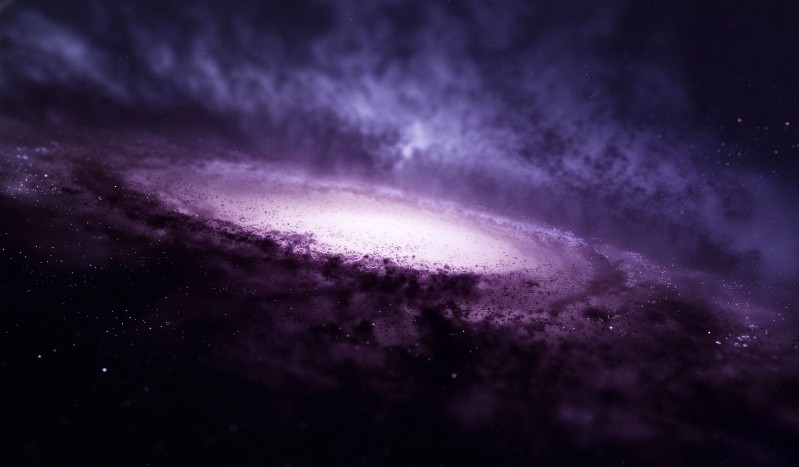
Figure 1. Tracing the Hidden Structure of the Universe.
DES data has also been instrumental in probing emerging tensions within the standard cosmological model, known as Lambda–CDM (ΛCDM). Some measurements of the nearby universe derived from galaxy surveys such as DES appear to be at odds with observations of the early universe obtained from the cosmic microwave background (CMB)—the residual radiation left over from the Big Bang. Figure 1 shows Tracing the Hidden Structure of the Universe
Beyond its core survey, the Dark Energy Camera (DECam) also imaged vast regions of the sky outside the official DES footprint. In a new set of studies published in the Open Journal of Astrophysics, researchers from the University of Chicago leveraged these additional observations to nearly double the number of galaxies with precisely measured shapes.
This expanded dataset covers thousands of square degrees beyond the original DES area. Although these observations were not originally intended for weak gravitational lensing studies, the team demonstrated that they could still be used to rigorously examine the reported discrepancies within the ΛCDM model using an independent dataset.
Distortion and distance
In the case of weak gravitational lensing, galaxies appear slightly distorted, or “sheared,” because their light is deflected as it travels through the large-scale structure of the universe before reaching Earth. This effect is extremely subtle and can only be detected through careful statistical analysis of large numbers of galaxies.
For the DECADE project, researchers analyzed the shapes of more than 100 million galaxies. They also estimated galaxy distances by measuring redshift—the shift of light toward longer wavelengths caused by a galaxy’s motion away from Earth—which allows scientists to determine how far away each galaxy is.
Using these measurements of galaxy shapes and distances, the team fit the data to the Lambda–CDM (ΛCDM) model, the standard framework of cosmology that describes the universe in terms of dark energy, dark matter, ordinary matter, neutrinos, and radiation. “This is a well-tested model that has withstood extensive scrutiny over the past decade, and our results add another important piece to that story,” said Chihway Chang.
The DECADE analysis shows that the growth of cosmic structure aligns with ΛCDM predictions, reinforcing findings from previous weak lensing studies. “When we compare our results with constraints extrapolated from early-universe measurements of the cosmic microwave background, we also find strong agreement,” Chang said. “This comparison has been debated for several years, and our results indicate no tension between weak lensing and CMB measurements.”
By combining DECADE lensing data with that from DES, the researchers produced the largest galaxy lensing analysis to date, incorporating measurements from 270 million galaxies across 13,000 square degrees of sky. “With such a large dataset, we can afford to be especially conservative,” Anbajagane said. “We focus only on the most reliable measurements rather than every possible one, while still achieving the precision needed to meaningfully compare with CMB results.”
An unconventional weak lensing survey
“One of the most distinctive aspects of this work is how we approached image quality,” Anbajagane explained. Traditional weak lensing surveys collect tens of thousands of images over many years, discarding many that fail strict quality thresholds. In contrast, DECADE repurposed archival images originally captured for a wide range of scientific goals—from studying stars and dwarf galaxies to distant galaxy clusters—and applied more flexible image-quality criteria.
The final catalog, combined with DES data, covers roughly one-third of the sky—about 13,000 square degrees—and includes 270 million galaxies. Released to the scientific community this fall, the dataset has already attracted widespread interest. Researchers have begun using it to study dwarf galaxies and construct detailed maps of mass across the universe. “We’re actively expanding the range of analyses we apply to this dataset in collaboration with experts at the Kavli Institute for Cosmological Physics,” Anbajagane said.
Source: SciTECHDaily
Cite this article:
Priyadharshini S (2025), Scientists Chart the Invisible Universe, Uncovering Fresh Insights into Dark Matter and Dark Energy, AnaTechMaz, pp.641
Recent Post
-
Scientists Crack the Milky Way’s Long-Standing Chemical Mystery
Scientists at the Institute of Cosmos Sciences of the University of Barcelona (ICCUB) and the French National...
-
Astronomers Discover Giant Exoplanet 18 Times the Mass of Jupiter in Distant Star System
OASIS plays a key role in identifying the most promising candidates....
-
Most Detailed Black Hole Accretion Model Ever Revealed by Scientists
“This marks the first time we can observe what happens when the key physical processes governing...
-
Possible Building Block of Life Spotted on Distant Exoplanet, but Scientists Advise Caution
The key question for TRAPPIST-1e is simple: if it has an atmosphere...
-
Astronomers Spot One of the Universe’s Biggest Rotating Cosmic Structures
Researchers have discovered a remarkably thin chain of 14...
-
Hidden Dark Matter Around Black Holes Revealed by Gravitational Waves
The study focuses on extreme mass-ratio inspirals (EMRIs), which occur....
-
Unveiling the Universe’s Fiercest Explosions: Fresh Insights into X-Ray Bursts
The rp-process relies on numerous nuclei located near the proton...
-

Universe’s Expansion Gets a New Twist Through Gravitational Lensing
The universe is vast and continues to grow, even though its.....
-
Black Hole Launches Near-Light-Speed Winds in Just Hours
Using XMM-Newton and the JAXA-led XRISM mission, scientists studied the supermassive black hole at...

Ancient Asteroids Could Reveal the Blueprint for Space Mining
Researchers at ICE-CSIC selected and characterized meteorite samples that were later analyzed using...
-
Scientists Chart the Invisible Universe, Uncovering Fresh Insights into Dark Matter and Dark Energy
Between 2013 and 2019, the...
-
Surprising Discoveries Suggest Uranus and Neptune are Very Different Than Expected
To explore these ideas, the researchers created a new technique to simulate...
-
Astronomers Snap Stunning Photo of a Real-Life “Tatooine” with Two Suns
Directly capturing an image of a planet outside our solar system is rare—but...
-
James Webb Finds its Strongest Evidence Yet of an Atmosphere Around a Rocky Exoplanet
Gases such as water vapor can absorb specific wavelengths of near...
-
Secrets of Hot Jupiters Revealed Through their Unusual Orbits
To address this challenge, a research team led by PhD student Yugo Kawai and Assistant Professor...