

Black Hole Launches Near-Light-Speed Winds in Just Hours
Peering Into NGC 3783’s Core
Using XMM-Newton and the JAXA-led XRISM mission, scientists studied the supermassive black hole at the heart of NGC 3783, which weighs about 30 million times the Sun’s mass. As it devours surrounding material, it powers an intensely bright Active Galactic Nucleus (AGN), capable of launching powerful jets and winds across space.
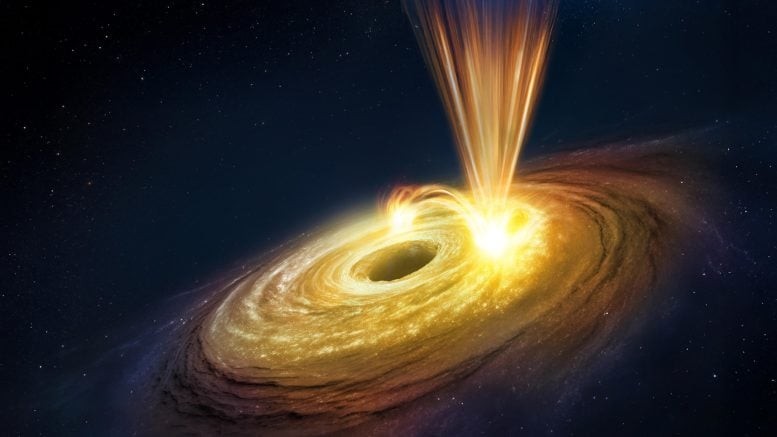
Figure 1. Black Hole Unleashes Near-Light-Speed Winds in Hours.
“These winds appear to arise when the AGN’s tangled magnetic fields suddenly ‘untwist’—like solar flares, but on an unimaginably larger scale,” explains Matteo Guainazzi, ESA XRISM Project Scientist and co-author of the study. Figure 1 shows Black Hole Unleashes Near-Light-Speed Winds in Hours.
Black Hole Winds Mirror Solar Eruptions
The powerful winds from supermassive black holes resemble the Sun’s coronal mass ejections—enormous bursts of superheated material that shoot into space during intense solar activity. This similarity hints that black holes can sometimes behave like gigantic versions of our Sun, governed by magnetic eruptions.
“These ‘windy’ AGNs influence the evolution of their host galaxies and the formation of new stars,” explains Camille Diez, ESA Research Fellow. “Understanding AGN magnetism and how it drives such winds is crucial to piecing together the history of galaxies across the Universe.”
Twin Telescopes Capture a Rapid Cosmic Event
For over 25 years, XMM-Newton has explored the Universe’s hottest and most extreme objects, while XRISM, launched in September 2023, investigates how matter and energy flow through space. Together, they tracked a spectacular black hole flare and the ultra-fast winds that followed.
XMM-Newton used its Optical Monitor to follow the flare’s evolution and its European Photon Imaging Camera (EPIC) to measure the wind’s spread. Meanwhile, XRISM’s Resolve instrument examined the winds’ speed, structure, and driving mechanisms.
Peering into the Heart of NGC 3783
Astronomers focused on the galaxy NGC 3783, home to a supermassive black hole about 30 million times the mass of the Sun. Using XMM-Newton and XRISM, they studied the galaxy’s Active Galactic Nucleus (AGN), the intensely bright core powered by matter falling into the black hole.
The observations revealed powerful winds forming as the AGN’s tangled magnetic fields suddenly “untwisted”—a process similar to solar flares, but on a scale millions of times larger.
Cosmic Winds Echo Solar Explosions
These black hole winds resemble the Sun’s coronal mass ejections—huge bursts of superheated material that shoot into space during solar activity.
Just like solar flares influence the solar system, these AGN winds shape their host galaxies, regulating star formation and the overall evolution of the galaxy. Understanding the magnetic forces behind these winds helps scientists trace the cosmic history of galaxies.
Two Telescopes Capture a Rapid Event
XMM-Newton, with over 25 years of study, and the recently launched XRISM, worked together to monitor the flare and the fast-moving winds. XMM-Newton tracked the flare’s evolution, while XRISM measured the winds’ speed, structure, and driving forces.
Their combined observations revealed winds reaching near-light speeds in just hours—a striking demonstration that the physics governing our Sun can also operate on colossal cosmic scales.
Source: SciTECHDaily
Cite this article:
Priyadharshini S (2025), Black Hole Launches Near-Light-Speed Winds in Just Hours, AnaTechMaz, pp.639
Recent Post
-
Scientists Crack the Milky Way’s Long-Standing Chemical Mystery
Scientists at the Institute of Cosmos Sciences of the University of Barcelona (ICCUB) and the French National...
-
Astronomers Discover Giant Exoplanet 18 Times the Mass of Jupiter in Distant Star System
OASIS plays a key role in identifying the most promising candidates....
-
Most Detailed Black Hole Accretion Model Ever Revealed by Scientists
“This marks the first time we can observe what happens when the key physical processes governing...
-
Possible Building Block of Life Spotted on Distant Exoplanet, but Scientists Advise Caution
The key question for TRAPPIST-1e is simple: if it has an atmosphere...
-
Astronomers Spot One of the Universe’s Biggest Rotating Cosmic Structures
Researchers have discovered a remarkably thin chain of 14...
-
Hidden Dark Matter Around Black Holes Revealed by Gravitational Waves
The study focuses on extreme mass-ratio inspirals (EMRIs), which occur....
-
Unveiling the Universe’s Fiercest Explosions: Fresh Insights into X-Ray Bursts
The rp-process relies on numerous nuclei located near the proton...
-

Universe’s Expansion Gets a New Twist Through Gravitational Lensing
The universe is vast and continues to grow, even though its.....
-
Black Hole Launches Near-Light-Speed Winds in Just Hours
Using XMM-Newton and the JAXA-led XRISM mission, scientists studied the supermassive black hole at...

Ancient Asteroids Could Reveal the Blueprint for Space Mining
Researchers at ICE-CSIC selected and characterized meteorite samples that were later analyzed using...
-
Scientists Chart the Invisible Universe, Uncovering Fresh Insights into Dark Matter and Dark Energy
Between 2013 and 2019, the...
-
Surprising Discoveries Suggest Uranus and Neptune are Very Different Than Expected
To explore these ideas, the researchers created a new technique to simulate...
-
Astronomers Snap Stunning Photo of a Real-Life “Tatooine” with Two Suns
Directly capturing an image of a planet outside our solar system is rare—but...
-
James Webb Finds its Strongest Evidence Yet of an Atmosphere Around a Rocky Exoplanet
Gases such as water vapor can absorb specific wavelengths of near...
-
Secrets of Hot Jupiters Revealed Through their Unusual Orbits
To address this challenge, a research team led by PhD student Yugo Kawai and Assistant Professor...