

Possible Building Block of Life Spotted on Distant Exoplanet, but Scientists Advise Caution
Searching for an Atmosphere
“The key question for TRAPPIST-1e is simple: if it has an atmosphere, it could be habitable,” said Ranjan, an assistant professor at LPL. “But first, we need to determine whether an atmosphere exists at all.”
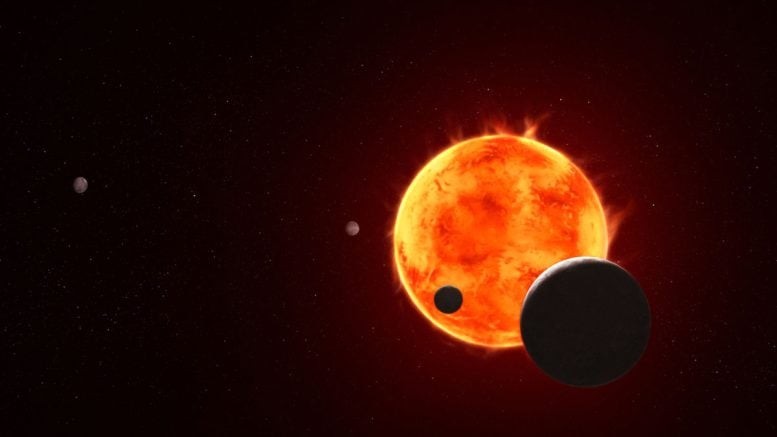
Figure 1. Distant Exoplanet Shows Signs of Potential Life-Building Molecule, Scientists Urge Caution.
To investigate, researchers used the James Webb Space Telescope’s Near-Infrared Spectrograph (NIRSpec) to observe TRAPPIST-1e as it transited its host star. During a transit, starlight passes through any planetary atmosphere, allowing astronomers to detect absorbed wavelengths and infer the presence of specific chemicals. The more transits observed, the clearer the atmospheric signature becomes. Figure 1 shows Distant Exoplanet Shows Signs of Potential Life-Building Molecule, Scientists Urge Caution.
Analysis of four transits revealed hints of methane. However, interpreting the results requires caution because TRAPPIST-1e orbits an M dwarf—an ultracool red dwarf about one-tenth the size of the Sun. Unlike the Sun, this dim, cool star could influence observed signals, raising the question: is the methane from the planet or the star itself?
To investigate, Ranjan’s team ran simulations of TRAPPIST-1e with methane-rich atmospheres, evaluating the likelihood of each scenario. In the most probable case, the planet resembled Titan, Saturn’s methane-rich moon. Yet even this scenario remained highly unlikely.
“Based on our latest analysis, the previously reported hint of an atmosphere is more likely just noise from the host star,” Ranjan said. “This doesn’t rule out the possibility that TRAPPIST-1e has an atmosphere—we simply need more data.”
Advancing Tools and Techniques
Ranjan noted that while the James Webb Space Telescope is transforming exoplanet science, it wasn’t originally designed to study small, Earth-like worlds.
“It was built long before we even knew these planets existed, so it’s remarkable that it can study them at all,” he explained. “Only a handful of Earth-sized planets are within reach for any detailed atmospheric analysis.”
New insights may come from NASA’s upcoming Pandora mission, scheduled for launch in early 2026. Led by Daniel Apai, professor of astronomy and planetary sciences at the University of Arizona’s Steward Observatory, Pandora is a small satellite designed to study exoplanet atmospheres and their host stars. It will observe stars hosting potentially habitable planets before, during, and after transits.
Meanwhile, researchers are developing new observational strategies and analytical techniques. One promising approach is the dual transit method, which observes TRAPPIST-1e and the system’s innermost, airless planet, TRAPPIST-1b, crossing the star simultaneously.
“These observations will help us separate stellar activity from any atmospheric signals the planet may have,” Ranjan said.
Source: SciTECHDaily
Cite this article:
Priyadharshini S (2025), Possible Building Block of Life Spotted on Distant Exoplanet, but Scientists Advise Caution, AnaTechMaz, pp.634
Recent Post
-
Scientists Crack the Milky Way’s Long-Standing Chemical Mystery
Scientists at the Institute of Cosmos Sciences of the University of Barcelona (ICCUB) and the French National...
-
Astronomers Discover Giant Exoplanet 18 Times the Mass of Jupiter in Distant Star System
OASIS plays a key role in identifying the most promising candidates....
-

Most Detailed Black Hole Accretion Model Ever Revealed by Scientists
“This marks the first time we can observe what happens when the key physical processes governing...
-
Possible Building Block of Life Spotted on Distant Exoplanet, but Scientists Advise Caution
The key question for TRAPPIST-1e is simple: if it has an atmosphere...
-

Astronomers Spot One of the Universe’s Biggest Rotating Cosmic Structures
Researchers have discovered a remarkably thin chain of 14...
-

Hidden Dark Matter Around Black Holes Revealed by Gravitational Waves
The study focuses on extreme mass-ratio inspirals (EMRIs), which occur....
-

Unveiling the Universe’s Fiercest Explosions: Fresh Insights into X-Ray Bursts
The rp-process relies on numerous nuclei located near the proton...
-

Universe’s Expansion Gets a New Twist Through Gravitational Lensing
The universe is vast and continues to grow, even though its.....
-

Black Hole Launches Near-Light-Speed Winds in Just Hours
Using XMM-Newton and the JAXA-led XRISM mission, scientists studied the supermassive black hole at...

Ancient Asteroids Could Reveal the Blueprint for Space Mining
Researchers at ICE-CSIC selected and characterized meteorite samples that were later analyzed using...
-

Scientists Chart the Invisible Universe, Uncovering Fresh Insights into Dark Matter and Dark Energy
Between 2013 and 2019, the...
-
Surprising Discoveries Suggest Uranus and Neptune are Very Different Than Expected
To explore these ideas, the researchers created a new technique to simulate...
-
Astronomers Snap Stunning Photo of a Real-Life “Tatooine” with Two Suns
Directly capturing an image of a planet outside our solar system is rare—but...
-
James Webb Finds its Strongest Evidence Yet of an Atmosphere Around a Rocky Exoplanet
Gases such as water vapor can absorb specific wavelengths of near...
-
Secrets of Hot Jupiters Revealed Through their Unusual Orbits
To address this challenge, a research team led by PhD student Yugo Kawai and Assistant Professor...