

Universe’s Expansion Gets a New Twist Through Gravitational Lensing
Measuring the Expansion of the Universe
The universe is vast and continues to grow, even though its total size remains unknown. Scientists can estimate its rate of expansion, but the process is complex. The farther away an object is, the faster it appears to be moving away from us.
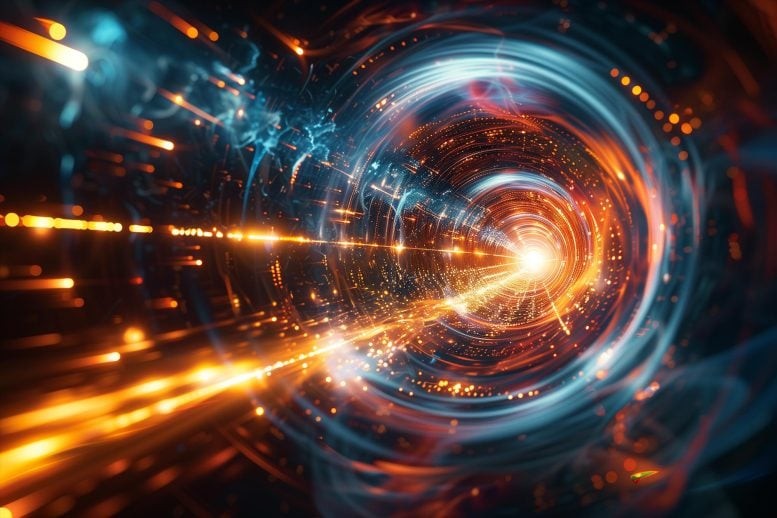
Figure 1. Gravitational Lensing Sheds New Light on the Universe’s Expansion.
On average, for every 3.3 million light-years (one megaparsec) from Earth, objects recede at about 73 kilometers per second. This rate—73 kilometers per second per megaparsec (km/s/Mpc)—is known as the Hubble constant. Figure 1 shows Gravitational Lensing Sheds New Light on the Universe’s Expansion.
Traditional Distance Ladders and a New Approach
For decades, astronomers have estimated the Hubble constant using distance ladders—methods built on well-understood objects like Cepheid variable stars and supernovae. These objects are considered reliable “rungs” because their properties are consistent across galaxies. By studying large samples over many years, researchers have narrowed the range of possible values for the Hubble constant. Yet, some uncertainty has remained, motivating the search for independent techniques.
A recent study led by Project Assistant Professor Kenneth Wong and postdoctoral researcher Eric Paic at the University of Tokyo’s Research Center for the Early Universe introduces such a method: time-delay cosmography. This approach reduces reliance on distance ladders and has broader potential for cosmology.
Using Gravitational Lensing to Track Cosmic Expansion
“To measure the Hubble constant with time-delay cosmography, you need a massive galaxy to act as a gravitational lens,” explained Wong. “The lens’s gravity bends light from background objects, creating distorted images. Under the right conditions, we see multiple images, each traveling along slightly different paths and taking different amounts of time to reach us.”
By tracking identical changes in these images that are slightly out of sync, astronomers can measure these time delays. Combining this with models of the lens galaxy’s mass distribution allows for a precise calculation of cosmic expansion. The resulting Hubble constant aligns well with other modern measurements.
Traditional Distance Ladders and a New Approach
For decades, astronomers have estimated the Hubble constant using distance ladders—methods built on well-understood objects like Cepheid variable stars and supernovae. These objects are considered reliable “rungs” because their properties are consistent across galaxies. By studying large samples over many years, researchers have narrowed the range of possible values for the Hubble constant. Yet, some uncertainty has remained, motivating the search for independent techniques.
Using Gravitational Lensing to Track Cosmic Expansion
“To measure the Hubble constant with time-delay cosmography, you need a massive galaxy to act as a gravitational lens,” explained Wong. “The lens’s gravity bends light from background objects, creating distorted images. Under the right conditions, we see multiple images, each traveling along slightly different paths and taking different amounts of time to reach us.”
By tracking identical changes in these images that are slightly out of sync, astronomers can measure these time delays. Combining this with models of the lens galaxy’s mass distribution allows for a precise calculation of cosmic expansion. The resulting Hubble constant aligns well with other modern measurements.
Source: SciTECHDaily
Cite this article:
Priyadharshini S (2025), Universe’s Expansion Gets a New Twist Through Gravitational Lensing, AnaTechMaz, pp.638
Recent Post
-
Scientists Crack the Milky Way’s Long-Standing Chemical Mystery
Scientists at the Institute of Cosmos Sciences of the University of Barcelona (ICCUB) and the French National...
-
Astronomers Discover Giant Exoplanet 18 Times the Mass of Jupiter in Distant Star System
OASIS plays a key role in identifying the most promising candidates....
-
Most Detailed Black Hole Accretion Model Ever Revealed by Scientists
“This marks the first time we can observe what happens when the key physical processes governing...
-
Possible Building Block of Life Spotted on Distant Exoplanet, but Scientists Advise Caution
The key question for TRAPPIST-1e is simple: if it has an atmosphere...
-
Astronomers Spot One of the Universe’s Biggest Rotating Cosmic Structures
Researchers have discovered a remarkably thin chain of 14...
-
Hidden Dark Matter Around Black Holes Revealed by Gravitational Waves
The study focuses on extreme mass-ratio inspirals (EMRIs), which occur....
-
Unveiling the Universe’s Fiercest Explosions: Fresh Insights into X-Ray Bursts
The rp-process relies on numerous nuclei located near the proton...
-
Universe’s Expansion Gets a New Twist Through Gravitational Lensing
The universe is vast and continues to grow, even though its.....
-
Black Hole Launches Near-Light-Speed Winds in Just Hours
Using XMM-Newton and the JAXA-led XRISM mission, scientists studied the supermassive black hole at...
Ancient Asteroids Could Reveal the Blueprint for Space Mining
Researchers at ICE-CSIC selected and characterized meteorite samples that were later analyzed using...
-
Scientists Chart the Invisible Universe, Uncovering Fresh Insights into Dark Matter and Dark Energy
Between 2013 and 2019, the...
-
Surprising Discoveries Suggest Uranus and Neptune are Very Different Than Expected
To explore these ideas, the researchers created a new technique to simulate...
-
Astronomers Snap Stunning Photo of a Real-Life “Tatooine” with Two Suns
Directly capturing an image of a planet outside our solar system is rare—but...
-
James Webb Finds its Strongest Evidence Yet of an Atmosphere Around a Rocky Exoplanet
Gases such as water vapor can absorb specific wavelengths of near...
-
Secrets of Hot Jupiters Revealed Through their Unusual Orbits
To address this challenge, a research team led by PhD student Yugo Kawai and Assistant Professor...