

Astronomers Discover Giant Exoplanet 18 Times the Mass of Jupiter in Distant Star System
OASIS plays a key role in identifying the most promising candidates. The program examines precise data from two European Space Agency missions, Hipparcos and Gaia, searching for stars whose movements suggest the gravitational influence of unseen companions. Once these stars are pinpointed, OASIS uses the Subaru Coronagraphic Extreme Adaptive Optics (SCExAO) system to observe them, providing the exceptional precision and image quality needed to directly detect these hidden objects.
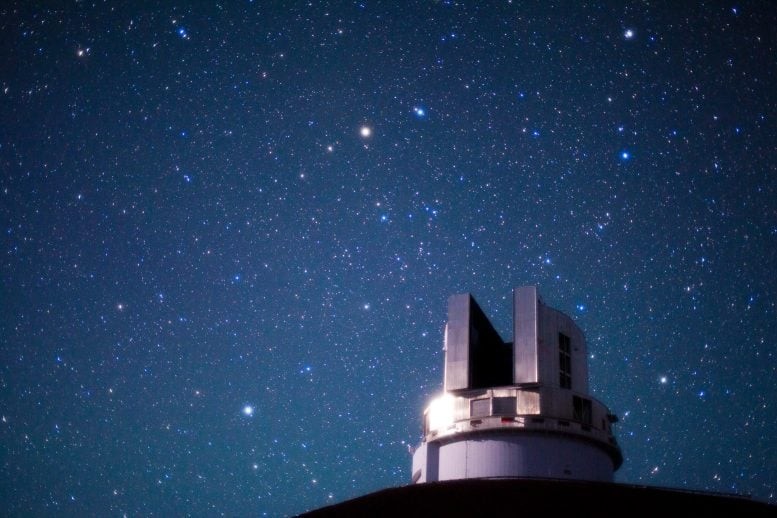
Figure 1. Giant Exoplanet 18 Times Jupiter’s Mass Spotted in Distant Star System.
A Massive Planet in Leo
The newly discovered planet, HIP 54515 b, orbits a star located 271 light-years away in the constellation Leo. Weighing nearly 18 times Jupiter’s mass, it orbits its star at a distance comparable to Neptune’s orbit around the Sun. Figure 1 shows Giant Exoplanet 18 Times Jupiter’s Mass Spotted in Distant Star System.
From Earth, the star and planet appear extremely close together—about the size a baseball would look from 100 km away. Thanks to the SCExAO system, astronomers obtained exceptionally sharp images, allowing the planet to be directly observed.
A Brown Dwarf in Bootes
The second discovery, HIP 71618 B, is a brown dwarf with 60 times the mass of Jupiter, situated 169 light-years away in the constellation Bootes. Brown dwarfs are often described as “failed stars” because they form like stars but never gain enough mass to sustain nuclear fusion.
A Crucial Target for NASA’s Roman Telescope
HIP 71618 B stands out for its suitability as a target for NASA’s Roman Space Telescope. Roman will conduct a technology demonstration to test coronagraph systems—tools that future telescopes will need to image Earth-like planets around other stars, which are roughly ten billion times fainter than their host stars.
Before this discovery, astronomers had no confirmed target meeting all the stringent requirements for this demonstration. HIP 71618 B changes that: its star is bright, and the brown dwarf is positioned just right. At the wavelengths the Roman Coronagraph operates, the brown dwarf will be faint enough relative to its star to effectively validate these new technologies.
These OASIS discoveries highlight the power of combining space-based precision star tracking with ground-based direct imaging. This collaborative approach uncovers planets and brown dwarfs that would otherwise remain hidden, demonstrating that the Subaru Telescope will remain a leading force in astronomy even as new observatories come online.
Source: SciTECHDaily
Cite this article:
Priyadharshini S (2025), Astronomers Discover Giant Exoplanet 18 Times the Mass of Jupiter in Distant Star System, AnaTechMaz, pp.632
Recent Post
-
Scientists Crack the Milky Way’s Long-Standing Chemical Mystery
Scientists at the Institute of Cosmos Sciences of the University of Barcelona (ICCUB) and the French National...
-
Astronomers Discover Giant Exoplanet 18 Times the Mass of Jupiter in Distant Star System
OASIS plays a key role in identifying the most promising candidates....
-
Most Detailed Black Hole Accretion Model Ever Revealed by Scientists
“This marks the first time we can observe what happens when the key physical processes governing...
-
Possible Building Block of Life Spotted on Distant Exoplanet, but Scientists Advise Caution
The key question for TRAPPIST-1e is simple: if it has an atmosphere...
-
Astronomers Spot One of the Universe’s Biggest Rotating Cosmic Structures
Researchers have discovered a remarkably thin chain of 14...
-
Hidden Dark Matter Around Black Holes Revealed by Gravitational Waves
The study focuses on extreme mass-ratio inspirals (EMRIs), which occur....
-
Unveiling the Universe’s Fiercest Explosions: Fresh Insights into X-Ray Bursts
The rp-process relies on numerous nuclei located near the proton...
-

Universe’s Expansion Gets a New Twist Through Gravitational Lensing
The universe is vast and continues to grow, even though its.....
-
Black Hole Launches Near-Light-Speed Winds in Just Hours
Using XMM-Newton and the JAXA-led XRISM mission, scientists studied the supermassive black hole at...
Ancient Asteroids Could Reveal the Blueprint for Space Mining
Researchers at ICE-CSIC selected and characterized meteorite samples that were later analyzed using...
-
Scientists Chart the Invisible Universe, Uncovering Fresh Insights into Dark Matter and Dark Energy
Between 2013 and 2019, the...
-
Surprising Discoveries Suggest Uranus and Neptune are Very Different Than Expected
To explore these ideas, the researchers created a new technique to simulate...
-
Astronomers Snap Stunning Photo of a Real-Life “Tatooine” with Two Suns
Directly capturing an image of a planet outside our solar system is rare—but...
-
James Webb Finds its Strongest Evidence Yet of an Atmosphere Around a Rocky Exoplanet
Gases such as water vapor can absorb specific wavelengths of near...
-
Secrets of Hot Jupiters Revealed Through their Unusual Orbits
To address this challenge, a research team led by PhD student Yugo Kawai and Assistant Professor...