

Why Dark Matter Remains One of Science’s Greatest Unsolved Mysteries
Right now, is a surreal moment for anyone studying dark matter. Despite cuts to research funding by governments worldwide, dark matter continues to be one of the most significant and thrilling unsolved problems in physics—and arguably in all of science. The majority of matter in the universe seems to be invisible: for every kilogram of visible matter, there appears to be about five kilograms of dark matter. Our knowledge of it comes not from direct observation, but from the way dark matter influences the structure and behavior of the visible universe.
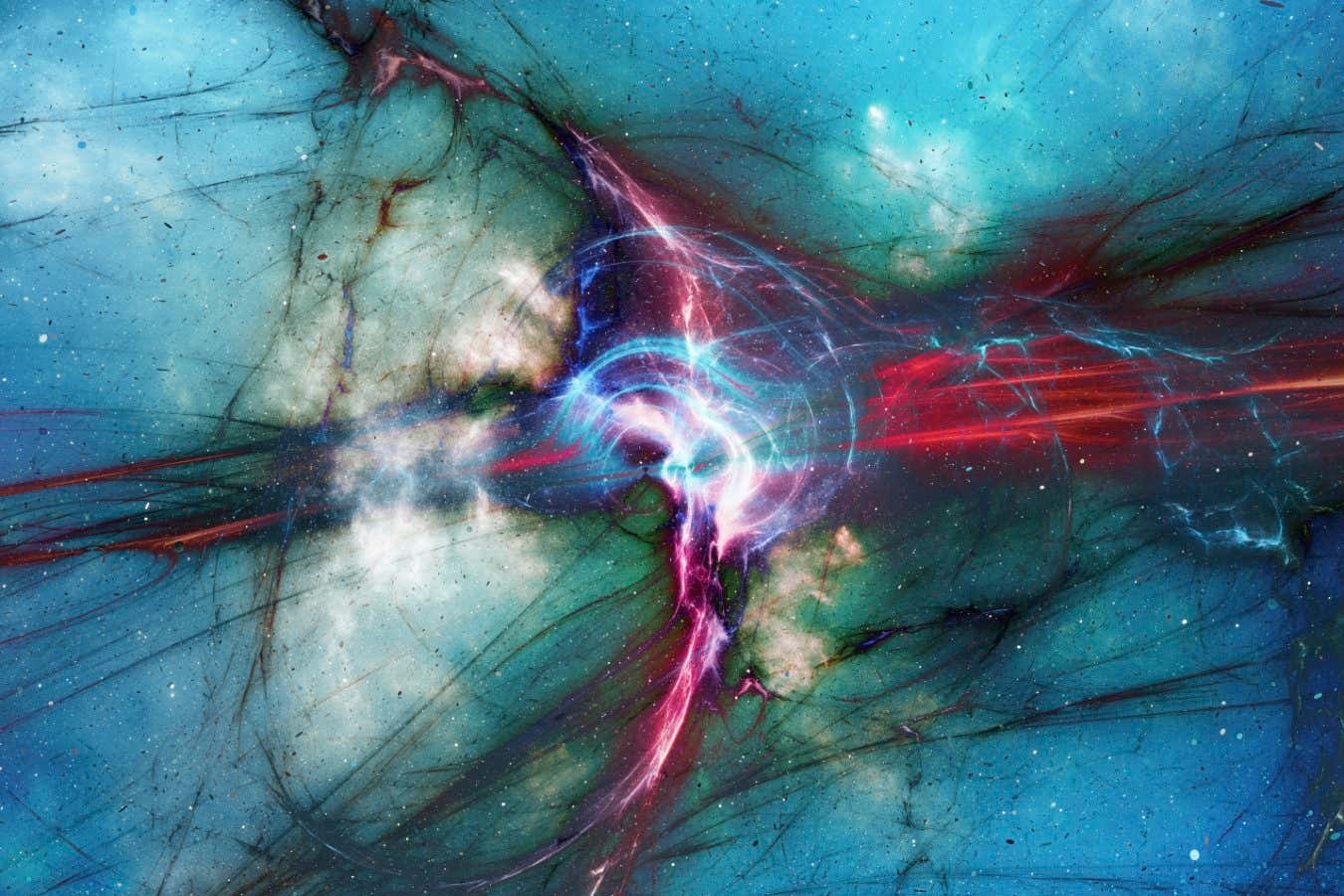
Figure 1. Dark Matter: One of Science’s Biggest Unsolved Mysteries.
The Invisible Majority
Explore what dark matter is—or, more accurately, what we think it is. Despite making up roughly 85% of all matter in the universe, it does not emit, absorb, or reflect light, making it invisible to conventional instruments. This part introduces why scientists are so fascinated by something we cannot see directly. Figure 1 shows Dark Matter: One of Science’s Biggest Unsolved Mysteries.
Clues from the Cosmos
Discuss the observational evidence for dark matter. This includes the rotation curves of galaxies, gravitational lensing, and cosmic microwave background patterns. These phenomena reveal that visible matter alone cannot account for the way galaxies and clusters behave, pointing to the existence of an unseen mass.
The Hunt for Candidates
Delve into the possible particles and theories that could make up dark matter, such as WIMPs (Weakly Interacting Massive Particles), axions, and sterile neutrinos. This section also covers why, despite decades of searches, none of these candidates have been definitively detected yet.
Experiments and Challenges
Cover the ongoing efforts to detect dark matter, from underground detectors to particle accelerators and astronomical observations. Highlight the technical and financial challenges researchers face, as well as surprising results that have ruled out many previously promising theories.
Explain the broader significance of dark matter research. Understanding it could rewrite fundamental physics, shed light on the formation of galaxies, and even influence our understanding of the ultimate fate of the universe. This part frames why solving the dark matter mystery is one of the most exciting quests in modern science.
Reference:
- https://www.newscientist.com/article/mg26835711-800-why-dark-matter-is-still-one-of-the-biggest-open-problems-in-science/
Cite this article:
Priyadharshini S (2025), Why Dark Matter Remains One of Science’s Greatest Unsolved Mysteries, AnaTechMaz, pp.614
Recent Post
-
Colliding Black Hole Twins Provide Einstein’s Theory Its Sharpest Test Yet
Gravitational waves are subtle ripples in space-time, generated...
-
The Universe Just Flashed a Creepy Cosmic Bat Signal
Just in time for Halloween, astronomers have spotted a haunting, bat-shaped cloud gliding through...
-
Webb Telescope Uncovers the Turbulent Youth of the Universe
“This isn’t just about a few remarkable exceptions — for the first time, we can observe an entire...
-
Geomagnetic Superstorm Overwhelms Earth’s Protective Plasma Shield
Launched by the Japan Aerospace Exploration Agency (JAXA) in 2016...
-
Mystery at the Milky Way’s Core: Unusual Star-Forming Regions Baffle Scientists
Previous research suggested that star formation near the Galactic Center is...
-
Ancient 13-Billion-Year Signal May Uncover the Universe’s First Stars
Fialkov leads the theoretical team behind REACH (the Radio Experiment for the Analysis of Cosmic Hydrogen...
-
Astronomers Puzzled by Exoplanet with an Extremely Tilted Orbit
The James Webb Space Telescope (JWST) can detect incredibly small variations in transit depth...
-
New Evidence Proves Hawking’s Prediction: Black Holes Don’t Shrink
In 1971, Stephen Hawking proposed that a black hole’s event horizon..
-
Revolutionary AI Maps our Galaxy’s 100 billion Stars Faster than Ever
A research team led by Keiya Hirashima at the RIKEN Center for Interdisciplinary Theoretical...
Supermassive Black Hole Unleashes Its Brightest Flare After Destroying a Massive Star
The universe’s biggest stars usually end their lives in dramatic......
-

Moss Endures 283 Days in Space, Astonishing Biologists
Though it may seem unassuming, Earth’s moss is remarkably resilient. It thrives in extreme conditions—from...
-
Voyager 1 Approaches Distance of Nearly One Light-Day from Earth
Voyager 1 stands as one of humanity’s most extraordinary technological achievements. Over its nearly fifty...
-
Astronomers Spot a Rule-Breaking Star Circling a Silent Black Hole
The most surprising aspect of this star lies in its composition. Classified as “alpha-rich,” it contains an abundance...
-
Why Dark Matter Remains One of Science’s Greatest Unsolved Mysteries
Right now, is a surreal moment for anyone studying dark matter...
-

Blue Origin Unveils Super-Heavy New Glenn Rocket Taller Than Saturn V
Fresh off a fully successful second flight of its latest mega rocket.....