

Astronomers Spot a Rule-Breaking Star Circling a Silent Black Hole
Age-Defying Star
The most surprising aspect of this star lies in its composition. Classified as “alpha-rich,” it contains an abundance of heavier elements usually found in stars that formed billions of years ago—implying great age. Yet, when researchers studied its vibrations, they found that the star is only about 5 billion years old, far too young to naturally exhibit these chemical traits.
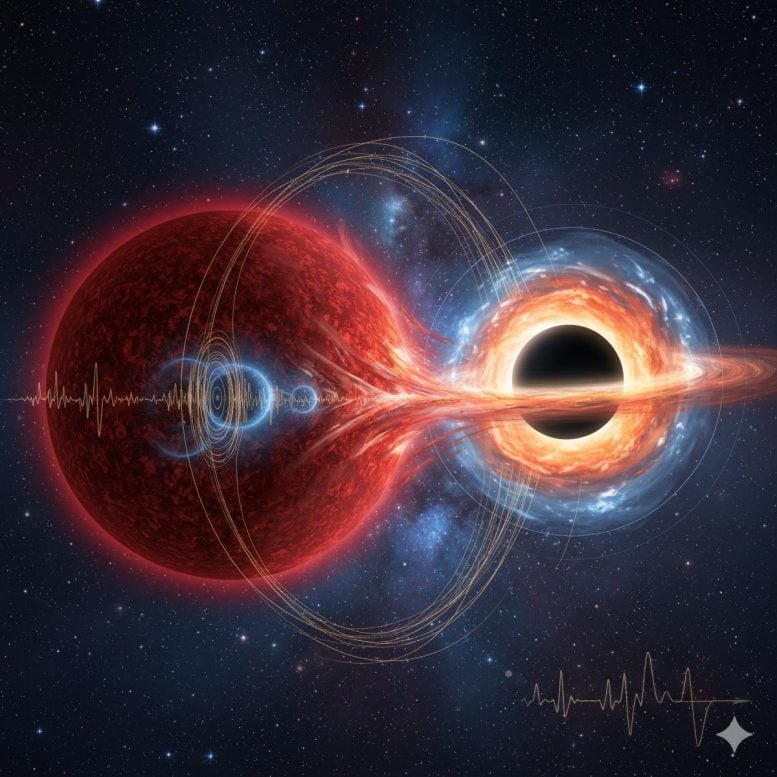
Figure 1. Astronomers Detect an Unusual Star Orbiting a Quiet Black Hole.
“Young, alpha-rich stars are quite rare and puzzling,” explained Daniel Hey. “The combination of youth and ancient chemistry suggests this star didn’t evolve in isolation. It likely gained extra mass from a companion, either through a merger or by absorbing material when the black hole formed.” Figure 1 shows Astronomers Detect an Unusual Star Orbiting a Quiet Black Hole.
Faster Than Expected
Long-term observations from ground-based telescopes reveal that the star rotates once every 398 days—much faster than expected for an isolated red giant of its age.
“If this rotation is real, it can’t be explained by the star’s birth spin alone,” said co-author Joel Ong, a NASA Hubble Fellow at the Institute for Astronomy (IfA). “The star must have been spun up through tidal interactions with its companion, further supporting the idea that this system has a complex history.”
The team also studied Gaia BH3, another dormant black hole system with an even more unusual companion star. Models predicted this star should show clear oscillations, but none were detected, suggesting that current theories about extremely metal-poor stars may need updating.
Both Gaia BH2 and BH3 are dormant black hole systems—they don’t feed on their companion stars and therefore emit no X-rays. Their discovery through precise measurements of stellar motion is reshaping astronomers’ understanding of black holes in our galaxy.
Peering Deeper Ahead
Future TESS observations of Gaia BH2 will allow scientists to study its stellar vibrations in detail and may confirm whether it formed through a past merger, helping to unravel the origins of these quiet black hole pairs.
The Star That Defies Age
Astronomers discovered a star that doesn’t follow the usual rules of stellar evolution. Classified as “alpha-rich,” it contains heavy elements usually found only in very old stars. Surprisingly, vibrations measured from the star reveal it is only 5 billion years old, far too young to naturally have these chemical traits. This makes it a rare and puzzling find.
A Fast-Spinning Red Giant
Further observations revealed that the star rotates once every 398 days, much faster than expected for a red giant of its age. Scientists believe the star must have been “spun up” through tidal interactions with a companion—most likely the black hole it orbits. This provides evidence of a complex history, possibly involving a merger or mass transfer from a companion star.
Silent Black Holes and Cosmic Mysteries
The star is part of a dormant black hole system, meaning the black hole isn’t actively feeding and emits no X-rays. Alongside Gaia BH3, these discoveries challenge existing models of stellar evolution and black hole companions. Future studies, including TESS observations, aim to unravel how these quiet black hole pairs form and what their unusual companion stars reveal about the hidden lives of black holes in our galaxy.
Source: POPULAR SCIENCE
Cite this article:
Priyadharshini S (2025), Astronomers Spot a Rule-Breaking Star Circling a Silent Black Hole, AnaTechMaz, pp.613
Recent Post
-
Colliding Black Hole Twins Provide Einstein’s Theory Its Sharpest Test Yet
Gravitational waves are subtle ripples in space-time, generated...
-
The Universe Just Flashed a Creepy Cosmic Bat Signal
Just in time for Halloween, astronomers have spotted a haunting, bat-shaped cloud gliding through...
-
Webb Telescope Uncovers the Turbulent Youth of the Universe
“This isn’t just about a few remarkable exceptions — for the first time, we can observe an entire...
-
Geomagnetic Superstorm Overwhelms Earth’s Protective Plasma Shield
Launched by the Japan Aerospace Exploration Agency (JAXA) in 2016...
-
Mystery at the Milky Way’s Core: Unusual Star-Forming Regions Baffle Scientists
Previous research suggested that star formation near the Galactic Center is...
-
Ancient 13-Billion-Year Signal May Uncover the Universe’s First Stars
Fialkov leads the theoretical team behind REACH (the Radio Experiment for the Analysis of Cosmic Hydrogen...
-
Astronomers Puzzled by Exoplanet with an Extremely Tilted Orbit
The James Webb Space Telescope (JWST) can detect incredibly small variations in transit depth...
-
New Evidence Proves Hawking’s Prediction: Black Holes Don’t Shrink
In 1971, Stephen Hawking proposed that a black hole’s event horizon..
-
Revolutionary AI Maps our Galaxy’s 100 billion Stars Faster than Ever
A research team led by Keiya Hirashima at the RIKEN Center for Interdisciplinary Theoretical...
Supermassive Black Hole Unleashes Its Brightest Flare After Destroying a Massive Star
The universe’s biggest stars usually end their lives in dramatic......
-
Moss Endures 283 Days in Space, Astonishing Biologists
Though it may seem unassuming, Earth’s moss is remarkably resilient. It thrives in extreme conditions—from...
-
Voyager 1 Approaches Distance of Nearly One Light-Day from Earth
Voyager 1 stands as one of humanity’s most extraordinary technological achievements. Over its nearly fifty...
-
Astronomers Spot a Rule-Breaking Star Circling a Silent Black Hole
The most surprising aspect of this star lies in its composition. Classified as “alpha-rich,” it contains an abundance...
-
Why Dark Matter Remains One of Science’s Greatest Unsolved Mysteries
Right now, is a surreal moment for anyone studying dark matter...
-

Blue Origin Unveils Super-Heavy New Glenn Rocket Taller Than Saturn V
Fresh off a fully successful second flight of its latest mega rocket.....