

New Evidence Proves Hawking’s Prediction: Black Holes Don’t Shrink
Testing Hawking’s Black Hole Area Theorem
In 1971, Stephen Hawking proposed that a black hole’s event horizon—the boundary past which nothing can escape, not even light—can never decrease in size.
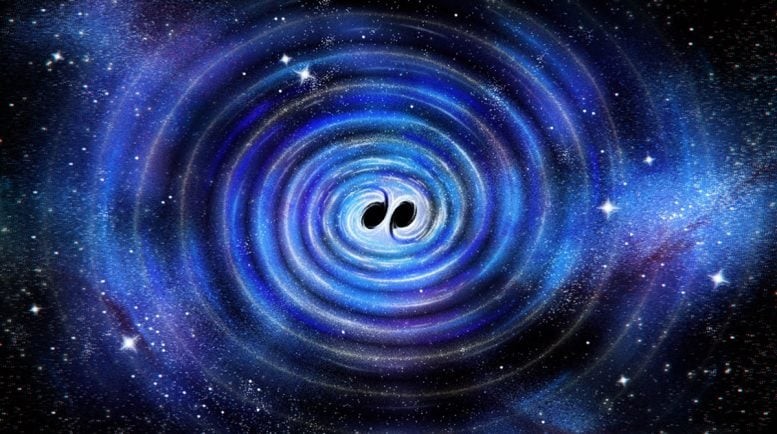
Figure 1. Hawking Was Right: Black Holes Never Shrink.
The latest results bolster that initial confirmation with far greater precision. They show that the surface area of the merged black hole is always at least as large as the sum of the areas of the two original black holes. This improved accuracy comes from data gathered by both LIGO facilities—one in Washington and the other in Louisiana. Figure 1 shows Hawking Was Right: Black Holes Never Shrink.
Listening to the “Ringing” of Black Holes
The team also managed to isolate and examine the gravitational waves produced after the black holes combined. By analyzing the waves’ pitch and decay, they uncovered new details about the final black hole’s structure and characteristics. The technique works much like using the tone of a resonant instrument to infer its size and shape—and the nature of the object that struck it.
The team confirmed that the resulting black hole matches the characteristics of what’s known as a Kerr black hole. In the 1960s, mathematician Roy Kerr solved Einstein’s equations of general relativity and produced a precise mathematical description of how gravity, space, and time should behave around a rotating black hole.
Although physicists expect all black holes to conform to Kerr’s model, proving this has been notoriously difficult. By analyzing the vibrations of the merged black hole in this unusually clean signal, Isi and the LIGO Collaboration have produced the strongest evidence so far that black holes behave just as Kerr predicted.
“Over the next decade, gravitational-wave detectors like LIGO will keep getting better, allowing us to observe black holes with even greater clarity,” Isi said. “I’m excited to see what new discoveries await us.”
Hawking’s Prediction
In 1971, Stephen Hawking proposed the black hole area theorem, which states that the event horizon of a black hole—the boundary beyond which nothing can escape—can never shrink. Essentially, black holes can grow when they absorb matter or merge with other black holes, but their surface area never decreases.
Observational Confirmation
In 2021, researchers using LIGO gravitational-wave data studied ripples in space-time from colliding black holes. Their analysis provided the first observational evidence supporting Hawking’s theorem, showing that the resulting black hole’s surface area was at least as large as the combined areas of the originals.
New Findings and Precision
Recent studies have strengthened these results with greater accuracy, thanks to data from both LIGO observatories. By “listening” to the gravitational waves emitted after the merger, scientists could study the black hole’s vibrations and confirm that black holes behave exactly as Hawking predicted—never shrinking and matching theoretical models like the Kerr solution.
Source: SciTECHDaily
Cite this article:
Priyadharshini S (2025), New Evidence Proves Hawking’s Prediction: Black Holes Don’t Shrink, AnaTechMaz, pp.608
Recent Post
-
Colliding Black Hole Twins Provide Einstein’s Theory Its Sharpest Test Yet
Gravitational waves are subtle ripples in space-time, generated...
-
The Universe Just Flashed a Creepy Cosmic Bat Signal
Just in time for Halloween, astronomers have spotted a haunting, bat-shaped cloud gliding through...
-
Webb Telescope Uncovers the Turbulent Youth of the Universe
“This isn’t just about a few remarkable exceptions — for the first time, we can observe an entire...
-
Geomagnetic Superstorm Overwhelms Earth’s Protective Plasma Shield
Launched by the Japan Aerospace Exploration Agency (JAXA) in 2016...
-
Mystery at the Milky Way’s Core: Unusual Star-Forming Regions Baffle Scientists
Previous research suggested that star formation near the Galactic Center is...
-
Ancient 13-Billion-Year Signal May Uncover the Universe’s First Stars
Fialkov leads the theoretical team behind REACH (the Radio Experiment for the Analysis of Cosmic Hydrogen...
-
Astronomers Puzzled by Exoplanet with an Extremely Tilted Orbit
The James Webb Space Telescope (JWST) can detect incredibly small variations in transit depth...
-
New Evidence Proves Hawking’s Prediction: Black Holes Don’t Shrink
In 1971, Stephen Hawking proposed that a black hole’s event horizon..
-
Revolutionary AI Maps our Galaxy’s 100 billion Stars Faster than Ever
A research team led by Keiya Hirashima at the RIKEN Center for Interdisciplinary Theoretical...
Supermassive Black Hole Unleashes Its Brightest Flare After Destroying a Massive Star
The universe’s biggest stars usually end their lives in dramatic......
-

Moss Endures 283 Days in Space, Astonishing Biologists
Though it may seem unassuming, Earth’s moss is remarkably resilient. It thrives in extreme conditions—from...
-
Voyager 1 Approaches Distance of Nearly One Light-Day from Earth
Voyager 1 stands as one of humanity’s most extraordinary technological achievements. Over its nearly fifty...
-
Astronomers Spot a Rule-Breaking Star Circling a Silent Black Hole
The most surprising aspect of this star lies in its composition. Classified as “alpha-rich,” it contains an abundance...
-
Why Dark Matter Remains One of Science’s Greatest Unsolved Mysteries
Right now, is a surreal moment for anyone studying dark matter...
-

Blue Origin Unveils Super-Heavy New Glenn Rocket Taller Than Saturn V
Fresh off a fully successful second flight of its latest mega rocket.....