

Ancient 13-Billion-Year Signal May Uncover the Universe’s First Stars
REACH, SKA, and the Hunt for the Universe’s Earliest Starlight
Fialkov leads the theoretical team behind REACH (the Radio Experiment for the Analysis of Cosmic Hydrogen), a radio antenna designed to probe the Cosmic Dawn and the Epoch of Reionization—eras when the first stars ionized the universe’s neutral hydrogen. Though REACH is still being calibrated, it is expected to provide valuable insights into the early cosmos. Meanwhile, the Square Kilometre Array (SKA), a giant network of antennas now under construction, will map variations in cosmic radio signals across enormous swaths of sky.
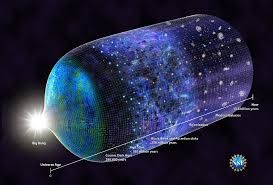
Figure 1. Deep-Time Radio Signal Hints at the Birth of the First Stars.
Both instruments will be crucial for understanding the masses, brightness, and distribution of the universe’s earliest stars. In this study, Fialkov—also a member of the SKA team—and her collaborators created a model predicting how REACH and SKA should detect the 21-centimeter hydrogen signal. They found that this signal is particularly sensitive to the masses of the first stars. Figure 1 shows Deep-Time Radio Signal Hints at the Birth of the First Stars.
“We are the first group to consistently model how the 21-centimeter signal depends on the masses of the first stars, including the influence of ultraviolet light and X-ray emissions from X-ray binaries formed when those stars die,” said Fialkov, who is also affiliated with Cambridge’s Kavli Institute for Cosmology. “These insights come from simulations that incorporate the universe’s primordial conditions, such as the hydrogen–helium mix created by the Big Bang.”
By building their theoretical framework, the team investigated how the 21-centimeter signal responds to the mass distribution of Population III stars—the earliest generation of stars. They discovered that earlier research underestimated this connection because it overlooked the abundance and luminosity of X-ray binaries—systems consisting of a normal star paired with a collapsed star—among Population III stars and their impact on the 21-centimeter signal.
A Statistical Window into the First Stars
Unlike optical observatories such as the James Webb Space Telescope, which capture detailed images, radio telescopes rely on statistical patterns within faint signals. REACH and SKA won’t image individual stars, but they will reveal information about entire populations of early stars, X-ray binaries, and primitive galaxies.
“The predictions we present have major consequences for understanding the nature of the universe’s first stars,” added co-author Dr. Eloy de Lera Acedo, Principal Investigator of REACH and Cambridge PI for SKA development. “We show that our radio telescopes can reveal details about the masses of those first stars and how these early lights may have differed greatly from stars we see today.
“Radio telescopes like REACH promise to unlock the secrets of the infant universe, and these predictions are vital for guiding the observations we are conducting from South Africa’s Karoo region.”
Source: SciTECHDaily
Cite this article:
Priyadharshini S (2025), Ancient 13-Billion-Year Signal May Uncover the Universe’s First Stars, AnaTechMaz, pp.606
Recent Post
-
Colliding Black Hole Twins Provide Einstein’s Theory Its Sharpest Test Yet
Gravitational waves are subtle ripples in space-time, generated...
-
The Universe Just Flashed a Creepy Cosmic Bat Signal
Just in time for Halloween, astronomers have spotted a haunting, bat-shaped cloud gliding through...
-
Webb Telescope Uncovers the Turbulent Youth of the Universe
“This isn’t just about a few remarkable exceptions — for the first time, we can observe an entire...
-
Geomagnetic Superstorm Overwhelms Earth’s Protective Plasma Shield
Launched by the Japan Aerospace Exploration Agency (JAXA) in 2016...
-
Mystery at the Milky Way’s Core: Unusual Star-Forming Regions Baffle Scientists
Previous research suggested that star formation near the Galactic Center is...
-
Ancient 13-Billion-Year Signal May Uncover the Universe’s First Stars
Fialkov leads the theoretical team behind REACH (the Radio Experiment for the Analysis of Cosmic Hydrogen...
-
Astronomers Puzzled by Exoplanet with an Extremely Tilted Orbit
The James Webb Space Telescope (JWST) can detect incredibly small variations in transit depth...
-
New Evidence Proves Hawking’s Prediction: Black Holes Don’t Shrink
In 1971, Stephen Hawking proposed that a black hole’s event horizon..
-
Revolutionary AI Maps our Galaxy’s 100 billion Stars Faster than Ever
A research team led by Keiya Hirashima at the RIKEN Center for Interdisciplinary Theoretical...
Supermassive Black Hole Unleashes Its Brightest Flare After Destroying a Massive Star
The universe’s biggest stars usually end their lives in dramatic......
-

Moss Endures 283 Days in Space, Astonishing Biologists
Though it may seem unassuming, Earth’s moss is remarkably resilient. It thrives in extreme conditions—from...
-
Voyager 1 Approaches Distance of Nearly One Light-Day from Earth
Voyager 1 stands as one of humanity’s most extraordinary technological achievements. Over its nearly fifty...
-
Astronomers Spot a Rule-Breaking Star Circling a Silent Black Hole
The most surprising aspect of this star lies in its composition. Classified as “alpha-rich,” it contains an abundance...
-
Why Dark Matter Remains One of Science’s Greatest Unsolved Mysteries
Right now, is a surreal moment for anyone studying dark matter...
-

Blue Origin Unveils Super-Heavy New Glenn Rocket Taller Than Saturn V
Fresh off a fully successful second flight of its latest mega rocket.....