

Supermassive Black Hole Unleashes Its Brightest Flare After Destroying a Massive Star
The universe’s biggest stars usually end their lives in dramatic supernova explosions before collapsing into black holes. But one gigantic star appears to have met a very different fate. Instead of going out in a brilliant burst, it wandered too close to a massive black hole, which ripped it apart and consumed it bit by bit.
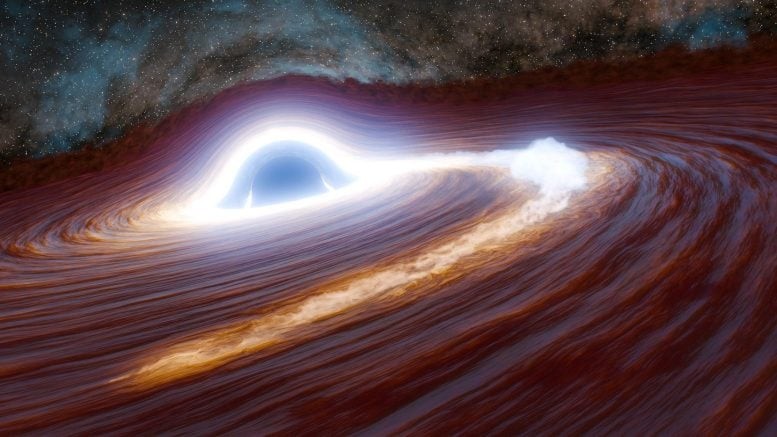
Figure 1. Brightest-Ever Flare Erupts as Supermassive Black Hole Tears Apart Huge Star.
The brilliant flash originated from an active galactic nucleus (AGN)—a supermassive black hole that feeds on nearby matter. This particular AGN, called J2245+3743, is believed to contain a black hole roughly 500 million times the mass of the Sun and lies nearly 10 billion light-years away. Because its light has taken so long to reach us, astronomers are witnessing the event as it happened billions of years in the past, during a much earlier chapter of the universe’s history. Figure 1 shows Brightest-Ever Flare Erupts as Supermassive Black Hole Tears Apart Huge Star.
“The energy output tells us this object is both extremely distant and remarkably bright,” says lead author Matthew Graham, a Caltech astronomy research professor, ZTF project scientist, and one of the project’s co-principal investigators. “It behaves unlike any AGN we’ve encountered before.”
Time Dilation and a Cosmic Slow-Motion Show
Although the flare is slowly fading, astronomers continue to monitor it closely. Its extreme distance not only shows us an event from the distant past, but also affects how fast it appears to unfold. Time moves more slowly at the black hole’s location compared to Earth.
“This effect is known as cosmological time dilation, caused by the stretching of space and time,” Graham explains. “As light travels across the expanding universe to reach us, its wavelength lengthens — and so does time itself.”
This is one reason long-running sky surveys like ZTF and Catalina are so essential. In this case, Graham notes that “seven years here is two years there. We’re essentially watching the event in cosmic slow motion.”
A Star Torn Apart — The Tidal Disruption Event
To understand what could generate such an intense burst of light, the team examined several possibilities and determined that a tidal disruption event (TDE) is the most likely explanation. A TDE occurs when a star wanders too close to a supermassive black hole and is torn apart by its gravity, gradually being consumed as it spirals inward. The fact that J2245+3743 is still flaring suggests that we’re seeing a star only partly swallowed — “like a fish only halfway down the whale’s gullet,” Graham says.
If the flare indeed comes from a TDE, the researchers estimate that the black hole is devouring a star at least 30 times the mass of our Sun. The previous largest known TDE — nicknamed Scary Barbie after its ZTF designation, ZTF20abrbeie — was far less powerful. That event, also likely linked to an AGN, was 30 times weaker, and its doomed star was estimated at only 3–10 solar masses.
A Stellar Snack Inside a Black Hole’s Disk
Of the roughly 100 recorded TDEs, most have occurred outside active galactic nuclei (AGN). AGN contain supermassive black holes encircled by enormous, turbulent disks of gas and dust. Their constant feeding activity can produce flares of their own, sometimes masking the signatures of TDEs. But the flare from J2245+3743 was so immense that it stood out clearly.
Confirming the Unthinkable: A Star Devoured
“At first, we had to confirm that this extreme object was truly this bright,” says co-author K. E. Saavik Ford of CUNY and AMNH. One possibility was that the object was beaming its light directly toward Earth, instead of glowing equally in all directions. But data from NASA’s former WISE mission ruled that out. After eliminating other explanations, the team concluded that J2245+3743 represents the brightest black hole flare ever observed.
“If you converted our entire Sun into pure energy using Einstein’s E = mc², that’s comparable to the energy this flare has emitted since we started watching it,” Ford says.
Beyond Supernovae — A Rare Celestial Catastrophe
With its brightness confirmed, scientists turned to the question of what could generate such extraordinary power. A supernova was one idea, but the numbers didn’t add up.
“Supernovae simply aren’t bright enough,” Ford says. The evidence instead points toward a supermassive black hole pulling apart an enormous star.
“Stars this massive are uncommon,” she adds, “but we believe stars inside AGN disks can grow much larger. Material from the disk can build up on them, increasing their mass.”
A Window into the Cosmic Past
“We never would have detected this rare event without ZTF,” Graham says. “After seven years of watching the sky, we can track how things brighten, change, and evolve over time.”
Source: SciTECHDaily
Cite this article:
Priyadharshini S (2025), Supermassive Black Hole Unleashes Its Brightest Flare After Destroying a Massive Star, AnaTechMaz, pp.610
Recent Post
-
Colliding Black Hole Twins Provide Einstein’s Theory Its Sharpest Test Yet
Gravitational waves are subtle ripples in space-time, generated...
-
The Universe Just Flashed a Creepy Cosmic Bat Signal
Just in time for Halloween, astronomers have spotted a haunting, bat-shaped cloud gliding through...
-
Webb Telescope Uncovers the Turbulent Youth of the Universe
“This isn’t just about a few remarkable exceptions — for the first time, we can observe an entire...
-
Geomagnetic Superstorm Overwhelms Earth’s Protective Plasma Shield
Launched by the Japan Aerospace Exploration Agency (JAXA) in 2016...
-
Mystery at the Milky Way’s Core: Unusual Star-Forming Regions Baffle Scientists
Previous research suggested that star formation near the Galactic Center is...
-
Ancient 13-Billion-Year Signal May Uncover the Universe’s First Stars
Fialkov leads the theoretical team behind REACH (the Radio Experiment for the Analysis of Cosmic Hydrogen...
-
Astronomers Puzzled by Exoplanet with an Extremely Tilted Orbit
The James Webb Space Telescope (JWST) can detect incredibly small variations in transit depth...
-
New Evidence Proves Hawking’s Prediction: Black Holes Don’t Shrink
In 1971, Stephen Hawking proposed that a black hole’s event horizon..
-
Revolutionary AI Maps our Galaxy’s 100 billion Stars Faster than Ever
A research team led by Keiya Hirashima at the RIKEN Center for Interdisciplinary Theoretical...
Supermassive Black Hole Unleashes Its Brightest Flare After Destroying a Massive Star
The universe’s biggest stars usually end their lives in dramatic......
-
Moss Endures 283 Days in Space, Astonishing Biologists
Though it may seem unassuming, Earth’s moss is remarkably resilient. It thrives in extreme conditions—from...
-
Voyager 1 Approaches Distance of Nearly One Light-Day from Earth
Voyager 1 stands as one of humanity’s most extraordinary technological achievements. Over its nearly fifty...
-
Astronomers Spot a Rule-Breaking Star Circling a Silent Black Hole
The most surprising aspect of this star lies in its composition. Classified as “alpha-rich,” it contains an abundance...
-
Why Dark Matter Remains One of Science’s Greatest Unsolved Mysteries
Right now, is a surreal moment for anyone studying dark matter...
-

Blue Origin Unveils Super-Heavy New Glenn Rocket Taller Than Saturn V
Fresh off a fully successful second flight of its latest mega rocket.....