

Voyager 1 Approaches Distance of Nearly One Light-Day from Earth
Voyager 1 stands as one of humanity’s most extraordinary technological achievements. Over its nearly fifty-year journey, the probe has captured stunning views of Saturn, crossed into interstellar space, and continues to hold the record as the farthest human-made object from Earth. According to NASA’s projections, Voyager 1 is approaching yet another milestone: on November 15, 2026, it will officially be one light-day away from our planet.
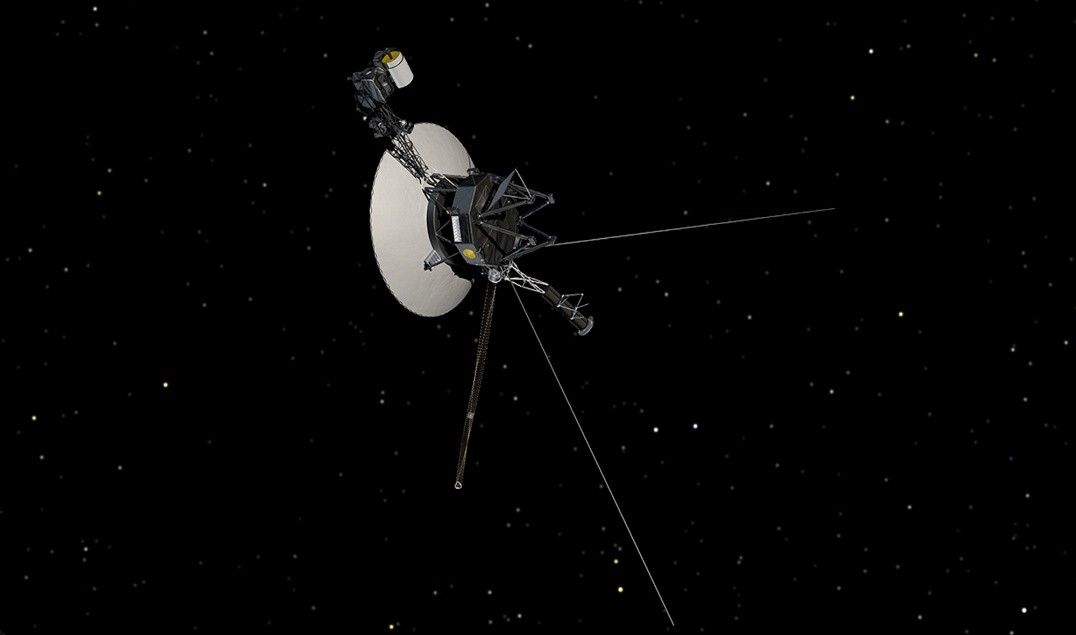
Figure 1. Voyager 1 Nears Milestone: One Light-Day from Earth.
Astronomers often measure cosmic distances in light- years, a scale suited to the universe’s immense size. Nothing, according to our current understanding of physics, can exceed the speed of light, which travels at roughly 186,000 miles per second—equivalent to about 5.88 trillion miles in a year. By comparison, the nearest star to our sun, Proxima Centauri, lies 4.2 light-years away. Even traveling at the speed of light, it would take just over four years to reach this red dwarf—if survival at such speeds were possible. Figure 1 shows Voyager 1 Nears Milestone: One Light-Day from Earth.
While Voyager 1 doesn’t come close to traveling at the speed of light, it still moves at an impressive pace. For decades, the spacecraft has coasted at roughly 11 miles per second, covering an additional 3.5 astronomical units (the distance from Earth to the Sun) every year. This also means that radio communications between Voyager 1 and NASA engineers take progressively longer. Last year, for instance, it took weeks to address technical issues because each command had to traverse the billions of miles at light speed—over 23 hours for a round trip.
In just under a year, Voyager 1 will reach 16.1 billion miles from Earth—the same distance light travels in 24 hours. If all goes according to plan, NASA will still be in touch with the spacecraft during the milestone. But engineers know these “light-days” are limited. Even without further technical problems, Voyager 1’s three radioisotope thermoelectric generators are expected to run out of power sometime in the 2030s.
Voyager 1 — Humanity’s Farthermost Explorer
Introduce Voyager 1 as one of humanity’s most remarkable technological achievements. Cover its history, including launches, planetary flybys (like Saturn), and its historic entry into interstellar space. Set the stage for why it remains a record-setting spacecraft.
Understanding Cosmic Distances
Explain concepts like light-speed, light-days, and light-years. Describe how astronomers measure distances in the cosmos and provide relatable comparisons, like the distance to Proxima Centauri. Emphasize the scale of Voyager 1’s journey in this context.
Voyager 1’s Speed and Journey
Focus on the spacecraft’s motion: its 11 miles per second speed, how it adds 3.5 AU each year, and the practical effects of distance, such as increasing communication delays with NASA. This gives readers a sense of both scale and the challenges of remote space operations.
The One Light-Day Milestone
Highlight the upcoming milestone of Voyager 1 reaching one light-day from Earth (16.1 billion miles). Explain what this means in practical terms, how long signals take to travel, and why it’s significant in the context of human space exploration.
The End of the Road — Power and Legacy
Discuss the limitations ahead: the eventual shutdown of Voyager 1’s radioisotope thermoelectric generators in the 2030s. Reflect on its enduring legacy as humanity’s farthest-traveling object and what its journey represents for exploration and science.
Source: POPULAR SCIENCE
Cite this article:
Priyadharshini S (2025), Voyager 1 Approaches Distance of Nearly One Light-Day from Earth, AnaTechMaz, pp.612
Recent Post
-
Colliding Black Hole Twins Provide Einstein’s Theory Its Sharpest Test Yet
Gravitational waves are subtle ripples in space-time, generated...
-
The Universe Just Flashed a Creepy Cosmic Bat Signal
Just in time for Halloween, astronomers have spotted a haunting, bat-shaped cloud gliding through...
-
Webb Telescope Uncovers the Turbulent Youth of the Universe
“This isn’t just about a few remarkable exceptions — for the first time, we can observe an entire...
-
Geomagnetic Superstorm Overwhelms Earth’s Protective Plasma Shield
Launched by the Japan Aerospace Exploration Agency (JAXA) in 2016...
-
Mystery at the Milky Way’s Core: Unusual Star-Forming Regions Baffle Scientists
Previous research suggested that star formation near the Galactic Center is...
-
Ancient 13-Billion-Year Signal May Uncover the Universe’s First Stars
Fialkov leads the theoretical team behind REACH (the Radio Experiment for the Analysis of Cosmic Hydrogen...
-
Astronomers Puzzled by Exoplanet with an Extremely Tilted Orbit
The James Webb Space Telescope (JWST) can detect incredibly small variations in transit depth...
-
New Evidence Proves Hawking’s Prediction: Black Holes Don’t Shrink
In 1971, Stephen Hawking proposed that a black hole’s event horizon..
-
Revolutionary AI Maps our Galaxy’s 100 billion Stars Faster than Ever
A research team led by Keiya Hirashima at the RIKEN Center for Interdisciplinary Theoretical...
Supermassive Black Hole Unleashes Its Brightest Flare After Destroying a Massive Star
The universe’s biggest stars usually end their lives in dramatic......
-

Moss Endures 283 Days in Space, Astonishing Biologists
Though it may seem unassuming, Earth’s moss is remarkably resilient. It thrives in extreme conditions—from...
-
Voyager 1 Approaches Distance of Nearly One Light-Day from Earth
Voyager 1 stands as one of humanity’s most extraordinary technological achievements. Over its nearly fifty...
-
Astronomers Spot a Rule-Breaking Star Circling a Silent Black Hole
The most surprising aspect of this star lies in its composition. Classified as “alpha-rich,” it contains an abundance...
-
Why Dark Matter Remains One of Science’s Greatest Unsolved Mysteries
Right now, is a surreal moment for anyone studying dark matter...
-
Blue Origin Unveils Super-Heavy New Glenn Rocket Taller Than Saturn V
Fresh off a fully successful second flight of its latest mega rocket.....