

Geomagnetic Superstorm Overwhelms Earth’s Protective Plasma Shield
Arase Satellite Offers Front-Row View of a Historic Plasmasphere Compression
Launched by the Japan Aerospace Exploration Agency (JAXA) in 2016, the Arase satellite orbits through Earth’s plasmasphere, measuring plasma waves and magnetic fields. During the May 2024 geomagnetic superstorm, its position provided an unprecedented opportunity to observe the dramatic compression of the plasmasphere and its gradual return to normal. For the first time, scientists obtained continuous, direct measurements of the plasmasphere collapsing to such a low altitude during a superstorm.
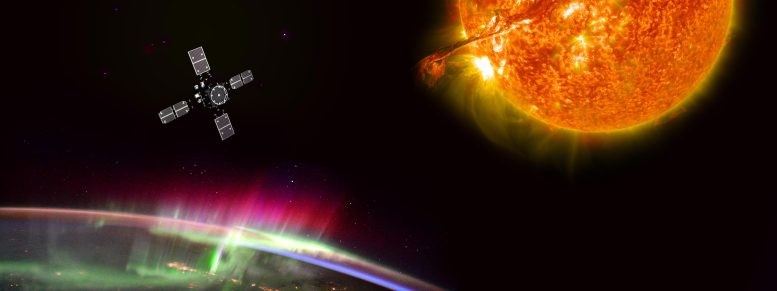
Figure 1. Superstorm Crushes Earth’s Plasma Shield.
Superstorm Forces Plasmasphere to Collapse to Record-Low Altitudes
The plasmasphere—an outer layer of cold, dense plasma that works with Earth’s magnetic field to shield the planet from harmful charged particles—typically extends tens of thousands of kilometers into space. During the superstorm, however, its outer boundary was driven inward from roughly 44,000 km above Earth to just 9,600 km.
The event was triggered by a series of powerful solar eruptions that hurled billions of tons of charged material toward Earth. Within only nine hours, the plasmasphere shrank to about one-fifth of its usual size. Its recovery was unusually slow, taking more than four days to refill— the longest restoration observed since the Arase satellite began monitoring the region in 2017.
Auroras Surged Toward the Equator as Earth’s Magnetic Field Compressed
During the storm’s most intense stage, extreme solar activity compressed Earth’s magnetic field, allowing energetic charged particles to travel farther along magnetic field lines toward the equator. This produced striking auroras at unusually low latitudes.
Ordinarily, auroras remain confined to polar regions because Earth’s magnetic field funnels solar particles into the atmosphere there. But the storm’s exceptional strength pushed the auroral oval far from its normal position near the Arctic and Antarctic Circles into mid-latitude regions—including Japan, Mexico, and southern Europe—places where auroras are rarely visible. The stronger the geomagnetic storm, the farther equatorward the auroras can extend.
Negative Storm Effects and the Chemistry Behind Delayed Plasmasphere Refilling
About an hour after the storm hit, charged-particle densities in the upper atmosphere surged at high latitudes and streamed into the polar cap. As the storm began to wane, the plasmasphere expectedly started to replenish with ions flowing upward from the ionosphere. However, the storm’s “negative phase”—a chemical shift marked by reduced electron density in the ionosphere—greatly slowed this refilling process.
This ionospheric depletion restricted the supply of charged particles available to rebuild the plasmasphere, extending the recovery period well beyond typical storm events.
Implications for Satellites, GPS Accuracy, and Space Weather Forecasting
“The negative storm slowed recovery by altering atmospheric chemistry and cutting off the supply of particles to the plasmasphere. This connection between negative storms and delayed recovery had never been clearly observed before,” Dr. Shinbori said.
The new findings offer a clearer understanding of how the plasmasphere evolves during extreme geomagnetic events and how energy is transferred through Earth’s near-space environment. During the superstorm, several satellites reported electrical anomalies or temporarily stopped transmitting data, GPS accuracy was degraded, and radio communications were disrupted.
Understanding how long Earth’s plasma layer takes to recover after such disturbances is critical for improving space-weather forecasts and protecting satellites, navigation systems, and communication infrastructure.
Source: SciTECHDaily
Cite this article:
Priyadharshini S (2025), Geomagnetic Superstorm Overwhelms Earth’s Protective Plasma Shield, AnaTechMaz, pp.604
Recent Post
-
Colliding Black Hole Twins Provide Einstein’s Theory Its Sharpest Test Yet
Gravitational waves are subtle ripples in space-time, generated...
-
The Universe Just Flashed a Creepy Cosmic Bat Signal
Just in time for Halloween, astronomers have spotted a haunting, bat-shaped cloud gliding through...
-
Webb Telescope Uncovers the Turbulent Youth of the Universe
“This isn’t just about a few remarkable exceptions — for the first time, we can observe an entire...
-
Geomagnetic Superstorm Overwhelms Earth’s Protective Plasma Shield
Launched by the Japan Aerospace Exploration Agency (JAXA) in 2016...
-
Mystery at the Milky Way’s Core: Unusual Star-Forming Regions Baffle Scientists
Previous research suggested that star formation near the Galactic Center is...
-
Ancient 13-Billion-Year Signal May Uncover the Universe’s First Stars
Fialkov leads the theoretical team behind REACH (the Radio Experiment for the Analysis of Cosmic Hydrogen...
-
Astronomers Puzzled by Exoplanet with an Extremely Tilted Orbit
The James Webb Space Telescope (JWST) can detect incredibly small variations in transit depth...
-
New Evidence Proves Hawking’s Prediction: Black Holes Don’t Shrink
In 1971, Stephen Hawking proposed that a black hole’s event horizon..
-
Revolutionary AI Maps our Galaxy’s 100 billion Stars Faster than Ever
A research team led by Keiya Hirashima at the RIKEN Center for Interdisciplinary Theoretical...
Supermassive Black Hole Unleashes Its Brightest Flare After Destroying a Massive Star
The universe’s biggest stars usually end their lives in dramatic......
-
Moss Endures 283 Days in Space, Astonishing Biologists
Though it may seem unassuming, Earth’s moss is remarkably resilient. It thrives in extreme conditions—from...
-
Voyager 1 Approaches Distance of Nearly One Light-Day from Earth
Voyager 1 stands as one of humanity’s most extraordinary technological achievements. Over its nearly fifty...
-
Astronomers Spot a Rule-Breaking Star Circling a Silent Black Hole
The most surprising aspect of this star lies in its composition. Classified as “alpha-rich,” it contains an abundance...
-
Why Dark Matter Remains One of Science’s Greatest Unsolved Mysteries
Right now, is a surreal moment for anyone studying dark matter...
-
Blue Origin Unveils Super-Heavy New Glenn Rocket Taller Than Saturn V
Fresh off a fully successful second flight of its latest mega rocket.....