

Moss Endures 283 Days in Space, Astonishing Biologists
Though it may seem unassuming, Earth’s moss is remarkably resilient. It thrives in extreme conditions—from the freezing, low-oxygen heights of the Himalayas to the scorching sands of Death Valley, and even across lava fields of active volcanoes. Now, space can be added to its list of habitats.
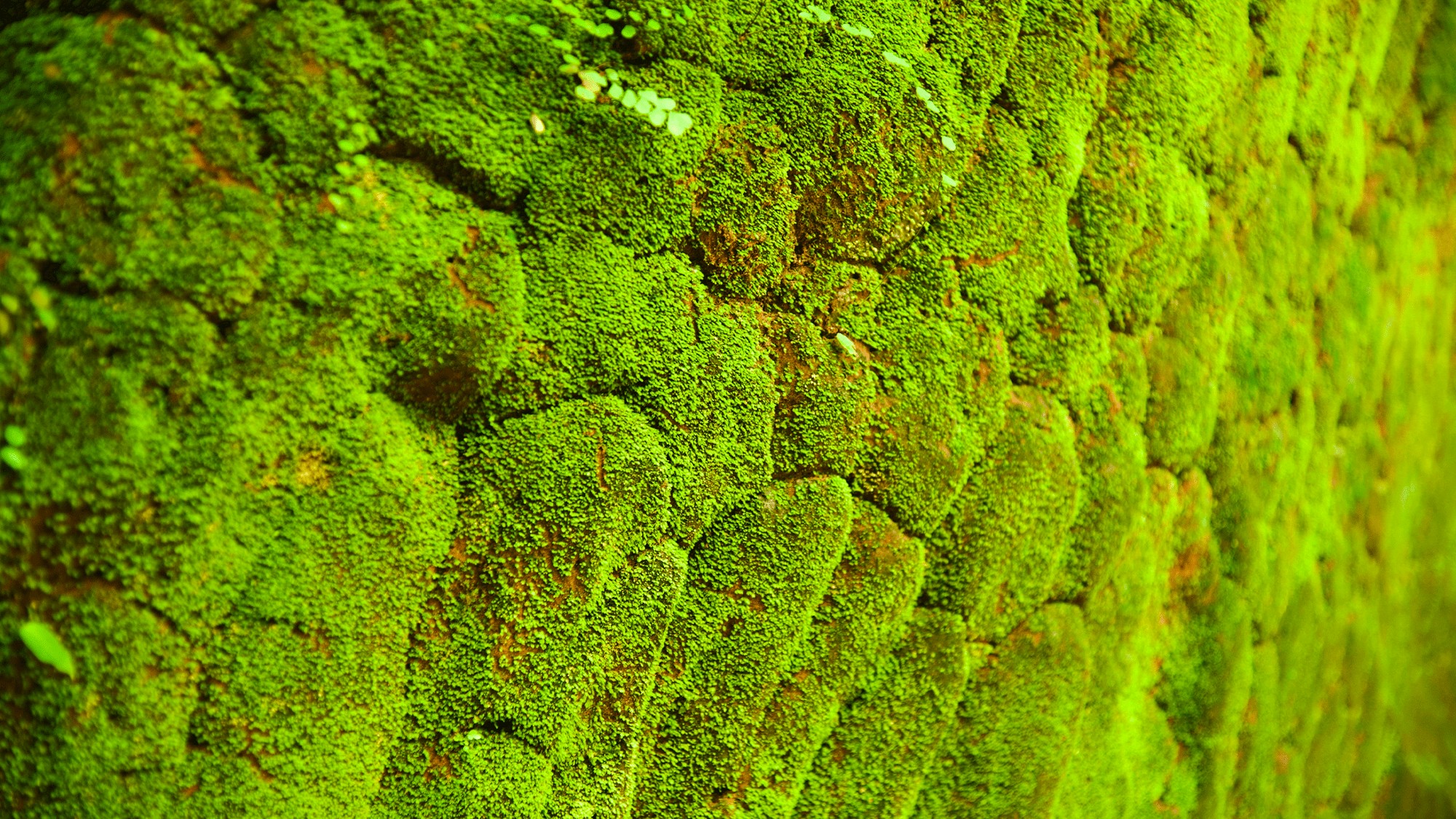
Figure 1. Moss Survives 283 Days in Space, Stunning Scientists.
“Most living organisms, including humans, cannot survive even a short time in the vacuum of space,” said Tomomichi Fujita, a biologist at Hokkaido University and co-author of the study. “Yet these moss spores maintained their vitality after nine months of direct exposure, offering compelling evidence that life on Earth has, at the cellular level, built-in mechanisms to withstand the harsh conditions of space.” Figure 1 shows Moss Survives 283 Days in Space, Stunning Scientists.
Preparing the Moss
To investigate, Fujita’s team focused on Physcomitrium patens, a well-studied moss species also known as spreading earthmoss. They exposed the moss to a simulated space environment, featuring intense ultraviolet (UV) radiation, extreme temperature fluctuations, and vacuum conditions.
The researchers then examined three different moss structures: juvenile moss (protenemata), specialized stem cells that form under stress (brood cells), and reproductive sporophytes that contain the spores. Testing these distinct structures allowed the team to identify which part of the moss was most likely to survive the harsh conditions of space.
“We expected that the combined stresses of space—including vacuum, cosmic radiation, extreme temperature swings, and microgravity—would inflict far more damage than any single stress alone,” Fujita explained.
The team found that UV radiation was the most damaging factor, but among the three moss structures, the sporophytes proved the most resilient. All juvenile moss succumbed to the intense UV or extreme temperatures, while brood cells fared slightly better. The sporophytes, however, demonstrated roughly 1,000 times greater tolerance to UV radiation. Remarkably, the spores could survive and germinate after exposure to temperatures as low as −320°F for over a week, as well as endure highs of 131°F for a month.
The researchers attribute this resilience to the protective coating surrounding each spore. This layer absorbs UV radiation and shields the inner spore both physically and chemically, preventing damage. It is likely an evolutionary adaptation that enabled bryophytes—the plant group moss belongs to—to transition from aquatic to terrestrial life around 500 million years ago. Moss has since survived multiple mass extinction events.
Moss Goes to Space
To test this evolutionary advantage in the harshest environment, the team sent the spores beyond Earth’s stratosphere to the International Space Station. Astronauts attached the sporophyte samples to the exterior of the station, where they remained exposed to space for 283 days. In January 2023, the moss returned to Earth aboard SpaceX CRS-16 for analysis.
Over 80% of the spores survived the journey, and all but 11% of them were able to germinate in the lab. Tests of chlorophyll levels showed mostly normal readings, with only a 20% reduction in chlorophyll a—a pigment especially sensitive to changes in light exposure. Despite this minor decrease, the spores’ overall health remained unaffected.
How Long Could Moss Survive in Space?
To estimate how much longer the spores might endure, the team used pre- and post-flight data to build a mathematical model. According to their calculations, the spores could potentially survive up to 15 years—or about 5,600 days—in space. The researchers caution, however, that this is a preliminary estimate based on a single experiment, and a larger dataset would be needed for more accurate predictions.
“Ultimately, we hope this work opens a new frontier for constructing ecosystems on extraterrestrial bodies such as the Moon and Mars,” Fujita said. “I hope our moss research can serve as a starting point for future exploration.”
Source: POPULAR SCIENCE
Cite this article:
Priyadharshini S (2025), Moss Endures 283 Days in Space, Astonishing Biologists, AnaTechMaz, pp.611
Recent Post
-
Colliding Black Hole Twins Provide Einstein’s Theory Its Sharpest Test Yet
Gravitational waves are subtle ripples in space-time, generated...
-
The Universe Just Flashed a Creepy Cosmic Bat Signal
Just in time for Halloween, astronomers have spotted a haunting, bat-shaped cloud gliding through...
-
Webb Telescope Uncovers the Turbulent Youth of the Universe
“This isn’t just about a few remarkable exceptions — for the first time, we can observe an entire...
-
Geomagnetic Superstorm Overwhelms Earth’s Protective Plasma Shield
Launched by the Japan Aerospace Exploration Agency (JAXA) in 2016...
-
Mystery at the Milky Way’s Core: Unusual Star-Forming Regions Baffle Scientists
Previous research suggested that star formation near the Galactic Center is...
-
Ancient 13-Billion-Year Signal May Uncover the Universe’s First Stars
Fialkov leads the theoretical team behind REACH (the Radio Experiment for the Analysis of Cosmic Hydrogen...
-
Astronomers Puzzled by Exoplanet with an Extremely Tilted Orbit
The James Webb Space Telescope (JWST) can detect incredibly small variations in transit depth...
-
New Evidence Proves Hawking’s Prediction: Black Holes Don’t Shrink
In 1971, Stephen Hawking proposed that a black hole’s event horizon..
-
Revolutionary AI Maps our Galaxy’s 100 billion Stars Faster than Ever
A research team led by Keiya Hirashima at the RIKEN Center for Interdisciplinary Theoretical...
Supermassive Black Hole Unleashes Its Brightest Flare After Destroying a Massive Star
The universe’s biggest stars usually end their lives in dramatic......
-
Moss Endures 283 Days in Space, Astonishing Biologists
Though it may seem unassuming, Earth’s moss is remarkably resilient. It thrives in extreme conditions—from...
-
Voyager 1 Approaches Distance of Nearly One Light-Day from Earth
Voyager 1 stands as one of humanity’s most extraordinary technological achievements. Over its nearly fifty...
-
Astronomers Spot a Rule-Breaking Star Circling a Silent Black Hole
The most surprising aspect of this star lies in its composition. Classified as “alpha-rich,” it contains an abundance...
-
Why Dark Matter Remains One of Science’s Greatest Unsolved Mysteries
Right now, is a surreal moment for anyone studying dark matter...
-
Blue Origin Unveils Super-Heavy New Glenn Rocket Taller Than Saturn V
Fresh off a fully successful second flight of its latest mega rocket.....