

Closest Alien Civilization May Lurk 33,000 Light-Years from Earth
The Delicate Carbon Dioxide Balance
A planet’s carbon dioxide levels play a crucial role in sustaining life. With enough CO₂, a planet can maintain photosynthesis, preserve its atmosphere, and support a stable biosphere. However, an excess can trigger a runaway greenhouse effect or make the atmosphere too toxic for life. Plate tectonics helps regulate CO₂ through the carbon-silicate cycle, recycling carbon between the atmosphere and the planet’s crust. Over time, though, more CO₂ becomes trapped in rocks instead of being released back, disrupting this balance and gradually reducing habitability.
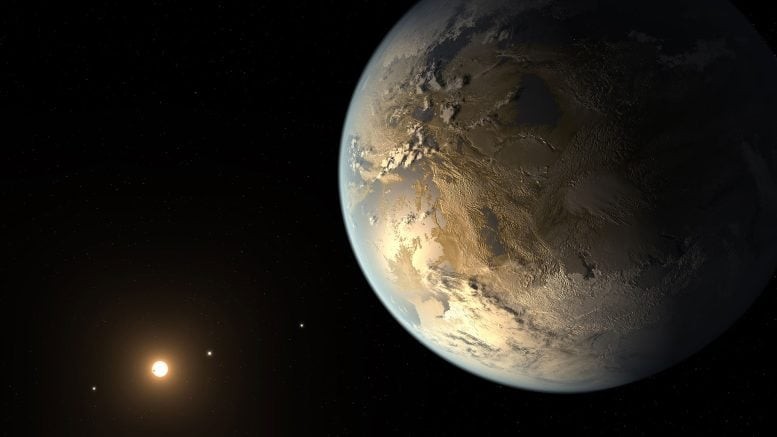
Figure 1. Nearest Intelligent Civilization Could Reside 33,000 Light-Years Away.
From Biospheres to Civilizations
“At some point, enough carbon dioxide will be drawn from the atmosphere that photosynthesis will stop working,” says Scherf. “For Earth, that’s expected to happen in about 200 million to roughly one billion years.” Figure 1 shows Nearest Intelligent Civilization Could Reside 33,000 Light-Years Away.
Earth’s atmosphere today is composed mainly of nitrogen (78%) and oxygen (21%), with trace gases such as carbon dioxide making up only about 0.042%. Scherf and Lammer explored how varying CO₂ levels could affect a planet’s ability to sustain life. On a planet with 10% carbon dioxide, the biosphere could last around 4.2 billion years—assuming it orbits farther from its star or that its sun is dimmer or younger, preventing a runaway greenhouse effect. In contrast, a planet with 1% carbon dioxide could maintain a biosphere for up to 3.1 billion years.
For advanced life, oxygen is equally critical. A minimum of 18% oxygen is required—not only to support large, complex organisms but also to allow open-air combustion. Without fire, metalworking and smelting would be impossible, effectively preventing the rise of a technological civilization.
Scherf and Lammer compared these potential biospheres durations with the timescales needed for technological life to evolve—about 4.5 billion years on Earth—and the possible lifespan of such civilizations. The longer a civilization endures, the greater the chance that it could coexist with others across the galaxy.
The Odds of Cosmic Company
Taking all these factors into account, Scherf and Lammer concluded that for there to be even a single other technological civilization existing in the galaxy right now, a species living on a planet with 10% carbon dioxide would need to survive for at least 280,000 years. In other words, even under favorable planetary conditions, the window of overlap between intelligent civilizations is vanishingly small—making simultaneous contact across the Milky Way an extraordinary rarity.
The Search for Cosmic Neighbors
“For ten civilizations to exist at the same time as ours, the average lifetime must exceed 10 million years,” explains Scherf. “The number of extraterrestrial intelligences (ETIs) is quite low and depends heavily on how long a civilization can survive.”
This suggests that if we ever detect another intelligent civilization, it will likely be far older than humanity. Based on their calculations, Scherf and Lammer estimate that the nearest technological civilization could be about 33,000 light-years away—potentially situated on the opposite side of the Milky Way, given that our Sun lies roughly 27,000 light-years from the galactic center.
However, these estimates aren’t definitive. Scherf notes that several crucial factors remain uncertain—such as how often life originates, how readily photosynthesis and multicellular organisms evolve, and how frequently intelligence leads to technology. If these processes are common, ETIs may be more abundant than predicted; if rare, the outlook becomes far more pessimistic.
“Even if ETIs are rare, there’s only one way to find out—and that’s to keep searching,” he says. “If we find nothing, it strengthens our theory. But if SETI does find something, it would be one of the greatest scientific discoveries in history—proof that we are not alone in the Universe.”
Source: SciTECHDaily
Cite this article:
Priyadharshini S (2025), Closest Alien Civilization May Lurk 33,000 Light-Years from Earth, AnaTechMaz, pp.570
Recent Post
-
ESA Mars Orbiters Capture Rare Interstellar Comet Older Than the Sun
ESA’s ExoMars Trace Gas Orbiter (TGO) and Mars Express....
-
Scientists Suggest Dark Matter Could Leave a Distinct ‘Fingerprint’ on Light
Dark matter, the enigmatic substance that makes up about 27%...
-

World’s Strongest Rocket Successfully Completes 11th Suborbital Test Ahead of Moon and Mars Missions
SpaceX’s colossal Starship...
-

Human Missions to Mars Could Shrink Hearts and Weaken Bones: The Deadly Risks Explained
It’s been more than 50 years since humans last walked on the....
-
Cosmic Timekeepers Uncover Mysterious Ripples in Spacetime
A recent study introduces a novel way to tell apart different origins of nanohertz gravitational waves....
-
“An Astonishing Discovery” – Scientists Detect a Supermassive Black Hole Where None Was Expected
In a discovery that defies ....
-
Scientists Detect Black Hole “Ringing,” Proving Hawking’s Long-Standing Theory
Ten years after humanity first detected gravitational waves, scientists...
-
Cosmic Enigma: Brightest-Ever Fast Radio Burst Stuns Astronomers with Its Silence
Astronomers have traced the brightest Fast Radio Burst (FRB) ever...
-
JWST Discovers a “Impossible” Planet Composed Mostly of Carbon
In a finding that challenges existing models of how planets form, astronomers using the James...

Physicists Predict the Universe Could End in a “Big Crunch”
New research from Cornell University suggests that the universe’s expansion may not continue forever.....
-
This Simple Earth Organism Might Be Able to Live on Mars
A team of Indian scientists has found that baker’s yeast can withstand harsh, Mars-like conditions involving....
-
This Minuscule Dark Object Might Change our Understanding of the Universe
Because the object emits no light or detectable radiation, researchers spotted it...
-
Astronomers Shocked as Black Hole Surpasses Known Growth Limits
The black hole powers a quasar—a brilliant celestial object that outshines...
-
Century-Old Black Hole Mystery Finally Solved by Scientists
For almost two centuries, astronomers were puzzled by a bright object in the constellation Virgo..
-
Closest Alien Civilization May Lurk 33,000 Light-Years from Earth
A planet’s carbon dioxide levels play a crucial role in sustaining life. With enough CO₂, a planet can...