

Astronomers Shocked as Black Hole Surpasses Known Growth Limits
Quasar RACS J0320-35 and Its Unprecedented Growth
The black hole powers a quasar—a brilliant celestial object that outshines entire galaxies. Its extraordinary luminosity arises from immense amounts of material spiraling into the black hole.
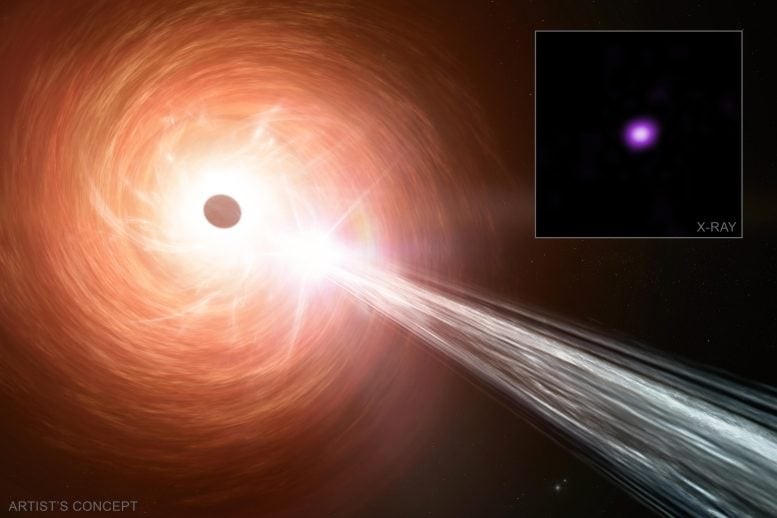
Figure 1. Black Hole Defies Known Growth Limits, Astonishing Astronomers.
Discovered by the same team two years ago, RACS J0320-35 has revealed a surprising feature in new 2023 Chandra observations. The X-ray data indicate that its black hole is growing at a rate exceeding the typical limits expected for such objects. Figure 1 shows Black Hole Defies Known Growth Limits, Astonishing Astronomers.
Understanding the Eddington Limit
As matter falls toward a black hole, it heats up and emits intense radiation across a wide range of wavelengths, including X-rays and visible light. This radiation pushes back against the infalling material. When the inflow reaches a critical threshold, the outward pressure from radiation balances the black hole’s gravity, preventing matter from falling in faster. This upper threshold is known as the Eddington limit.
Researchers note that black holes growing more slowly than this limit must have started with masses of at least 10,000 Suns to reach a billion solar masses within the first billion years after the Big Bang, as seen with RACS J0320-35. One possible origin for such a massive “seed” black hole is the collapse of an enormous, metal-poor gas cloud—a rare cosmic event.
Possible Origins and Growth Scenarios
If RACS J0320-35 is indeed growing at a high rate—estimated at 2.4 times the Eddington limit—and has done so for an extended period, its black hole could have formed more conventionally, starting with a mass under 100 Suns from the collapse of a massive star.
“By knowing the mass of the black hole and calculating its growth rate, we can estimate how massive it was at birth,” said co-author Alberto Moretti of INAF-Osservatorio Astronomico di Brera in Italy. “This allows us to test different theories about black hole formation.”
To determine the growth rate—between 300 and 3,000 Suns per year—the team compared theoretical models with the X-ray spectrum observed by Chandra. The spectrum matched expectations for a black hole growing faster than the Eddington limit. Observations in optical and infrared light further support the conclusion that this black hole is gaining mass at an extraordinary pace.
Insights into Cosmic Mysteries
“How did the universe create the first generation of black holes?” said co-author Thomas Connor of the Center for Astrophysics. “This remains one of the biggest questions in astrophysics, and this object is helping us pursue the answer.”
Another mystery relates to the jets of particles observed streaming from RACS J0320-35 at nearly the speed of light. Such jets are rare in quasars, suggesting that the black hole’s extraordinary growth rate may play a role in producing them.
RACS J0320-35 was initially discovered through a radio survey using the Australian Square Kilometer Array Pathfinder, combined with optical observations from the Dark Energy Camera on the Victor M. Blanco 4-meter Telescope at Cerro Tololo Inter-American Observatory in Chile. The Gemini-South Telescope at Cerro Pachon, operated by the U.S. National Science Foundation’s National Optical-Infrared Astronomy Research Laboratory, provided precise measurements of the quasar’s distance.
Source: SciTECHDaily
Cite this article:
Priyadharshini S (2025), Astronomers Shocked as Black Hole Surpasses Known Growth Limits, AnaTechMaz, pp.568
Recent Post
-
ESA Mars Orbiters Capture Rare Interstellar Comet Older Than the Sun
ESA’s ExoMars Trace Gas Orbiter (TGO) and Mars Express....
-
Scientists Suggest Dark Matter Could Leave a Distinct ‘Fingerprint’ on Light
Dark matter, the enigmatic substance that makes up about 27%...
-

World’s Strongest Rocket Successfully Completes 11th Suborbital Test Ahead of Moon and Mars Missions
SpaceX’s colossal Starship...
-

Human Missions to Mars Could Shrink Hearts and Weaken Bones: The Deadly Risks Explained
It’s been more than 50 years since humans last walked on the....
-
Cosmic Timekeepers Uncover Mysterious Ripples in Spacetime
A recent study introduces a novel way to tell apart different origins of nanohertz gravitational waves....
-
“An Astonishing Discovery” – Scientists Detect a Supermassive Black Hole Where None Was Expected
In a discovery that defies ....
-
Scientists Detect Black Hole “Ringing,” Proving Hawking’s Long-Standing Theory
Ten years after humanity first detected gravitational waves, scientists...
-
Cosmic Enigma: Brightest-Ever Fast Radio Burst Stuns Astronomers with Its Silence
Astronomers have traced the brightest Fast Radio Burst (FRB) ever...
-
JWST Discovers a “Impossible” Planet Composed Mostly of Carbon
In a finding that challenges existing models of how planets form, astronomers using the James...

Physicists Predict the Universe Could End in a “Big Crunch”
New research from Cornell University suggests that the universe’s expansion may not continue forever.....
-

This Simple Earth Organism Might Be Able to Live on Mars
A team of Indian scientists has found that baker’s yeast can withstand harsh, Mars-like conditions involving....
-
This Minuscule Dark Object Might Change our Understanding of the Universe
Because the object emits no light or detectable radiation, researchers spotted it...
-
Astronomers Shocked as Black Hole Surpasses Known Growth Limits
The black hole powers a quasar—a brilliant celestial object that outshines...
-
Century-Old Black Hole Mystery Finally Solved by Scientists
For almost two centuries, astronomers were puzzled by a bright object in the constellation Virgo..
-
Closest Alien Civilization May Lurk 33,000 Light-Years from Earth
A planet’s carbon dioxide levels play a crucial role in sustaining life. With enough CO₂, a planet can...