

Human Missions to Mars Could Shrink Hearts and Weaken Bones: The Deadly Risks Explained
It’s been more than 50 years since humans last walked on the Moon. Those early steps remain iconic achievements, yet the prospect of a “giant leap” to another planet remains unrealized. Interplanetary travel is still a dream, though visionaries like Elon Musk insist it’s only a matter of time. “Each launch,” he says, “is about learning what’s needed to make life multiplanetary.”
While SpaceX and other companies focus on rockets and propulsion, the bigger challenge may not be technical at all. Imagine arriving on Mars only to collapse from exhaustion, or facing an invisible threat that damages your DNA. This isn’t science fiction—it’s the biological reality awaiting the first humans venturing into deep space.
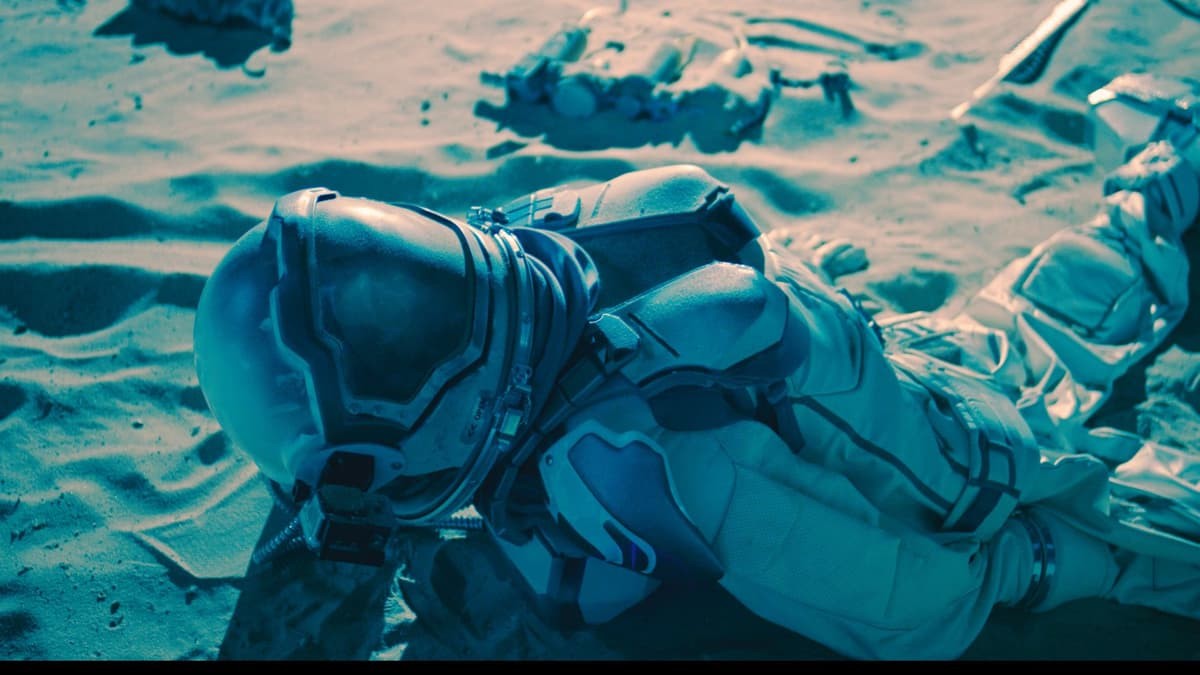
Figure 1. Human Missions to Mars.
The Human Body vs. the Void
A journey to Mars isn’t measured in miles but in months—six to nine months through a vacuum hostile to life. Unlike short Moon missions or the relatively controlled environment of the International Space Station (ISS), a Mars trip tests human endurance like never before. Figure 1 shows Human Missions to Mars.
Space doesn’t just remove gravity; it strips away the conditions under which our bodies evolved. Muscles weaken, bones lose density, fluids shift, and the heart begins to shrink. Even the brain and immune system start to behave unpredictably. In space, adaptation is not optional—it’s a constant fight for survival.
microgravity: The Enemy Within
As soon as astronauts enter microgravity, their bodies begin to change. On Earth, gravity keeps muscles active, bones strong, and balance systems calibrated. In its absence, the body rapidly deteriorates.
The first challenge is space adaptation syndrome. Without gravity, the brain’s balance system is thrown off. Vision conflicts with signals from muscles and joints, causing nausea, dizziness, headaches, and fatigue—described by experts as feeling like “a grumpy drunk.”
Over time, the brain adapts, but the body continues to degrade. Bones lose density at roughly 1% per month—far faster than an elderly person with osteoporosis on Earth [1]. Leg and spine muscles atrophy from disuse, while the spine stretches, temporarily making astronauts taller but causing back pain. Returning to Earth is difficult: muscles are weaker, bones fragile, and balance systems need retraining.
The Body Fluid Revolution
On Earth, gravity pulls fluids downward. In space, fluids redistribute toward the head, producing the characteristic “puffy face” and “chicken legs” appearance. This fluid shift increases pressure behind the eyes, sometimes causing permanent vision problems, and disrupts cardiovascular regulation.
The heart, under less strain, begins to shrink, while the body eliminates excess blood plasma. Red blood cell counts drop, and blood pressure regulation becomes erratic, making standing or moving on Earth a dizzying and painful challenge.
DNA, Immunity, and Cellular Stress
Space affects more than muscles and bones; it reaches deep into cellular function. NASA studies comparing astronaut Scott Kelly, who spent a year on the ISS, to his twin brother on Earth revealed changes in gene expression related to DNA repair and immune response. Telomeres lengthened in space but shortened rapidly upon return.
Radiation exposure and the absence of Earth’s microbial environment disrupt immune function, altering white blood cell behavior, inflammation, and even allergy responses. Prolonged missions could increase cancer risk and autoimmune disorders, risks that grow with journey duration.
countermeasures: Exercise and Engineering
NASA has learned that exercise is essential. Astronauts spend over two hours daily on treadmills, resistance machines, and cycling setups designed to mimic gravity. Despite these efforts, astronauts still return weaker.
Researchers are exploring additional strategies: high-protein nutrition, electrical muscle stimulation, pharmaceuticals to slow bone and muscle loss, and even artificial gravity using rotating spacecraft. Early tests show that even brief periods of artificial gravity help maintain muscle tone and bone density, though scaling the technology for long missions remains a challenge.
radiation: The Invisible Killer
Beyond Earth’s protective magnetic field, astronauts face cosmic radiation, a constant barrage of high-energy particles that can damage DNA and tissue. Solar storms pose immediate threats, potentially delivering lethal doses in hours. Long-term exposure to galactic cosmic rays increases cancer risk over years, and shielding remains only partially effective.
The Psychological Challenge
Isolation in deep space poses another threat. Mars missions involve months of confinement and a communication delay of up to 40 minutes each way. Astronauts must operate autonomously, managing medical or technical emergencies without real-time support. The psychological burden is immense, with potential effects on mental health, decision-making, and team dynamics.
mars: The Ultimate Test
The scale of a Mars mission makes every problem magnified. The ISS is 400 kilometers from Earth; the Moon is 384,000 kilometers away; Mars, at its closest, is 225 million kilometers distant. A round-trip could take three years, during which astronauts face radiation, muscle and bone loss, isolation, and limited nutrition.
Even with advanced engineering, the human body itself may be the greatest limiting factor. Current food preservation, radiation shielding, and psychological support technologies remain inadequate for multi-year missions.
Despite these immense challenges, progress continues. Space agencies and private companies are developing new life-support systems, medical technologies, and spacecraft capable of sustaining humans beyond Earth, bringing the dream of interplanetary travel ever closer to reality.
Reference:
- https://interestingengineering.com/space/the-real-problem-with-space-travel
Cite this article:
Keerthana S (2025), Human Missions to Mars Could Shrink Hearts and Weaken Bones: The Deadly Risks Explained, AnaTechMaz, pp.559
Recent Post
-
ESA Mars Orbiters Capture Rare Interstellar Comet Older Than the Sun
ESA’s ExoMars Trace Gas Orbiter (TGO) and Mars Express....
-
Scientists Suggest Dark Matter Could Leave a Distinct ‘Fingerprint’ on Light
Dark matter, the enigmatic substance that makes up about 27%...
-
World’s Strongest Rocket Successfully Completes 11th Suborbital Test Ahead of Moon and Mars Missions
SpaceX’s colossal Starship...
-
Human Missions to Mars Could Shrink Hearts and Weaken Bones: The Deadly Risks Explained
It’s been more than 50 years since humans last walked on the....
-
Cosmic Timekeepers Uncover Mysterious Ripples in Spacetime
A recent study introduces a novel way to tell apart different origins of nanohertz gravitational waves....
-
“An Astonishing Discovery” – Scientists Detect a Supermassive Black Hole Where None Was Expected
In a discovery that defies ....
-
Scientists Detect Black Hole “Ringing,” Proving Hawking’s Long-Standing Theory
Ten years after humanity first detected gravitational waves, scientists...
-
Cosmic Enigma: Brightest-Ever Fast Radio Burst Stuns Astronomers with Its Silence
Astronomers have traced the brightest Fast Radio Burst (FRB) ever...
-
JWST Discovers a “Impossible” Planet Composed Mostly of Carbon
In a finding that challenges existing models of how planets form, astronomers using the James...
Physicists Predict the Universe Could End in a “Big Crunch”
New research from Cornell University suggests that the universe’s expansion may not continue forever.....
-
This Simple Earth Organism Might Be Able to Live on Mars
A team of Indian scientists has found that baker’s yeast can withstand harsh, Mars-like conditions involving....
-
This Minuscule Dark Object Might Change our Understanding of the Universe
Because the object emits no light or detectable radiation, researchers spotted it...
-
Astronomers Shocked as Black Hole Surpasses Known Growth Limits
The black hole powers a quasar—a brilliant celestial object that outshines...
-
Century-Old Black Hole Mystery Finally Solved by Scientists
For almost two centuries, astronomers were puzzled by a bright object in the constellation Virgo..
-
Closest Alien Civilization May Lurk 33,000 Light-Years from Earth
A planet’s carbon dioxide levels play a crucial role in sustaining life. With enough CO₂, a planet can...