

Century-Old Black Hole Mystery Finally Solved by Scientists
From “Starless Nebula” to Colossal Galaxy
For almost two centuries, astronomers were puzzled by a bright object in the constellation Virgo, which Charles Messier cataloged in 1784 as “87: Nebula without stars.” What looked like a simple patch of fuzzy light was eventually revealed to be an immense galaxy. In 1918, scientists spotted a mysterious jet of light emerging from its center—an enigma they could not yet explain.
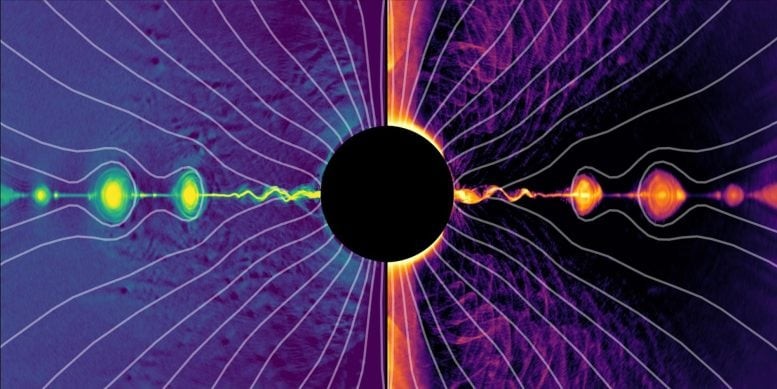
Figure 1. Scientists Crack a 100-Year-Old Black Hole Mystery.
At the heart of this galaxy, now known as M87, lies the supermassive black hole M87*, with a mass roughly six and a half billion times that of the Sun. Its rapid spin drives a stream of charged particles that shoots outward at nearly the speed of light, stretching some 5,000 light-years into space. Similar jets from other spinning black holes help distribute energy and matter across the cosmos, influencing the growth and evolution of galaxies. Figure 1 shows Scientists Crack a 100-Year-Old Black Hole Mystery.
Decoding the Power Behind Black Holes
A team from Goethe University Frankfurt, led by Prof. Luciano Rezzolla, has created a cutting-edge simulation tool called the Frankfurt Particle-in-Cell code for black hole spacetimes (FPIC). This computational model accurately tracks how a spinning black hole channels its rotational energy into a powerful jet.
Their findings reveal that, alongside the well-known Blandford–Znajek mechanism—long thought to explain how black holes extract energy via magnetic fields—another crucial process contributes: magnetic reconnection. In this phenomenon, magnetic field lines break and reconnect, releasing energy as heat, radiation, and bursts of plasma.
These simulations demanded extraordinary computing power, consuming millions of CPU hours on Frankfurt’s “Goethe” supercomputer and Stuttgart’s “Hawk.” This immense effort was necessary to solve Maxwell’s equations and the motion of electrons and positrons within the framework of Einstein’s general relativity.
Plasma Chains and Negative Energy
The researchers found that in the black hole’s equatorial plane, intense magnetic reconnection generates chains of plasmoids—condensed plasma “bubbles” moving near the speed of light. Remarkably, this process also produces particles with negative energy, which can feed the extreme astrophysical phenomena observed around black holes, such as jets and plasma eruptions.
Shedding Light on the Universe’s Most Powerful Engines
“With our work, we can show how energy is efficiently extracted from rotating black holes and funneled into jets,” says Prof. Rezzolla. “This helps explain the extreme brightness of active galactic nuclei and how particles are accelerated to nearly the speed of light.”
He adds that it is both thrilling and rewarding to explore the physics near black holes using advanced numerical simulations. “Even more satisfying is being able to interpret these complex results with rigorous mathematical analysis, as we have done in our study.”
Source: SciTECHDaily
Cite this article:
Priyadharshini S (2025), Century-Old Black Hole Mystery Finally Solved by Scientists, AnaTechMaz, pp.569
Recent Post
-
ESA Mars Orbiters Capture Rare Interstellar Comet Older Than the Sun
ESA’s ExoMars Trace Gas Orbiter (TGO) and Mars Express....
-
Scientists Suggest Dark Matter Could Leave a Distinct ‘Fingerprint’ on Light
Dark matter, the enigmatic substance that makes up about 27%...
-

World’s Strongest Rocket Successfully Completes 11th Suborbital Test Ahead of Moon and Mars Missions
SpaceX’s colossal Starship...
-

Human Missions to Mars Could Shrink Hearts and Weaken Bones: The Deadly Risks Explained
It’s been more than 50 years since humans last walked on the....
-
Cosmic Timekeepers Uncover Mysterious Ripples in Spacetime
A recent study introduces a novel way to tell apart different origins of nanohertz gravitational waves....
-
“An Astonishing Discovery” – Scientists Detect a Supermassive Black Hole Where None Was Expected
In a discovery that defies ....
-
Scientists Detect Black Hole “Ringing,” Proving Hawking’s Long-Standing Theory
Ten years after humanity first detected gravitational waves, scientists...
-
Cosmic Enigma: Brightest-Ever Fast Radio Burst Stuns Astronomers with Its Silence
Astronomers have traced the brightest Fast Radio Burst (FRB) ever...
-
JWST Discovers a “Impossible” Planet Composed Mostly of Carbon
In a finding that challenges existing models of how planets form, astronomers using the James...
Physicists Predict the Universe Could End in a “Big Crunch”
New research from Cornell University suggests that the universe’s expansion may not continue forever.....
-

This Simple Earth Organism Might Be Able to Live on Mars
A team of Indian scientists has found that baker’s yeast can withstand harsh, Mars-like conditions involving....
-
This Minuscule Dark Object Might Change our Understanding of the Universe
Because the object emits no light or detectable radiation, researchers spotted it...
-
Astronomers Shocked as Black Hole Surpasses Known Growth Limits
The black hole powers a quasar—a brilliant celestial object that outshines...
-
Century-Old Black Hole Mystery Finally Solved by Scientists
For almost two centuries, astronomers were puzzled by a bright object in the constellation Virgo..
-
Closest Alien Civilization May Lurk 33,000 Light-Years from Earth
A planet’s carbon dioxide levels play a crucial role in sustaining life. With enough CO₂, a planet can...