

This Minuscule Dark Object Might Change our Understanding of the Universe
Discovery of a Tiny Cosmic Enigma
Because the object emits no light or detectable radiation, researchers spotted it through gravitational lensing—observing how its gravity subtly warped light passing nearby. This tiny distortion allowed them to estimate the object’s mass.
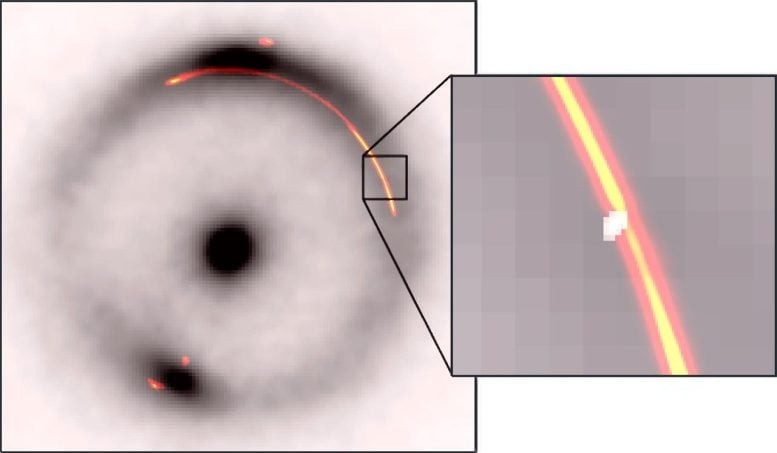
Figure 1. Tiny Dark Object Could Transform Our View of the Universe.
Remarkably, the object’s presence appeared only as a minuscule “pinch” within the warped image of a much larger gravitational lens, similar to a small imperfection in a funhouse mirror. Figure 1 shows Tiny Dark Object Could Transform Our View of the Universe
Implications for Dark Matter
“It’s an impressive achievement to detect such a low-mass object at such a large distance,” said Chris Fassnacht, a physics and astronomy professor at UC Davis and co-author of the Nature Astronomy paper. “Finding objects like this is critical for understanding the nature of dark matter.”
The object’s estimated mass is about one million times that of the Sun. Its true nature remains uncertain—it could be a dense clump of dark matter roughly 100 times smaller than previously discovered, or a compact, inactive dwarf galaxy.
Though invisible except through its gravitational influence, dark matter is thought to shape the arrangement of galaxies, stars, and other matter across the cosmos. Determining whether dark matter can exist in small, starless clumps could refine—or even overturn—current theories about this elusive substance.
Building an Earth-Sized Telescope
To detect the tiny dark object, the team combined instruments from around the world—including the Green Bank Telescope (GBT) in West Virginia, the Very Long Baseline Array (VLBA) in Hawaiʻi, and the European Very Long Baseline Interferometric Network (EVN), which spans Europe, Asia, South Africa, and Puerto Rico—effectively creating an Earth-sized super-telescope. This global network allowed them to capture the faint signals of gravitational lensing caused by the invisible object.
A Breakthrough for the Cold Dark Matter Theory
At a hundred times lower in mass than any object previously detected using this technique, the discovery demonstrates the method’s potential to uncover other similar objects.
“Given the sensitivity of our data, we were expecting to find at least one dark object, so our discovery is consistent with the so-called ‘cold dark matter theory,’ which underpins much of our understanding of galaxy formation,” said lead author Devon Powell of the Max Planck Institute for Astrophysics (MPA), Germany. “Now that we’ve found one, the next question is whether we can find more—and whether their numbers will continue to align with theoretical models.”
Next Steps in the Cosmic Hunt
The team is analyzing the data further to better understand the nature of this dark object, while also searching other regions of the sky for more hidden, starless masses.
Source: SciTECHDaily
Cite this article:
Priyadharshini S (2025), This Minuscule Dark Object Might Change our Understanding of the Universe, AnaTechMaz, pp.567
Recent Post
-
ESA Mars Orbiters Capture Rare Interstellar Comet Older Than the Sun
ESA’s ExoMars Trace Gas Orbiter (TGO) and Mars Express....
-
Scientists Suggest Dark Matter Could Leave a Distinct ‘Fingerprint’ on Light
Dark matter, the enigmatic substance that makes up about 27%...
-

World’s Strongest Rocket Successfully Completes 11th Suborbital Test Ahead of Moon and Mars Missions
SpaceX’s colossal Starship...
-

Human Missions to Mars Could Shrink Hearts and Weaken Bones: The Deadly Risks Explained
It’s been more than 50 years since humans last walked on the....
-
Cosmic Timekeepers Uncover Mysterious Ripples in Spacetime
A recent study introduces a novel way to tell apart different origins of nanohertz gravitational waves....
-
“An Astonishing Discovery” – Scientists Detect a Supermassive Black Hole Where None Was Expected
In a discovery that defies ....
-
Scientists Detect Black Hole “Ringing,” Proving Hawking’s Long-Standing Theory
Ten years after humanity first detected gravitational waves, scientists...
-
Cosmic Enigma: Brightest-Ever Fast Radio Burst Stuns Astronomers with Its Silence
Astronomers have traced the brightest Fast Radio Burst (FRB) ever...
-
JWST Discovers a “Impossible” Planet Composed Mostly of Carbon
In a finding that challenges existing models of how planets form, astronomers using the James...

Physicists Predict the Universe Could End in a “Big Crunch”
New research from Cornell University suggests that the universe’s expansion may not continue forever.....
-

This Simple Earth Organism Might Be Able to Live on Mars
A team of Indian scientists has found that baker’s yeast can withstand harsh, Mars-like conditions involving....
-
This Minuscule Dark Object Might Change our Understanding of the Universe
Because the object emits no light or detectable radiation, researchers spotted it...
-
Astronomers Shocked as Black Hole Surpasses Known Growth Limits
The black hole powers a quasar—a brilliant celestial object that outshines...
-
Century-Old Black Hole Mystery Finally Solved by Scientists
For almost two centuries, astronomers were puzzled by a bright object in the constellation Virgo..
-
Closest Alien Civilization May Lurk 33,000 Light-Years from Earth
A planet’s carbon dioxide levels play a crucial role in sustaining life. With enough CO₂, a planet can...