

Tiny Star, Giant Rule-Breaking Planet: A Cosmic Oddity
Discovery of a Giant Planet Orbiting a Tiny Star
An international team of astronomers, including researchers from the University of Liège and institutions in the UK, Chile, and the USA, has discovered a massive planet orbiting an exceptionally small star — the tiniest star ever found to host such a large companion.
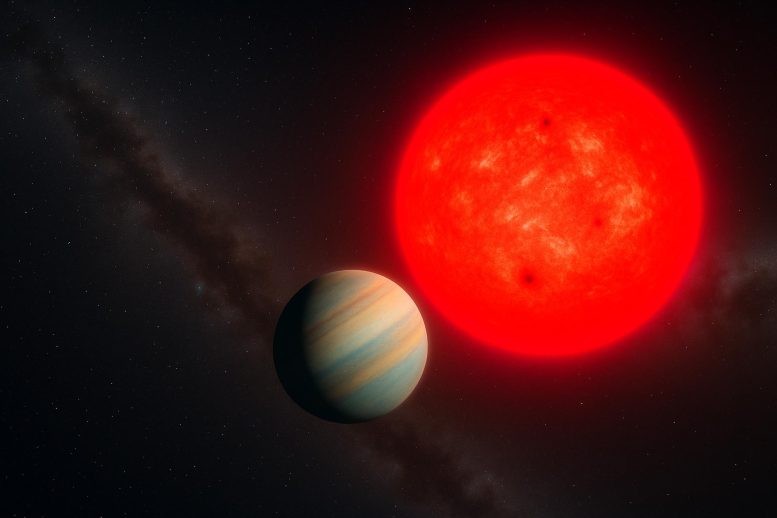
Figure 1. Tiny Star, Monster Planet: Defying the Rules of Space.
The star, TOI-6894, is a red dwarf with just 20% of the Sun’s mass. Red dwarfs are the most common stars in the galaxy, yet it was long thought that stars this small lack the material necessary to form or sustain giant planets. Contrary to expectations, the team detected a Saturn-sized planet, named TOI-6894b, orbiting this star. The findings were published in Nature Astronomy. Figure 1 shows Tiny Star, Monster Planet: Defying the Rules of Space.
TESS First, Earth Confirms
NASA’s Transiting Exoplanet Survey Satellite (TESS) initially spotted the unusual signal as part of a broader search for giant planets around small stars, led by Dr. Edward Bryant of UCL’s Mullard Space Science Laboratory.
To confirm the discovery, follow-up observations were conducted using Earth-based telescopes, including those from the SPECULOOS and TRAPPIST projects coordinated by the University of Liège. Dr. Khalid Barkaoui, who led the follow-up, said:
A Record-Breaking Star-Planet System
TOI-6894 now holds the record as the smallest star ever discovered to host a transiting giant planet, with a radius 40% smaller than any previously known host. Prof. Jamila Chouquar, formerly at ULiège, remarked:
Rethinking Planet Formation
Current models suggest giant planets should be rare around small stars, as their protoplanetary disks — the gas and dust from which planets form — are believed to lack the material to build massive cores and thick gas envelopes. TOI-6894b challenges this assumption, opening new questions about how planets form around the galaxy’s most abundant stars.
A New Era of Exoplanet Discovery
“This giant planet orbiting a tiny star shows that planetary diversity in the galaxy is far greater than we imagined. Most of the stars we observe with SPECULOOS and TRAPPIST are similar — or even smaller — so we’re in an excellent position to uncover more cosmic outliers in the years ahead.”
This discovery not only challenges long-standing assumptions about planet formation but also opens the door to finding more unexpected giant planets around the galaxy’s smallest stars, ushering in a new era of exoplanet exploration.
Source: SciTECHDaily
Cite this article:
Priyadharshini S (2025), Tiny Star, Giant Rule-Breaking Planet: A Cosmic Oddity, AnaTechMaz, pp.495
Recent Post
-
Space Clues: How an Explosive Prebiotic Molecule Could Unlock Life’s Origins
This is essentially a prebiotic concentrate — a seed-of-life...
-
“Strange ‘Infinity’ Galaxy Baffles Scientists: How Do We Make Sense of It?”
Everything about this galaxy is unusual,” said the researcher....
-
Martian Rock’s Strange Spots Could Hold Clues to Ancient Life
Researchers tested O-PTIR on a basalt rock containing dark inclusions, similar in size.....
-
Webb Telescope Detects Most Ancient Black Hole Yet, Breaking Cosmic Record
Astronomers use spectroscopy to split light into its component...
-
Black Holes Could Act as Cosmic Supercolliders in the Search for Dark Matter
Instead of waiting decades and spending billions on massive particle...
-
Uncovering the Secrets Between Galaxies Through Mysterious Radio Signals
Most of the universe’s matter is invisible, detectable...
-
Earth Targeted by the ‘Eye of Sauron’ in Stunning Astronomical Capture
Billions of light-years away, the blazar PKS 1424+240 has long....
-
Hubble Spots a Rare Interstellar Comet Speeding at 130,000 MPH Through the Solar System
Hubble has captured striking details of comet 3I/ATLAS, including a...
-
Pink Nebulae Radiate Brilliantly in a Spiral Galaxy 35 million Light-Years Away
Pink Nebulae Radiate Brilliantly in a Spiral Galaxy 35 million...
AI Spots Rare Supernova That Flared Twice in a Lifetime
Astronomers have captured the violent death of a massive star locked in a deadly...
-
James Webb Reveals Planet-Forming Regions Under Intense Ultraviolet Radiation
Ultraviolet (UV) radiation is a form of light invisible to the human...
-
Webb Spots Mysterious “Little Red Dots” — Possible Birthplaces of the Universe’s First Black Holes
Astronomers at the Center for Astrophysics...
-
Next Solar Superstorm May Pose Greater Threat to Satellites
New research from the U.S. National Science Foundation’s National Center for ...
-
Rare Supernova Challenges Expectations, Unveiling the Hidden Layers of a Dying Star
Astrophysicists at Northwestern University, working...
-
Tiny Star, Giant Rule-Breaking Planet: A Cosmic Oddity
An international team of astronomers, including researchers from the University of Liège.....