

James Webb Reveals Planet-Forming Regions Under Intense Ultraviolet Radiation
The Harsh Light of the Lobster Nebula
Ultraviolet (UV) radiation is a form of light invisible to the human eye, carrying more energy than visible light. On Earth, UV radiation can damage living cells, causing effects that range from sunburn to skin cancer. In the vacuum of space, with no atmospheric protection, UV radiation is even more intense.
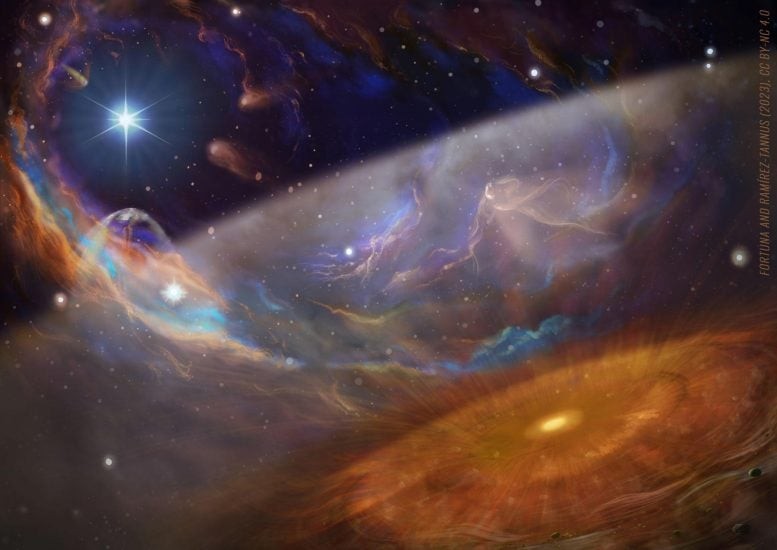
Figure 1. James Webb Captures Planet Birth Amid Extreme Ultraviolet Light.
The researchers focused on a young star roughly the same mass as the Sun, named XUE 1, located about 5,500 light-years away in the Lobster Nebula (NGC 6357). This nebula hosts more than 20 massive stars, including two of the largest in the Milky Way, both emitting extreme levels of ultraviolet radiation. Within this region, the team also identified around a dozen smaller young stars, each surrounded by protoplanetary disks exposed to intense UV light. Figure 1 shows James Webb Captures Planet Birth Amid Extreme Ultraviolet Light.
By combining James Webb Space Telescope (JWST) observations with advanced astrochemical models, the researchers determined the composition of the tiny dust grains in XUE 1’s protoplanetary disk—grains that could eventually coalesce into rocky planets. They found that the disk contains enough solid material to potentially form at least 10 planets, each with a mass similar to Mercury. The team also mapped the spatial distribution of a variety of previously detected molecules in the disk, including water vapor, carbon monoxide, carbon dioxide, hydrogen cyanide, and acetylene.
“These molecules are expected to contribute to the formation of the atmospheres of emerging planets,” said Konstantin Getman, research professor in the Department of Astronomy and Astrophysics at Penn State and co-author of the study. “The detection of such reservoirs of dust and gas suggests that the fundamental building blocks for planet formation can survive even in environments with extreme ultraviolet radiation.”
Evidence of Disk Erosion
The team also noted the absence of certain molecules that typically trace UV irradiation in the JWST observations, leading them to conclude that XUE 1’s protoplanetary disk is compact and largely depleted of gas at its outer edges. The disk stretches only about 10 astronomical units (AU) from the host star—roughly the distance from the Sun to Saturn. The researchers attribute this compactness to the erosive effect of intense external UV radiation on the outer regions of the disk.
“These findings support the idea that planets can form around stars even when their natal disks are exposed to strong external radiation,” said Eric Feigelson, distinguished senior scholar and professor of astronomy, astrophysics, and statistics at Penn State. “It helps explain why astronomers are finding that planetary systems are so common around other stars.”
Studying XUE 1 marks an important step toward understanding how external radiation influences protoplanetary disks. The research lays the foundation for future observations—both from space- and ground-based telescopes—aimed at building a fuller picture of planet formation across diverse cosmic environments. According to Portilla-Revelo, the study highlights the transformative power of NASA’s James Webb Space Telescope in probing the complexities of planet formation, while also demonstrating the remarkable resilience of protoplanetary disks under extreme conditions.
Source: SciTECHDaily
Cite this article:
Priyadharshini S (2025), James Webb Reveals Planet-Forming Regions Under Intense Ultraviolet Radiation, AnaTechMaz, pp.491
Recent Post
-
Space Clues: How an Explosive Prebiotic Molecule Could Unlock Life’s Origins
This is essentially a prebiotic concentrate — a seed-of-life...
-
“Strange ‘Infinity’ Galaxy Baffles Scientists: How Do We Make Sense of It?”
Everything about this galaxy is unusual,” said the researcher....
-
Martian Rock’s Strange Spots Could Hold Clues to Ancient Life
Researchers tested O-PTIR on a basalt rock containing dark inclusions, similar in size.....
-
Webb Telescope Detects Most Ancient Black Hole Yet, Breaking Cosmic Record
Astronomers use spectroscopy to split light into its component...
-
Black Holes Could Act as Cosmic Supercolliders in the Search for Dark Matter
Instead of waiting decades and spending billions on massive particle...
-
Uncovering the Secrets Between Galaxies Through Mysterious Radio Signals
Most of the universe’s matter is invisible, detectable...
-
Earth Targeted by the ‘Eye of Sauron’ in Stunning Astronomical Capture
Billions of light-years away, the blazar PKS 1424+240 has long....
-
Hubble Spots a Rare Interstellar Comet Speeding at 130,000 MPH Through the Solar System
Hubble has captured striking details of comet 3I/ATLAS, including a...
-
Pink Nebulae Radiate Brilliantly in a Spiral Galaxy 35 million Light-Years Away
Pink Nebulae Radiate Brilliantly in a Spiral Galaxy 35 million...
AI Spots Rare Supernova That Flared Twice in a Lifetime
Astronomers have captured the violent death of a massive star locked in a deadly...
-
James Webb Reveals Planet-Forming Regions Under Intense Ultraviolet Radiation
Ultraviolet (UV) radiation is a form of light invisible to the human...
-
Webb Spots Mysterious “Little Red Dots” — Possible Birthplaces of the Universe’s First Black Holes
Astronomers at the Center for Astrophysics...
-
Next Solar Superstorm May Pose Greater Threat to Satellites
New research from the U.S. National Science Foundation’s National Center for ...
-
Rare Supernova Challenges Expectations, Unveiling the Hidden Layers of a Dying Star
Astrophysicists at Northwestern University, working...
-
Tiny Star, Giant Rule-Breaking Planet: A Cosmic Oddity
An international team of astronomers, including researchers from the University of Liège.....