

Next Solar Superstorm May Pose Greater Threat to Satellites
Rising CO₂ in the Upper Atmosphere Could Change How Storms Affect Satellites
New research from the U.S. National Science Foundation’s National Center for Atmospheric Research (NSF NCAR) suggests that increasing levels of carbon dioxide high in Earth’s atmosphere may alter the way geomagnetic storms impact the planet. This finding has important implications for the thousands of satellites orbiting Earth.
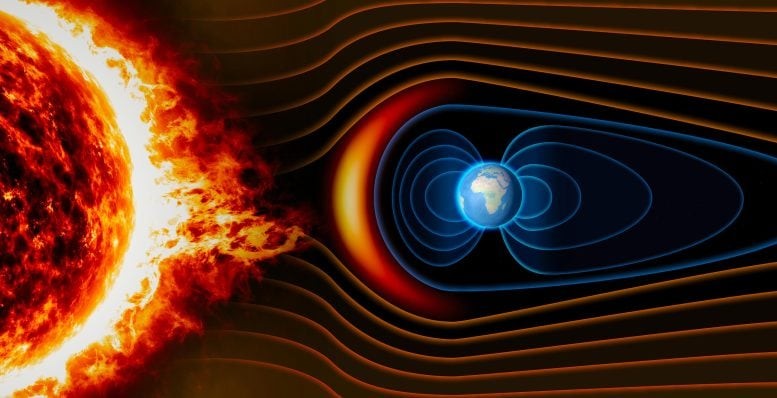
Figure 1. Satellites Face Higher Risk from Upcoming Solar Superstorms.
Geomagnetic storms occur when bursts of charged particles from the Sun collide with Earth’s atmosphere. As society becomes more reliant on technology, these solar events are an increasing concern. During a storm, the upper atmosphere temporarily becomes denser, increasing drag on satellites and affecting their speed, orbital height, and operational lifespan. Figure 1 shows Satellites Face Higher Risk from Upcoming Solar Superstorms.
Using advanced computer models, the research team found that in the future, the upper atmosphere may not densify as much during storms of the same intensity. Because the background density will already be lower due to rising CO₂ levels, the overall peak density during storms is expected to be less than it is under today’s conditions.
Why Future Storms Could Hit Satellites Harder
Even though the upper atmosphere may not become as dense overall during future geomagnetic storms, the relative change — the jump from baseline to peak density over the course of a multiday storm — is expected to be greater.
“The way energy from the Sun interacts with the atmosphere will change in the future because the background density is different, leading to a different atmospheric response,” explained NSF NCAR scientist Nicholas Pedatella, lead author of the study. “This is particularly important for the satellite industry, which needs to design spacecraft to withstand specific atmospheric conditions.”
A Colder, Thinner Sky: How CO₂ Is Changing the Upper Atmosphere
Earth’s upper atmosphere has become increasingly critical as society relies on satellites for navigation, communications, national security, and other technology-dependent applications.
Unlike the lower atmosphere, which warms with rising carbon dioxide levels, the upper atmosphere cools. This occurs because CO₂ at high altitudes releases heat directly into space rather than transferring it to nearby air molecules, which are much sparser than near Earth’s surface.
Modeling the Future of Geomagnetic Storms
While previous studies have examined how rising CO₂ and other greenhouse gases reduce the upper atmosphere’s neutral density—the concentration of non-ionized particles such as oxygen and nitrogen—Pedatella and colleagues asked a different question: how will future atmospheric density respond during powerful geomagnetic storms?
The researchers focused on the geomagnetic superstorm of May 10–11, 2024, when a series of powerful solar disturbances, known as coronal mass ejections, struck Earth’s atmosphere. They examined how the same storm would have affected the atmosphere in 2016 and projected its impact for three future years—2040, 2061, and 2084—each occurring near the minimum of the 11-year solar cycle.
To conduct the study, the team used the NSF NCAR-based Community Earth System Model Whole Atmosphere Community Climate Model with thermosphere-ionosphere eXtension, which simulates the atmosphere from the surface up to the upper thermosphere, 500–700 kilometers (310–435 miles) above Earth. This approach allows scientists to see how changes in the lower atmosphere, like rising greenhouse gas concentrations, influence regions far above the surface.
Sharper Spikes, Lower Density
Simulations run on the Derecho supercomputer at the NSF NCAR-Wyoming Supercomputing Center revealed that, later this century, certain regions of the upper atmosphere could be 20–50% less dense at the peak of a storm similar to the May 2024 event, assuming significantly higher CO₂ levels. Yet the relative change from pre-storm to peak density will be larger. Today, such storms roughly double atmospheric density at their peak; in the future, they may nearly triple it. This occurs because a storm of the same intensity has a proportionally greater effect on a thinner atmosphere.
Pedatella emphasized that further research is needed to better understand how space weather may evolve, including how different types of geomagnetic storms could vary in impact at different points in the 11-year solar cycle, when atmospheric density naturally fluctuates.
Understanding Space Weather in a Changing Climate
“We now have the capability with our models to explore the complex interactions between the lower and upper atmosphere,” Pedatella said. “Understanding these changes is critical because they have profound implications for our atmosphere and for satellite operations.”
Source: SciTECHDaily
Cite this article:
Priyadharshini S (2025), Next Solar Superstorm May Pose Greater Threat to Satellites, AnaTechMaz, pp.493
Recent Post
-
Space Clues: How an Explosive Prebiotic Molecule Could Unlock Life’s Origins
This is essentially a prebiotic concentrate — a seed-of-life...
-
“Strange ‘Infinity’ Galaxy Baffles Scientists: How Do We Make Sense of It?”
Everything about this galaxy is unusual,” said the researcher....
-
Martian Rock’s Strange Spots Could Hold Clues to Ancient Life
Researchers tested O-PTIR on a basalt rock containing dark inclusions, similar in size.....
-
Webb Telescope Detects Most Ancient Black Hole Yet, Breaking Cosmic Record
Astronomers use spectroscopy to split light into its component...
-
Black Holes Could Act as Cosmic Supercolliders in the Search for Dark Matter
Instead of waiting decades and spending billions on massive particle...
-
Uncovering the Secrets Between Galaxies Through Mysterious Radio Signals
Most of the universe’s matter is invisible, detectable...
-
Earth Targeted by the ‘Eye of Sauron’ in Stunning Astronomical Capture
Billions of light-years away, the blazar PKS 1424+240 has long....
-
Hubble Spots a Rare Interstellar Comet Speeding at 130,000 MPH Through the Solar System
Hubble has captured striking details of comet 3I/ATLAS, including a...
-
Pink Nebulae Radiate Brilliantly in a Spiral Galaxy 35 million Light-Years Away
Pink Nebulae Radiate Brilliantly in a Spiral Galaxy 35 million...
AI Spots Rare Supernova That Flared Twice in a Lifetime
Astronomers have captured the violent death of a massive star locked in a deadly...
-
James Webb Reveals Planet-Forming Regions Under Intense Ultraviolet Radiation
Ultraviolet (UV) radiation is a form of light invisible to the human...
-
Webb Spots Mysterious “Little Red Dots” — Possible Birthplaces of the Universe’s First Black Holes
Astronomers at the Center for Astrophysics...
-
Next Solar Superstorm May Pose Greater Threat to Satellites
New research from the U.S. National Science Foundation’s National Center for ...
-
Rare Supernova Challenges Expectations, Unveiling the Hidden Layers of a Dying Star
Astrophysicists at Northwestern University, working...
-
Tiny Star, Giant Rule-Breaking Planet: A Cosmic Oddity
An international team of astronomers, including researchers from the University of Liège.....