

AI Spots Rare Supernova That Flared Twice in a Lifetime
AI Tracks a Star’s Final Moments
Astronomers have captured the violent death of a massive star locked in a deadly orbit with a black hole. This breakthrough was made possible by an artificial intelligence system developed by a team at the University of California, Santa Cruz, which specializes in monitoring stars immediately after they explode as supernovae.
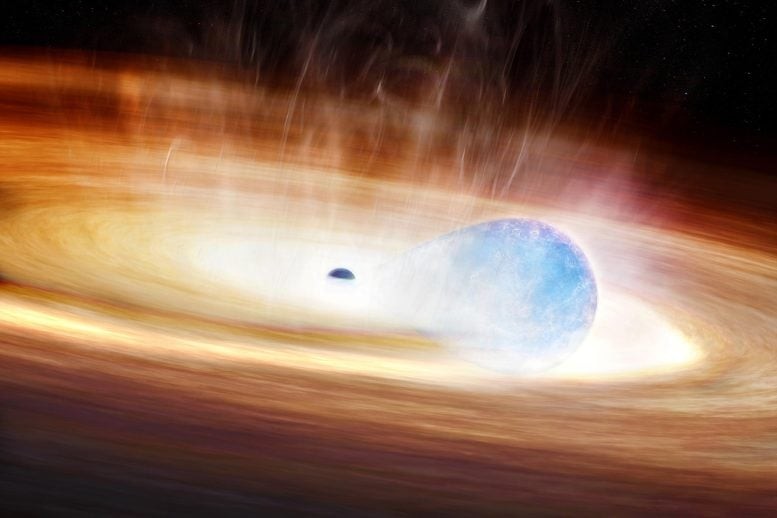
Figure 1. AI Detects Rare Supernova That Shined Twice.
In July 2023, the event—designated SN 2023zkd—was detected by this AI-powered system, which scans the sky in real time for unusual stellar explosions. The rapid alert allowed researchers to begin detailed follow-up observations almost immediately, a critical step in reconstructing the full sequence of the star’s catastrophic demise. Figure 1 shows AI Detects Rare Supernova That Shined Twice.
Unmatched Observations from Multiple Telescopes
By the conclusion of the event, SN 2023zkd had been tracked by a wide network of telescopes, both on Earth and in space. This included two instruments at Hawaiʻi’s Haleakalā Observatory, which are part of the Young Supernova Experiment (YSE) led by UC Santa Cruz.
“Something exactly like this supernova has not been seen before, so it may be extremely rare,” said Ryan Foley, associate professor of astronomy and astrophysics at UC Santa Cruz. “Humans are reasonably good at spotting things that ‘aren’t like the others,’ but AI can flag unusual events earlier than a human might notice. This early detection is critical for time-sensitive observations.”
Surveying the Skies for Supernovae
Foley’s team runs the Young Supernova Experiment (YSE), which scans a region of the sky roughly 6,000 times the size of the full moon—about 4% of the night sky—every three days. The survey has uncovered thousands of new cosmic explosions and other astrophysical transients, often within days or even hours of their initial eruption.
The scientists interpreting SN 2023zkd suggest that a collision between the massive star and its black hole companion was inevitable. As energy was lost from the orbit, the star moved closer to the black hole until gravitational stress triggered the supernova. The discovery was published on August 13 in The Astrophysical Journal. “Our analysis shows the blast was caused by a catastrophic encounter with a black hole companion, providing the strongest evidence yet that such close interactions can actually detonate a star,” said lead author Alexander Gagliano, a fellow at the NSF Institute for Artificial Intelligence and Fundamental Interactions.
An alternative hypothesis is that the black hole tore the star apart before it could explode naturally. In this case, the debris from the star collided with surrounding gas, producing the bright light observed. Either scenario leaves behind a single, heavier black hole.
A Supernova That Glowed Twice
Located about 730 million light-years from Earth, SN 2023zkd initially appeared to be a typical supernova, producing a single burst of light. However, over several months, it unexpectedly brightened again. Archival data revealed that the system had been gradually brightening for more than four years before the explosion—a rare prelude for supernovae.
Detailed analysis at UC Santa Cruz showed that the supernova’s light was shaped by material the star had shed in its final years. The initial brightening came from the blast wave hitting low-density gas, while a second, delayed peak resulted from a slower collision with a dense, disk-like cloud. The star’s erratic pre-explosion behavior suggests it was under extreme gravitational stress from a nearby compact companion, likely a black hole.
From Skepticism to Confirmation
Foley recalled that the idea of a black hole triggering a supernova initially sounded almost like science fiction. Through careful analysis of spectral data and discussions with Gagliano, the team confirmed the binary system interpretation. Gagliano led the effort on spectral analysis, while Foley served as a spectroscopy expert and critical sounding board.
Power of AI and Collaboration
“Our team built the software platform that consolidates data and manages observations, integrating AI tools for studies like this,” Foley said. The research collaboration combined diverse expertise, including theory (led by Enrico Ramirez-Ruiz at UC Santa Cruz) and AI analysis (V. Ashley Villar at Harvard). The study was conducted under YSE, coordinated with the Center for Astrophysics | Harvard & Smithsonian and MIT, and funded by NSF, NASA, the Moore Foundation, and the Packard Foundation.
Funding Uncertainty Threatens Future Discoveries
Foley expressed concern over uncertain funding, which is forcing the collaboration to take fewer risks and reducing overall scientific output. “This uncertainty is shrinking our program, limiting graduate admissions, and pushing students to leave the field or work outside the U.S.,” he said.
Despite these challenges, Foley emphasized the broader potential of AI-driven anomaly detection. “Techniques like this could be applied to screening for diseases, detecting security threats, monitoring mental health, or preventing financial fraud. Anywhere real-time anomaly detection is needed; these methods will likely play a role.”
Source: SciTECHDaily
Cite this article:
Priyadharshini S (2025), AI Spots Rare Supernova That Flared Twice in a Lifetime, AnaTechMaz, pp.490
Recent Post
-
Space Clues: How an Explosive Prebiotic Molecule Could Unlock Life’s Origins
This is essentially a prebiotic concentrate — a seed-of-life...
-
“Strange ‘Infinity’ Galaxy Baffles Scientists: How Do We Make Sense of It?”
Everything about this galaxy is unusual,” said the researcher....
-
Martian Rock’s Strange Spots Could Hold Clues to Ancient Life
Researchers tested O-PTIR on a basalt rock containing dark inclusions, similar in size.....
-
Webb Telescope Detects Most Ancient Black Hole Yet, Breaking Cosmic Record
Astronomers use spectroscopy to split light into its component...
-
Black Holes Could Act as Cosmic Supercolliders in the Search for Dark Matter
Instead of waiting decades and spending billions on massive particle...
-
Uncovering the Secrets Between Galaxies Through Mysterious Radio Signals
Most of the universe’s matter is invisible, detectable...
-
Earth Targeted by the ‘Eye of Sauron’ in Stunning Astronomical Capture
Billions of light-years away, the blazar PKS 1424+240 has long....
-
Hubble Spots a Rare Interstellar Comet Speeding at 130,000 MPH Through the Solar System
Hubble has captured striking details of comet 3I/ATLAS, including a...
-
Pink Nebulae Radiate Brilliantly in a Spiral Galaxy 35 million Light-Years Away
Pink Nebulae Radiate Brilliantly in a Spiral Galaxy 35 million...
AI Spots Rare Supernova That Flared Twice in a Lifetime
Astronomers have captured the violent death of a massive star locked in a deadly...
-
James Webb Reveals Planet-Forming Regions Under Intense Ultraviolet Radiation
Ultraviolet (UV) radiation is a form of light invisible to the human...
-
Webb Spots Mysterious “Little Red Dots” — Possible Birthplaces of the Universe’s First Black Holes
Astronomers at the Center for Astrophysics...
-
Next Solar Superstorm May Pose Greater Threat to Satellites
New research from the U.S. National Science Foundation’s National Center for ...
-
Rare Supernova Challenges Expectations, Unveiling the Hidden Layers of a Dying Star
Astrophysicists at Northwestern University, working...
-
Tiny Star, Giant Rule-Breaking Planet: A Cosmic Oddity
An international team of astronomers, including researchers from the University of Liège.....