

Black Holes Could Act as Cosmic Supercolliders in the Search for Dark Matter
Black Holes vs. Billion-Dollar Labs
Instead of waiting decades and spending billions on massive particle accelerators like the Large Hadron Collider, scientists are investigating whether supermassive black holes could naturally function as cosmic laboratories for uncovering dark matter and other elusive particles. A Johns Hopkins University study suggests these extreme objects might offer a cost-free glimpse into physics that next-generation colliders—projected to cost $30 billion and take 40 years to build—aim to reveal.
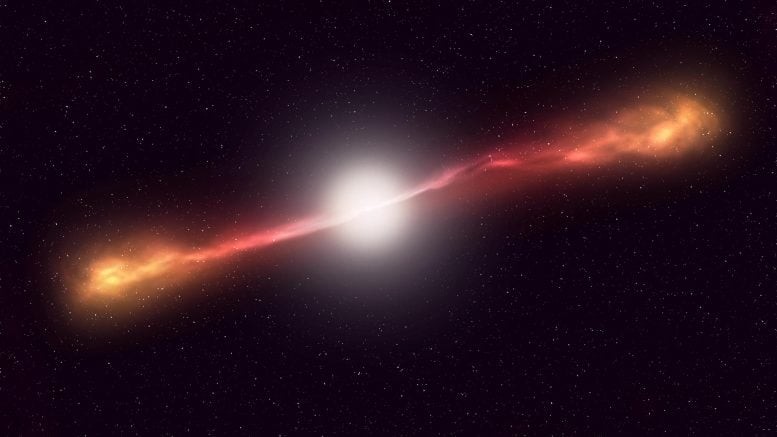
Figure 1. Cosmic Collisions: Black Holes as Gateways to Dark Matter.
Cosmic Jets as Natural Supercolliders
Black holes don’t just rotate—they spin with unimaginable force, dragging matter into extreme conditions that rival human-built particle colliders. A new study highlights how fast-spinning supermassive black holes at galactic centers can unleash plasma jets powered by their rotation and accretion disks. These violent outbursts may create high-energy collisions similar to those inside the Large Hadron Collider. Figure 1 shows Cosmic Collisions: Black Holes as Gateways to Dark Matter.
“If supermassive black holes can generate such particles, we might detect them on Earth as unusual, high-energy signatures—potential evidence for new physics or even dark matter,” said Joseph Silk of Johns Hopkins University and Oxford. The research suggests that plunging gas flows near a spinning black hole can tap into its rotational energy, sparking chaotic particle collisions on scales far beyond what any terrestrial machine could achieve.
Escaping Particles Carry Extreme Clues
Not all particles born from black hole collisions vanish into the abyss. Some, accelerated by immense energy and momentum, escape as powerful beams. “We figured out how energetic these beams of particles could be: as powerful as you get from a supercollider, or more,” said Joseph Silk. “It’s very hard to say what the limit is, but they certainly reach the energy of the newest supercollider we plan to build—and could give us complementary results.”
To hunt for these elusive signals, researchers point to observatories already tuned to the cosmos—like the IceCube Neutrino Observatory at the South Pole and the Kilometer Cube Neutrino Telescope in the Mediterranean, which recently caught the most energetic neutrino ever recorded.
Distance Is No Barrier to Discovery
The crucial difference between man-made colliders and cosmic ones is scale: black holes lie far across the universe. Yet their messengers can still reach Earth. “The difference between a supercollider and a black hole is that black holes are far away,” Silk noted. “But nevertheless, these particles will get to us.”
Black Holes vs. Billion-Dollar Labs
- Scientists traditionally rely on giant particle colliders, like the Large Hadron Collider (LHC), to smash particles together in hopes of discovering new physics—like dark matter.
- But these machines are expensive (tens of billions of dollars) and take decades to build.
- A new study from Johns Hopkins suggests that supermassive black holes might already be doing this work naturally by generating extreme particle collisions in space.
Cosmic Jets as Natural Supercolliders
- Fast-spinning black holes at galactic centers can launch enormous jets of plasma, fueled by energy from their spin and surrounding matter (the accretion disk).
- Within these violent environments, particles may collide at energies equal to—or greater than—those inside Earth’s most advanced colliders.
Escaping Particles and Earthly Detectors
- Some particles from these collisions vanish into the black hole, but others escape at staggering energies.
- Earth-based observatories like the IceCube Neutrino Observatory in Antarctica and the KM3NeT telescope in the Mediterranean are already capable of detecting these exotic messengers.
- If unusual high-energy neutrinos or cosmic rays are traced back to black holes, it could confirm that these objects act as natural supercolliders—and perhaps reveal dark matter in the process.
Source: SciTECHDaily
Cite this article:
Priyadharshini S (2025), Black Holes Could Act as Cosmic Supercolliders in the Search for Dark Matter, AnaTechMaz, pp.485
Recent Post
-
Space Clues: How an Explosive Prebiotic Molecule Could Unlock Life’s Origins
This is essentially a prebiotic concentrate — a seed-of-life...
-
“Strange ‘Infinity’ Galaxy Baffles Scientists: How Do We Make Sense of It?”
Everything about this galaxy is unusual,” said the researcher....
-
Martian Rock’s Strange Spots Could Hold Clues to Ancient Life
Researchers tested O-PTIR on a basalt rock containing dark inclusions, similar in size.....
-
Webb Telescope Detects Most Ancient Black Hole Yet, Breaking Cosmic Record
Astronomers use spectroscopy to split light into its component...
-
Black Holes Could Act as Cosmic Supercolliders in the Search for Dark Matter
Instead of waiting decades and spending billions on massive particle...
-
Uncovering the Secrets Between Galaxies Through Mysterious Radio Signals
Most of the universe’s matter is invisible, detectable...
-
Earth Targeted by the ‘Eye of Sauron’ in Stunning Astronomical Capture
Billions of light-years away, the blazar PKS 1424+240 has long....
-
Hubble Spots a Rare Interstellar Comet Speeding at 130,000 MPH Through the Solar System
Hubble has captured striking details of comet 3I/ATLAS, including a...
-
Pink Nebulae Radiate Brilliantly in a Spiral Galaxy 35 million Light-Years Away
Pink Nebulae Radiate Brilliantly in a Spiral Galaxy 35 million...
AI Spots Rare Supernova That Flared Twice in a Lifetime
Astronomers have captured the violent death of a massive star locked in a deadly...
-
James Webb Reveals Planet-Forming Regions Under Intense Ultraviolet Radiation
Ultraviolet (UV) radiation is a form of light invisible to the human...
-
Webb Spots Mysterious “Little Red Dots” — Possible Birthplaces of the Universe’s First Black Holes
Astronomers at the Center for Astrophysics...
-
Next Solar Superstorm May Pose Greater Threat to Satellites
New research from the U.S. National Science Foundation’s National Center for ...
-
Rare Supernova Challenges Expectations, Unveiling the Hidden Layers of a Dying Star
Astrophysicists at Northwestern University, working...
-
Tiny Star, Giant Rule-Breaking Planet: A Cosmic Oddity
An international team of astronomers, including researchers from the University of Liège.....