

“Strange ‘Infinity’ Galaxy Baffles Scientists: How Do We Make Sense of It?”
A Galactic Oddity with a Central Mystery
“Everything about this galaxy is unusual,” said the researcher. “It not only has a bizarre appearance, but it also hosts a supermassive black hole consuming a significant amount of material. The biggest surprise? The black hole isn’t located in either of the two galactic nuclei from the merger—it sits right in the middle. We kept asking ourselves: how can we make sense of this?”
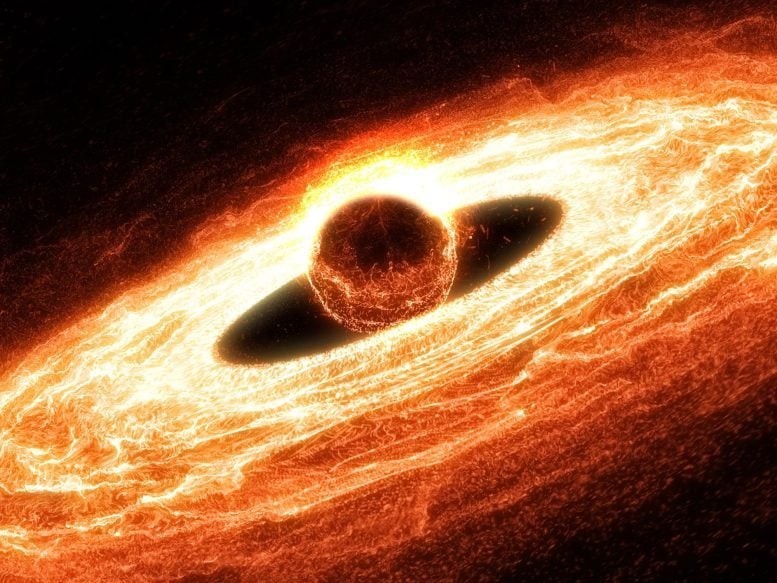
Figure 1. “‘Infinity’ Galaxy Mystifies Astronomers”.
Van Dokkum and astronomer Gabriel Brammer of the University of Copenhagen first spotted this oddity while analyzing images from the COSMOS-Web survey, part of NASA’s James Webb Space Telescope data archives. Figure 1 shows “‘Infinity’ Galaxy Mystifies Astronomers”.
Follow-up observations of the Webb data drew on measurements from the National Radio Astronomy Observatory’s Very Large Array, the Chandra X-ray Observatory, and the Keck Observatory. These multi-wavelength observations were critical in interpreting the mysterious galaxy.
Using Keck’s Low-Resolution Imaging Spectrometer (LRIS), van Dokkum and his team obtained spectra that revealed essential information: the distance to the Infinity galaxy, the precise location of its newly formed black hole, and its mass—roughly a million times that of the Sun, comparable to the Milky Way’s central black hole.
“This is a prime example of Keck Observatory’s pivotal role in following up on unusual objects spotted in JWST images,” said van Dokkum. “The flexibility of Keck’s observing model allows astronomers to decide in real time what to observe, enabling rapid pursuit of high-risk, high-reward targets that fixed-schedule observatories cannot accommodate. The Keck/Yale partnership has been crucial for this and many other discoveries, and this pipeline will only strengthen with Roman and future advanced Keck instruments.”
Black Hole Formation: A Tale of Two Seed Theories
Discovering a black hole outside a galaxy’s nucleus is rare in itself, but finding one that has only just formed is unprecedented. This discovery also bears on ongoing debates about how black holes formed in the early universe.
The “light seeds” theory suggests that black holes began as remnants of massive stars that collapsed and exploded, gradually merging over time to form supermassive black holes. However, JWST has already detected supermassive black holes at epochs too early for the light seed model to fully explain.
An alternative, the “heavy seeds” theory, posits that massive black holes can form directly from the collapse of enormous gas clouds. The challenge is that such clouds usually form stars rather than black holes.
Van Dokkum proposes that the Infinity galaxy may demonstrate how extreme conditions—similar to those in the early universe, as suggested by the heavy seeds model—can create a black hole.
“In this case, two disk galaxies collided, forming the ring-like structures we observe,” he explained. “During the collision, gas in the galaxies was shocked and compressed. This compression could create a dense knot that collapses directly into a black hole. While such collisions are rare today, extreme gas densities were likely common in the early universe when galaxies were forming.”
Van Dokkum emphasized the need for further research. “We want to get closer to the black hole to study the gas in its immediate vicinity,” he said. “Later this fall, we will use Keck Observatory’s adaptive optics for this investigation.”
“Beyond that,” he added, “the ball is in the theorists’ court. We need computer simulations to test whether extreme conditions during collisions can indeed form black holes. In a galaxy unimaginably far away, the universe just created a black hole—and in doing so, it offered a clue about how our own Milky Way was born.”
Source: SciTECHDaily
Cite this article:
Priyadharshini S (2025), Strange ‘Infinity’ Galaxy Baffles Scientists: How Do We Make Sense of It?, AnaTechMaz, pp.482
Recent Post
-
Space Clues: How an Explosive Prebiotic Molecule Could Unlock Life’s Origins
This is essentially a prebiotic concentrate — a seed-of-life...
-
“Strange ‘Infinity’ Galaxy Baffles Scientists: How Do We Make Sense of It?”
Everything about this galaxy is unusual,” said the researcher....
-
Martian Rock’s Strange Spots Could Hold Clues to Ancient Life
Researchers tested O-PTIR on a basalt rock containing dark inclusions, similar in size.....
-
Webb Telescope Detects Most Ancient Black Hole Yet, Breaking Cosmic Record
Astronomers use spectroscopy to split light into its component...
-
Black Holes Could Act as Cosmic Supercolliders in the Search for Dark Matter
Instead of waiting decades and spending billions on massive particle...
-
Uncovering the Secrets Between Galaxies Through Mysterious Radio Signals
Most of the universe’s matter is invisible, detectable...
-
Earth Targeted by the ‘Eye of Sauron’ in Stunning Astronomical Capture
Billions of light-years away, the blazar PKS 1424+240 has long....
-
Hubble Spots a Rare Interstellar Comet Speeding at 130,000 MPH Through the Solar System
Hubble has captured striking details of comet 3I/ATLAS, including a...
-
Pink Nebulae Radiate Brilliantly in a Spiral Galaxy 35 million Light-Years Away
Pink Nebulae Radiate Brilliantly in a Spiral Galaxy 35 million...
AI Spots Rare Supernova That Flared Twice in a Lifetime
Astronomers have captured the violent death of a massive star locked in a deadly...
-
James Webb Reveals Planet-Forming Regions Under Intense Ultraviolet Radiation
Ultraviolet (UV) radiation is a form of light invisible to the human...
-
Webb Spots Mysterious “Little Red Dots” — Possible Birthplaces of the Universe’s First Black Holes
Astronomers at the Center for Astrophysics...
-
Next Solar Superstorm May Pose Greater Threat to Satellites
New research from the U.S. National Science Foundation’s National Center for ...
-
Rare Supernova Challenges Expectations, Unveiling the Hidden Layers of a Dying Star
Astrophysicists at Northwestern University, working...
-
Tiny Star, Giant Rule-Breaking Planet: A Cosmic Oddity
An international team of astronomers, including researchers from the University of Liège.....