

Webb Spots Mysterious “Little Red Dots” — Possible Birthplaces of the Universe’s First Black Holes
Astronomers at the Center for Astrophysics | Harvard & Smithsonian have proposed a new explanation for one of the most puzzling discoveries in the early universe: the so-called “little red dots.”
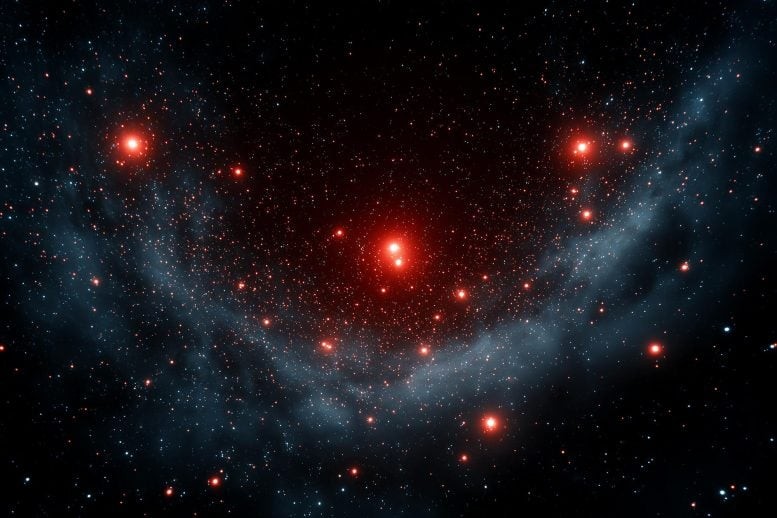
Figure 1. Webb Detects Mysterious “Little Red Dots” — Potential Cradles of the First Black Holes.
In a study published in The Astrophysical Journal Letters, Fabio Pacucci and Abraham (Avi) Loeb suggest that these unusual galaxies likely formed within exceptionally rare dark matter halos that spin much more slowly than typical halos. Figure 1 shows Webb Detects Mysterious “Little Red Dots” — Potential Cradles of the First Black Holes.
These compact, faint objects were identified in deep-space images captured by the James Webb Space Telescope (JWST) and challenge existing theories about the formation of galaxies and black holes in the universe’s infancy.
Their paper, “Cosmic Outliers: Low-Spin Halos Explain the Abundance, Compactness, and Redshift Evolution of the Little Red Dots,” offers a physical explanation for the unique properties of these galaxies.
“Little red dots are extremely compact, distant galaxies that went completely undetected before JWST,” Pacucci explained. “They may well be JWST’s most surprising discovery so far. Our research indicates they could naturally arise in dark matter halos with very low spin.”
Cosmic Dawn: Tiny but Brilliant Galaxies
Pacucci notes that these galaxies are mostly seen when the universe was about one billion years old, though they likely formed even earlier during the cosmic dawn. Despite being only a tenth the size of typical galaxies, they shine unusually brightly. Their deep red hue suggests they may be shrouded in cosmic dust or dominated by older stars.
Astronomers have long debated whether the light from these “little red dots” comes from stars or from supermassive black holes at their centers.
“It’s a fundamental mystery,” Pacucci said. “If they host black holes, those black holes are enormous for such tiny galaxies. But if they only contain stars, the galaxies are far too compact to house them, reaching central stellar densities that are extreme.”
Rather than focusing on what powers the luminosity, Pacucci and Loeb explored how these objects might form in the first place.
The Low-Spin Halo Hypothesis
Dark matter halos—the invisible, spinning scaffolding around which galaxies form—play a key role. Their study shows that the luminous dots emerge in halos within the lowest 1% of the spin distribution. In other words, 99% of halos spin faster than these. Low-spin halos naturally produce extremely compact galaxies. Pacucci compares it to a carnival swing ride: faster spins fling the swings outward, expanding the galaxy, while slower spins keep the galaxy tight and compact.
This theory also explains why little red dots are rare: they make up only about 1% of typical galaxy abundance, yet are still more common than quasars, which are extremely bright galaxy centers powered by supermassive black holes. Furthermore, low-spin halos form primarily in the early universe, explaining why these galaxies appear during a brief one-billion-year window. As halos grow and gain angular momentum, compact, low-spin galaxies become harder to form.
“Dark matter halos have a range of rotational velocities,” Loeb said. “If the little red dots are in the first percentile of the spin distribution, you naturally explain all their observed properties.”
Prime Sites for Black Hole or Stellar Growth
While the study does not settle whether little red dots are powered by stars or black holes, it suggests they provide ideal conditions for rapid growth.
“Low-spin halos concentrate mass at the center, facilitating fast black hole accretion or rapid star formation,” Pacucci explained. Some dots show broad emission lines, hinting at active black holes, though they lack the X-ray signals usually associated with them. Pacucci is leading follow-up studies to better understand these unusual objects, including searching for nearby analogs to track their evolution.
Unlocking the First Black Holes
“Our research is a step toward understanding these mysterious galaxies,” Pacucci said. “They may reveal how the first black holes formed and co-evolved with early galaxies in the universe.”
Reference:
- https://scitechdaily.com/webbs-mysterious-little-red-dots-may-be-the-cradle-of-the-first-black-holes/
Cite this article:
Priyadharshini S (2025), Webb Spots Mysterious “Little Red Dots” — Possible Birthplaces of the Universe’s First Black Holes, AnaTechMaz, pp.492
Recent Post
-
Space Clues: How an Explosive Prebiotic Molecule Could Unlock Life’s Origins
This is essentially a prebiotic concentrate — a seed-of-life...
-
“Strange ‘Infinity’ Galaxy Baffles Scientists: How Do We Make Sense of It?”
Everything about this galaxy is unusual,” said the researcher....
-

Martian Rock’s Strange Spots Could Hold Clues to Ancient Life
Researchers tested O-PTIR on a basalt rock containing dark inclusions, similar in size.....
-
Webb Telescope Detects Most Ancient Black Hole Yet, Breaking Cosmic Record
Astronomers use spectroscopy to split light into its component...
-
Black Holes Could Act as Cosmic Supercolliders in the Search for Dark Matter
Instead of waiting decades and spending billions on massive particle...
-
Uncovering the Secrets Between Galaxies Through Mysterious Radio Signals
Most of the universe’s matter is invisible, detectable...
-
Earth Targeted by the ‘Eye of Sauron’ in Stunning Astronomical Capture
Billions of light-years away, the blazar PKS 1424+240 has long....
-
Hubble Spots a Rare Interstellar Comet Speeding at 130,000 MPH Through the Solar System
Hubble has captured striking details of comet 3I/ATLAS, including a...
-
Pink Nebulae Radiate Brilliantly in a Spiral Galaxy 35 million Light-Years Away
Pink Nebulae Radiate Brilliantly in a Spiral Galaxy 35 million...
AI Spots Rare Supernova That Flared Twice in a Lifetime
Astronomers have captured the violent death of a massive star locked in a deadly...
-
James Webb Reveals Planet-Forming Regions Under Intense Ultraviolet Radiation
Ultraviolet (UV) radiation is a form of light invisible to the human...
-
Webb Spots Mysterious “Little Red Dots” — Possible Birthplaces of the Universe’s First Black Holes
Astronomers at the Center for Astrophysics...
-
Next Solar Superstorm May Pose Greater Threat to Satellites
New research from the U.S. National Science Foundation’s National Center for ...
-
Rare Supernova Challenges Expectations, Unveiling the Hidden Layers of a Dying Star
Astrophysicists at Northwestern University, working...
-
Tiny Star, Giant Rule-Breaking Planet: A Cosmic Oddity
An international team of astronomers, including researchers from the University of Liège.....